
How Heavy Should a Weighted Blanket Be? The 10% Rule Explained
Quick Answer
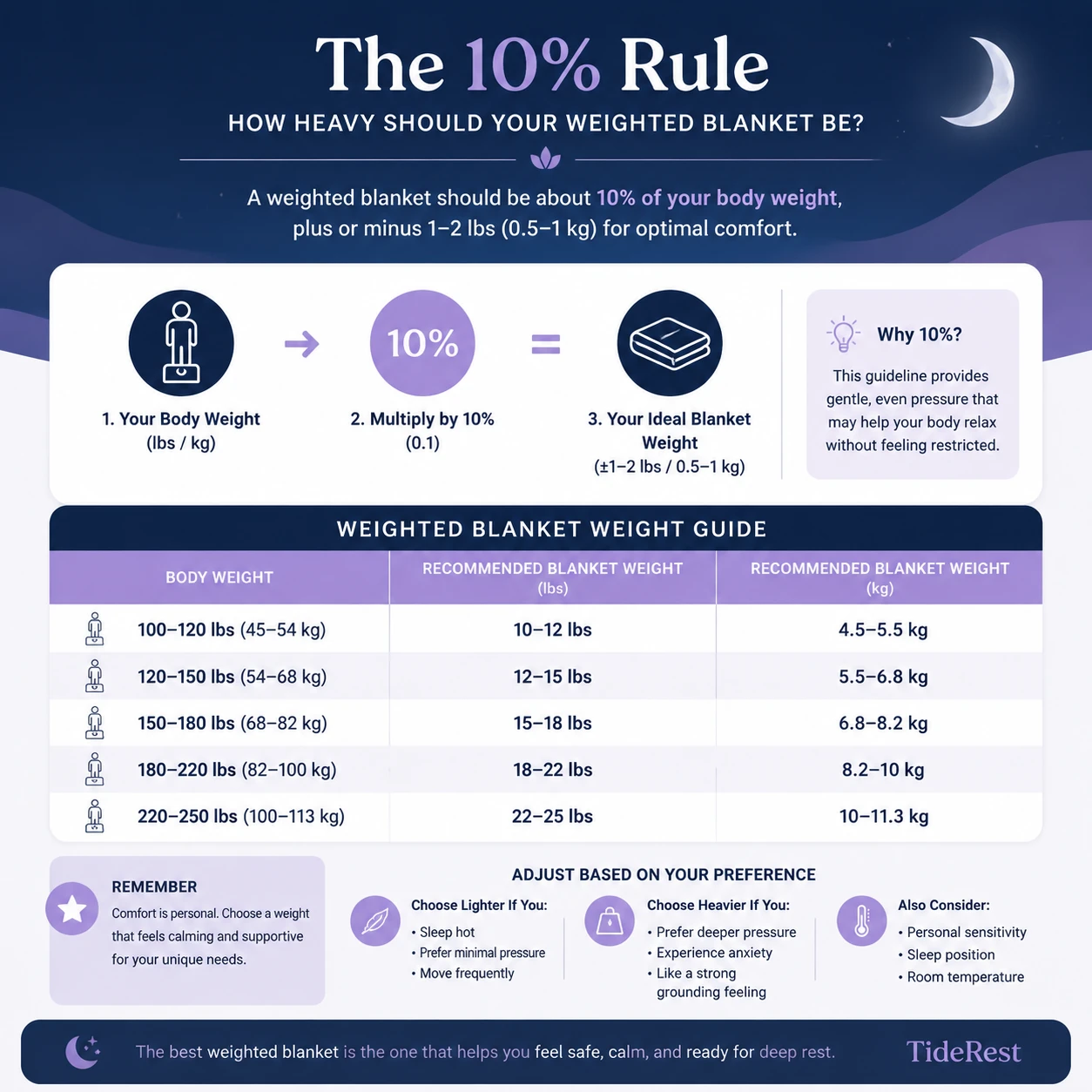
A weighted blanket should typically weigh about 10% of your body weight (±1–2 lbs / 0.5–1 kg) for optimal comfort and calming effect.
International Quick Conversion:
- 150 lbs (68 kg) → ~15 lb (6.8 kg) blanket
- 200 lbs (91 kg) → ~20 lb (9 kg) blanket
👉 This guideline is known as the “10% rule”, commonly used in sleep wellness and deep pressure therapy contexts.
What Is the 10% Rule?
The 10% rule is a general guideline for selecting weighted blanket weight:
Weighted blanket weight ≈ 10% of body weight
Why this works:
- Provides gentle deep pressure stimulation (DPS)
- Supports relaxation of the nervous system
- Avoids excessive restriction or discomfort
- Mimics a “grounding” or “hug-like” sensation
Weighted blankets are most effective when they are part of a complete sleep system, rather than a standalone solution.
Sleep quality is influenced by multiple factors, including temperature regulation, sensory input, and breathing patterns.
👉 To optimize your full sleep environment: Sleep Environment Optimization Guide
Weight Guide (lbs + kg Standardized)
| Body Weight | Recommended Blanket |
|---|---|
| 100–120 lbs (45–54 kg) | 10–12 lbs (4.5–5.5 kg) |
| 120–150 lbs (54–68 kg) | 12–15 lbs (5.5–6.8 kg) |
| 150–180 lbs (68–82 kg) | 15–18 lbs (6.8–8.2 kg) |
| 180–220 lbs (82–100 kg) | 18–22 lbs (8.2–10 kg) |
| 220–250 lbs (100–113 kg) | 22–25 lbs (10–11.3 kg) |
How Weighted Blankets Work (Science-Based)

Weighted blankets use Deep Pressure Stimulation (DPS), which may:
- Promote parasympathetic nervous system activation
- Support relaxation response
- Reduce perceived anxiety
- Improve subjective sleep quality
👉 DPS is also used in occupational therapy contexts for sensory regulation.
Couples / Shared Bed Scenario
If you sleep with a partner:
Do NOT calculate blanket weight based on combined body weight.
Recommended approach:
- Choose two separate weighted blankets, or
- Choose based on individual preference zones
Why?
- Body weight difference causes uneven pressure distribution
- One partner may overheat or feel restricted
- Movement transfer can reduce sleep quality
👉 In most real-world cases, two individual blankets perform better than one oversized blanket.
How to Choose the Right Weight (Real-World Logic)
Choose lighter if you:
- Sleep hot
- Prefer minimal pressure
- Move frequently at night
Choose heavier if you:
- Prefer strong grounding sensation
- Experience anxiety or restlessness
- Enjoy deep pressure comfort
👉 Comfort always overrides strict mathematical rules.
Safety Guidelines
Children Safety Warning (HIGH PRIORITY)
Weighted blankets are not recommended for infants under 3 years old due to risk of suffocation and entrapment.
For children over 3 years old:
- Must use only under direct adult supervision
- Child must be able to independently remove the blanket
- Never cover the child’s head
- Consultation with a pediatric occupational therapist is recommended
Pregnancy Considerations
Pregnant individuals, especially in the second and third trimester, may experience discomfort due to abdominal pressure.
Use only after consulting a healthcare provider.
Respiratory Conditions
Individuals with conditions such as:
- Sleep apnea
- Asthma
- Chronic respiratory limitations
may experience discomfort due to chest pressure.
Medical consultation is recommended before use.
Mobility Limitations
Users must always ensure they can independently remove the blanket at any time.
Temperature Factor (Often Overlooked)
Weight is not the only factor affecting comfort.
Look for:
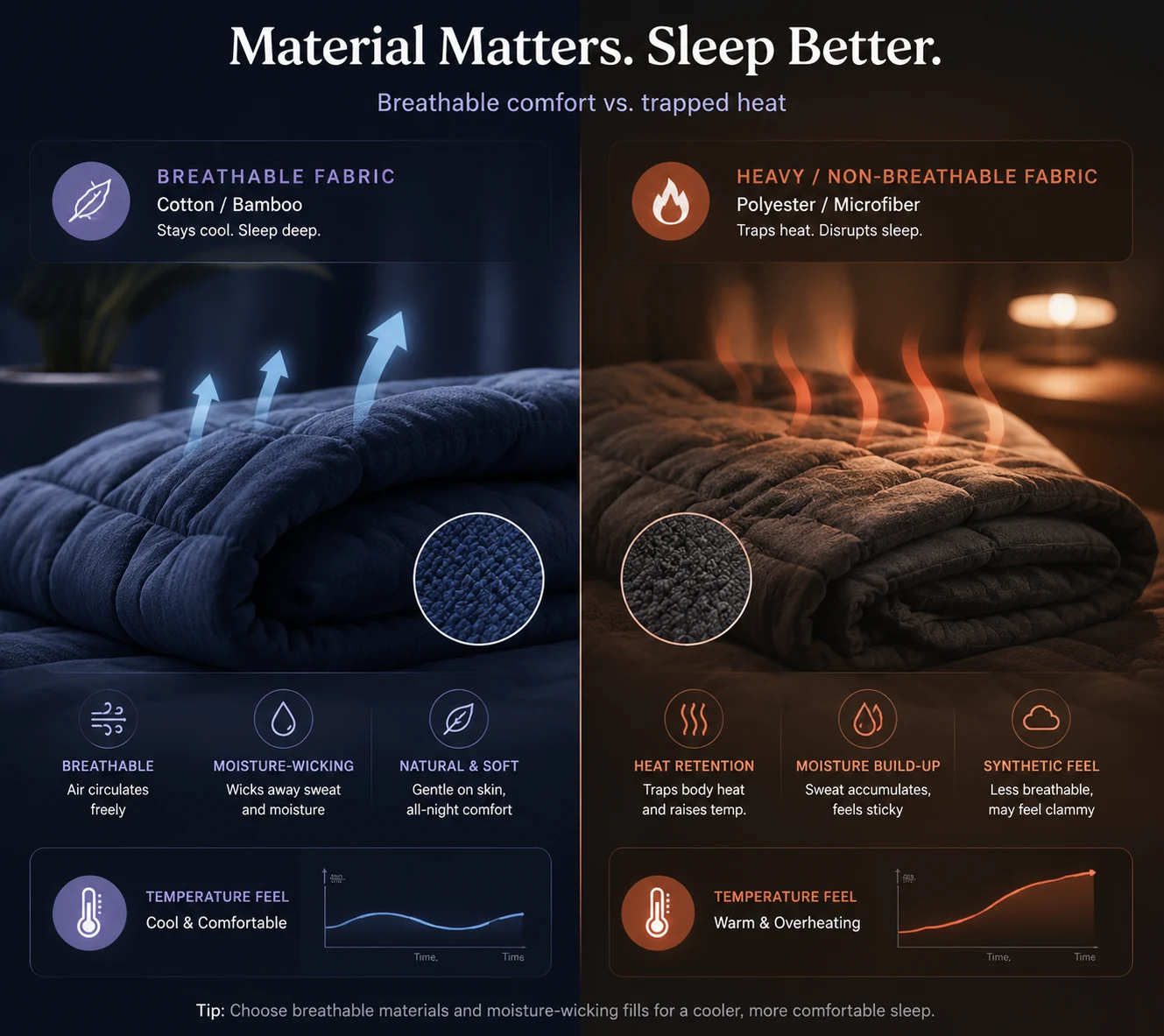
- Breathable cotton or bamboo fabric
- Cooling glass bead fill
- Moisture-wicking materials
👉 Overheating is one of the most common reasons users stop using weighted blankets.
One of the most common reasons people stop using weighted blankets is heat retention during sleep.
Fabric choice and airflow play a major role in long-term comfort.
👉 Learn more about cooling solutions: Weighted Blankets That Don’t Overheat
Key Takeaway
The ideal weighted blanket is:
Approximately 10% of your body weight, adjusted for comfort, temperature, and sleep style.
Soft Product Insight
At TideRest, weighted sleep solutions are designed around:
- Balanced pressure distribution
- Breathable material systems
- Natural sleep rhythm support
Rather than focusing only on weight, we prioritize sleep comfort + nervous system calming experience.
Explore the Full Sleep Optimization System
Weighted blankets are part of a broader sleep optimization framework covering environment, breathing, and sensory control.

Continue exploring related topics:
- Sleep Environment Optimization
- Weighted Blankets That Don’t Overheat
- Mouth Tape vs Nasal Strips
- Sleep Hygiene Checklist 2026
- 3D Contoured Sleep Masks