
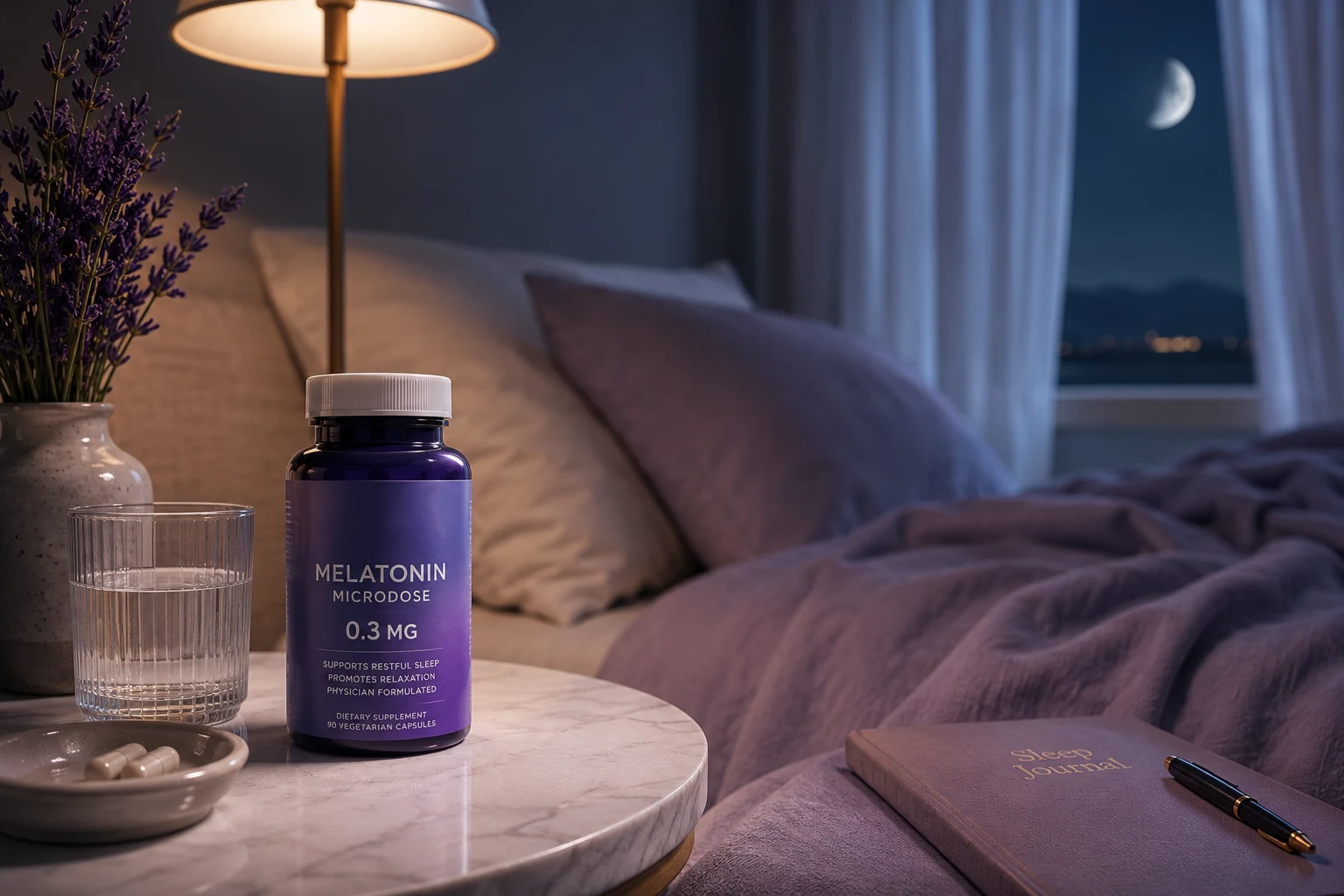
Low-Dose Melatonin (0.3mg): Why Sleep Researchers Say Less Is More
Quick Answer
Low-dose melatonin (around 0.3 mg) may better mimic the body’s natural nighttime melatonin levels than the 3–10 mg doses commonly sold in stores. Research suggests that lower doses are often sufficient for supporting circadian timing while reducing the likelihood of next-day grogginess and other dose-related side effects.
However, the best melatonin dose depends on why you’re taking it. Melatonin works best as a circadian rhythm regulator, not as a general sleeping pill.
This guide explains what current research says, who may benefit from low-dose melatonin, and when non-hormonal approaches may be a better option.
Quick Take
If you only remember four things from this article, remember these:
- Around 0.3 mg closely matches the physiological nighttime melatonin signal produced by many healthy adults.
- Higher doses are not necessarily more effective and may increase the chance of morning grogginess.
- Timing often matters more than dosage.
- Melatonin is most helpful for circadian rhythm issues such as jet lag or delayed sleep phase—not every type of insomnia.
Table of Contents
- What Is Low-Dose Melatonin?
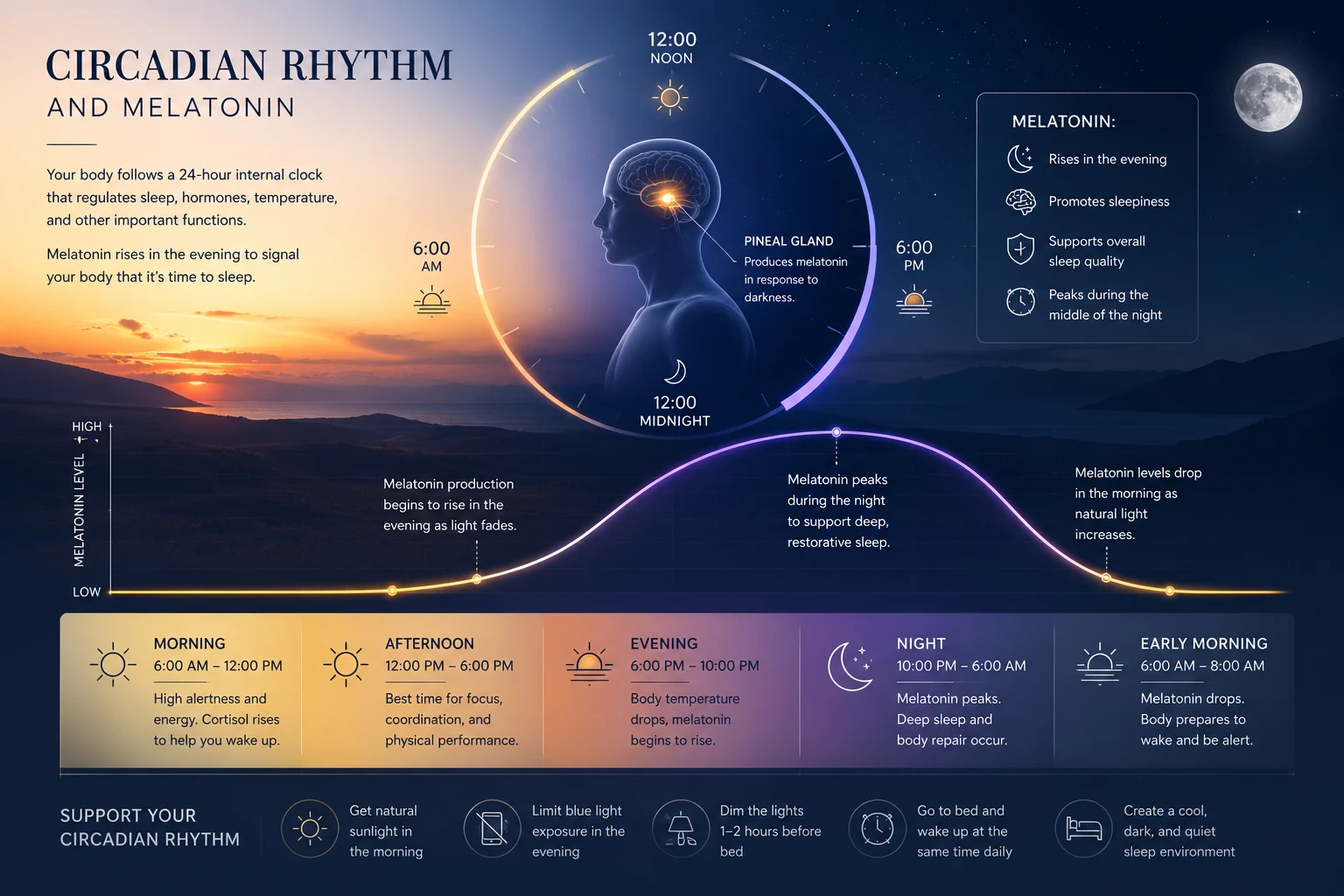
- How Melatonin Works
- Why Researchers Recommend Lower Doses
- Low-Dose vs High-Dose Melatonin
- What Is the Optimal Melatonin Dose?
- How to Find a 0.3 mg Supplement
- When Should You Take Melatonin?
- Immediate-Release vs Extended-Release Melatonin
- Safety Considerations
- When Melatonin May Not Be the Best Choice
- Final Verdict
- FAQ
What Is Low-Dose Melatonin?
Low-dose melatonin generally refers to supplements containing approximately 0.1–0.5 mg of melatonin, with 0.3 mg frequently cited in sleep research because it produces blood melatonin levels closer to those seen naturally at night.
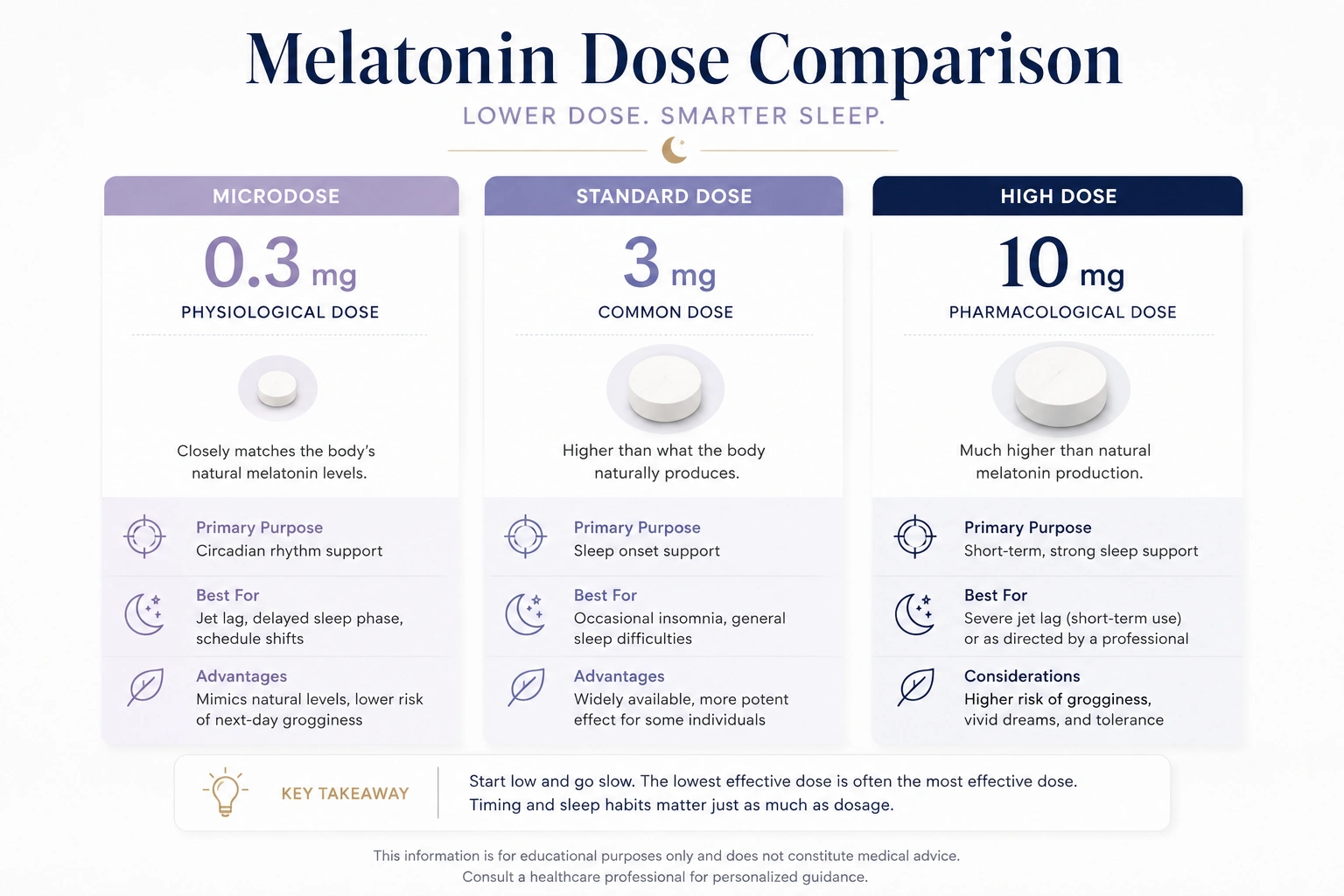
By comparison, many over-the-counter supplements contain:
- 3 mg
- 5 mg
- 10 mg
- occasionally even 20 mg
These higher doses are 10–30 times greater than the amount commonly used in physiological dosing studies.
Rather than overwhelming the body with melatonin, a physiological dose aims to reinforce the body’s existing circadian signal.
How Melatonin Actually Works
One of the biggest misconceptions is that melatonin is a sleeping pill.
It isn’t.
Melatonin is a hormone naturally produced by the pineal gland in response to darkness. Its primary role is to tell your brain:
“Night has arrived.”
Instead of directly causing sedation, melatonin helps synchronize your internal biological clock with the external light-dark cycle.
This explains why melatonin is particularly effective for situations involving disrupted circadian timing, including:
- Jet lag
- Delayed Sleep-Wake Phase Disorder (DSWPD)
- Shift work
- Temporary schedule changes
For sleep problems caused primarily by stress, anxiety, pain, or poor sleep habits, melatonin alone is often much less effective.
If your sleep difficulties are mainly lifestyle-related, improving your bedtime routine may have a greater impact than increasing your melatonin dose. Our Sleep Hygiene Checklist 2026 provides practical, evidence-based strategies to support your body’s natural melatonin production before considering supplementation.
Why Sleep Researchers Say Less Is More
Interest in low-dose melatonin has grown because several studies suggest that more melatonin does not automatically produce better sleep.
Researchers generally point to three reasons.
1. Physiological Dosing Better Mimics Natural Biology
Healthy adults naturally produce relatively small amounts of melatonin each evening.
A dose around 0.3 mg produces blood concentrations that more closely resemble normal nighttime physiology than doses of 5–10 mg.
The goal is not to overwhelm the body’s signaling system, but to gently reinforce it.
2. Higher Doses May Increase Side Effects
Although melatonin is generally well tolerated, higher doses are more commonly associated with:
- Morning grogginess
- Vivid dreams
- Headaches
- Daytime sleepiness
- Temporary disruption of normal sleep timing
Using the lowest effective dose may reduce the likelihood of these unwanted effects while still supporting circadian alignment.
3. Timing Matters More Than Dose
Sleep specialists frequently emphasize that when you take melatonin often has a greater influence than how much you take.
Taking melatonin too early or too late may reduce its effectiveness, even if the dose is appropriate.
For many healthy adults, consistent timing combined with a low physiological dose provides better results than simply increasing the amount.
Low-Dose vs Standard-Dose Melatonin
| Dose | Typical Purpose | Advantages | Potential Drawbacks |
|---|---|---|---|
| 0.1–0.5 mg | Circadian rhythm support | Closely mimics natural secretion, lower risk of grogginess | May not be appropriate for every situation |
| 1–3 mg | General sleep onset support | Commonly available | More than many people physiologically require |
| 5–10 mg | Short-term use in selected cases | Higher pharmacological effect | Greater likelihood of residual drowsiness and vivid dreams |
For most adults, experts recommend starting with the lowest effective dose rather than assuming that more is better.
What Is the Optimal Melatonin Dose?
There is no single dose that works for everyone.
Current evidence suggests that the optimal melatonin dose depends on your sleep goal, not simply your body size or age.
Circadian rhythm support
Approximately 0.3 mg is often sufficient.
Difficulty falling asleep
Some individuals may benefit from 0.5–1 mg, particularly when recommended by a healthcare professional.
Jet lag
Timing usually plays a larger role than increasing dosage.
The key principle remains:
Use the lowest effective dose that achieves the desired effect.
How Can You Find a 0.3 mg Melatonin Supplement?
One practical challenge is that 0.3 mg melatonin products are less common than higher-dose supplements. Many over-the-counter products contain 3–10 mg per serving, which may be more than necessary for some people.
If you’re looking for a physiological dose, consider these options:
- Look for supplements specifically labeled 0.3 mg or microdose melatonin.
- Liquid melatonin allows smaller dose adjustments than fixed-dose tablets.
- If appropriate and approved by the manufacturer, some immediate-release tablets may be divided with a pill cutter. Do not split extended-release tablets, as doing so can change how the medication is released.
- Choose products that clearly state the melatonin content per serving and provide transparent ingredient labeling.
Quality also matters. Independent studies have found that the actual melatonin content of some supplements can differ substantially from what appears on the label. Choosing products that undergo third-party testing or independent quality certification may improve dosing accuracy and consistency.
When Should You Take Low-Dose Melatonin?
Many people focus on dosage, but timing is often the most important factor in whether melatonin works.
Unlike a sleeping pill, melatonin shifts or reinforces your internal biological clock. Taking it at the wrong time may reduce its effectiveness—or even shift your circadian rhythm in the wrong direction.
General Timing Guidelines
For most adults using melatonin to support sleep onset:
- 0.3–1 mg: Take 30–90 minutes before your planned bedtime
- Maintain a consistent bedtime and wake time whenever possible.
- Avoid taking additional doses if you wake during the night unless specifically instructed by a healthcare professional.
Remember that melatonin works best when combined with healthy sleep habits rather than replacing them.
Timing for Different Sleep Situations
| Sleep Goal | Suggested Timing | Notes |
|---|---|---|
| Difficulty falling asleep | 30–90 minutes before bedtime | Often responds well to low physiological doses |
| Delayed Sleep-Wake Phase Disorder | 1–3 hours before desired bedtime (under professional guidance) | Earlier timing may help shift the body clock |
| Jet lag | Based on destination time zone | Timing usually matters more than increasing the dose |
| Shift work | Before the planned daytime sleep period | Should be combined with appropriate light management |
Because melatonin is fundamentally a darkness signal, reducing evening light exposure can be just as important as taking the supplement itself.
Using dim lighting during the last hour before bed and limiting exposure to bright screens may help your body respond more naturally to melatonin.
For a complete evidence-based evening routine—including light exposure, bedroom temperature, caffeine timing, and screen habits—see our Sleep Hygiene Checklist 2026.
Immediate-Release vs Extended-Release Melatonin
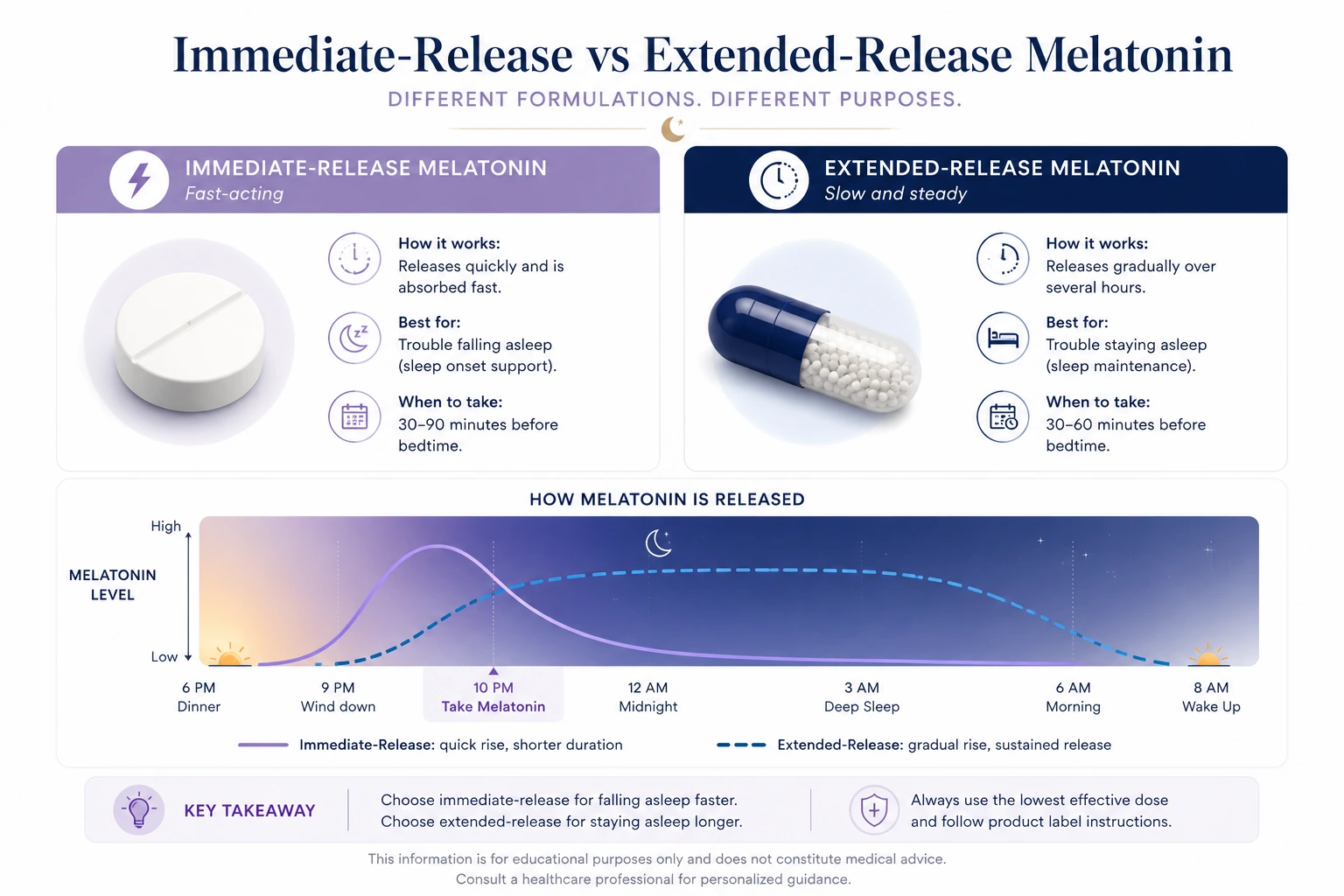
Not all melatonin supplements work the same way.
The formulation you choose should match the type of sleep difficulty you’re trying to address.
Immediate-Release Melatonin
Immediate-release formulations dissolve quickly and produce a relatively rapid increase in blood melatonin levels.
They are generally more appropriate for people who:
- Have difficulty falling asleep
- Experience occasional circadian disruption
- Are recovering from jet lag
- Want a lower physiological dose that more closely mimics the body’s natural evening rise
Low-dose melatonin (around 0.3 mg) is most commonly used in immediate-release form.
Extended-Release Melatonin
Extended-release (also called prolonged-release or controlled-release) formulations release melatonin gradually throughout the night.
They may be more appropriate for individuals who:
- Frequently wake during the night
- Experience reduced melatonin production associated with aging
- Have difficulty maintaining sleep rather than initiating it
Extended-release products are not intended to be split or cut, as this can alter the release mechanism and result in unpredictable dosing.
Which One Is Better?
There is no universally superior formulation.
A simple way to think about it is:
| If your main problem is… | Consider… |
|---|---|
| Falling asleep | Immediate-release |
| Staying asleep | Extended-release (if appropriate) |
If you’re unsure, discuss the most appropriate formulation with a healthcare professional rather than assuming a higher dose will solve the problem.
How to Choose a High-Quality Melatonin Supplement
Unlike prescription medications, dietary supplements may vary in quality.
Independent laboratory analyses have found that the actual melatonin content of some commercially available products can differ substantially from the amount listed on the label.
For this reason, look for products that offer:
- Third-party testing or independent quality certification
- Clearly stated melatonin content per serving
- Transparent ingredient lists
- Minimal unnecessary fillers, dyes, or sweeteners
- Manufacturing under recognized quality standards (such as GMP)
Choosing a reputable manufacturer is particularly important when you’re trying to use a physiological dose like 0.3 mg, where accurate dosing matters.
Is Low-Dose Melatonin Safe?
For most healthy adults, low-dose melatonin appears to have a favorable safety profile when used appropriately.
However, “natural” does not automatically mean “risk-free.”
Even low doses may cause:
- Mild morning drowsiness
- Vivid dreams
- Headache
- Temporary dizziness
- Changes in sleep timing if taken at the wrong time
Fortunately, these effects are generally less common with physiological doses than with higher-dose supplements.
Who Should Talk to a Healthcare Professional First?
Melatonin should not be considered appropriate for everyone.
Consult your healthcare provider before using melatonin if you:
- Are pregnant or breastfeeding
- Are under 18 years old unless advised by a pediatric healthcare professional
- Have an autoimmune disease
- Have epilepsy or another seizure disorder
- Have diabetes
- Have hypertension or cardiovascular disease
- Have depression or another psychiatric condition
- Have liver disease
- Take blood thinners (anticoagulants)
- Take immunosuppressive medications
- Take sedatives or medications that affect sleep or alertness
Because melatonin may interact with certain medications and medical conditions, individualized guidance is important.
Can You Build a Tolerance to Melatonin?
Current evidence suggests that melatonin is less likely to produce dependence than many prescription sleep medications.
However, researchers continue to study the effects of long-term supplementation, and questions remain regarding prolonged daily use in healthy individuals.
If you find yourself gradually increasing your dose over time, it may be more helpful to reassess the underlying cause of your sleep problem than simply taking more melatonin.
For a deeper discussion, see our guide:
Melatonin Tolerance: Why Your Sleep Gummies Stopped Working
When Melatonin May Not Be the Best Solution
Melatonin works best when the primary issue involves circadian timing.
If your sleep problems have another cause, increasing your melatonin dose is unlikely to solve the underlying problem.
Low-dose melatonin is less likely to help when poor sleep is mainly related to:
- Chronic psychological stress
- Elevated evening cortisol
- Anxiety
- Chronic pain
- Obstructive sleep apnea
- Excessive caffeine intake
- Poor sleep habits
- An uncomfortable sleep environment
In these situations, addressing the root cause often provides greater long-term benefit.
For example:
- If stress is keeping you awake, you may benefit more from learning about Magnesium Glycinate for Sleep.
- If your bedtime routine is inconsistent, our Sleep Hygiene Checklist 2026 offers practical strategies to improve natural sleep quality.
- If you’re looking for non-hormonal options, explore Sleep Supplements Without Melatonin to compare evidence-based alternatives.
Melatonin vs Non-Melatonin Sleep Support
Understanding how different sleep supports work can help you choose the right tool for your situation.
| Option | Primary Role | Best For |
|---|---|---|
| Low-dose melatonin | Circadian timing | Jet lag, delayed sleep schedule |
| Magnesium glycinate | Nervous system relaxation | Stress-related sleep difficulties |
| L-theanine | Mental relaxation | Racing thoughts before bed |
| Apigenin | Gentle relaxation support | Evening wind-down routines |
| Sleep hygiene improvements | Natural sleep regulation | Nearly everyone |
Rather than viewing these approaches as competitors, it’s often more helpful to think of them as addressing different aspects of sleep.
Melatonin answers “When should my body sleep?”
Lifestyle habits and non-hormonal supplements often address “How relaxed is my body before bed?”
Final Verdict
Low-dose melatonin challenges the common assumption that higher doses produce better sleep.
For many people, a physiological dose of around 0.3 mg may be enough to support healthy circadian timing while reducing the likelihood of next-day grogginess associated with larger doses.
Equally important, melatonin is not a universal solution for every sleep problem. It works best when used for the right purpose, taken at the right time, and combined with healthy sleep habits.
If your sleep challenges are primarily driven by stress, lifestyle, or an inconsistent bedtime routine, focusing on those factors may have a greater impact than increasing your melatonin dose.
Continue Optimizing Your Sleep Naturally

Sleep is influenced by more than one supplement. Explore these evidence-based resources to build a complete nighttime routine:
- The Ultimate Guide to Natural Sleep Aids
- Sleep Supplements Without Melatonin: 5 Evidence-Based Options
- Magnesium Glycinate for Sleep: Dosage, Timing & What Science Says
- Sleep Hygiene Checklist 2026
- Melatonin Tolerance: Why Your Sleep Gummies Stopped Working
 FAQ Section
 References
The following sources informed this article and represent high-quality evidence available at the time of publication.
- National Institutes of Health (NIH), Office of Dietary Supplements.
Melatonin Fact Sheet for Health Professionals. - American Academy of Sleep Medicine (AASM).
Clinical guidance on melatonin use and circadian rhythm sleep-wake disorders. - Sleep Foundation.
Melatonin: Benefits, Uses, Dosage, and Side Effects. - Zhdanova IV, Wurtman RJ, et al.
Effects of low oral doses of melatonin on sleep in healthy adults. - Brzezinski A.
Melatonin in Humans.
New England Journal of Medicine. - Erland LAE, Saxena PK. (2017).
Melatonin Natural Health Products and Supplements: Presence of Serotonin and Significant Variability of Melatonin Content. Journal of Clinical Sleep Medicine. - European Food Safety Authority (EFSA).
Scientific opinions regarding melatonin and sleep. - Selected peer-reviewed studies available through PubMed regarding melatonin pharmacokinetics, circadian rhythm regulation, and sleep medicine.
 Additional Compliance Note
Melatonin supplements are intended to support healthy sleep timing and are not a substitute for good sleep habits, balanced nutrition, or medical care. Persistent sleep difficulties lasting more than a few weeks should be evaluated by a qualified healthcare professional to identify possible underlying causes.