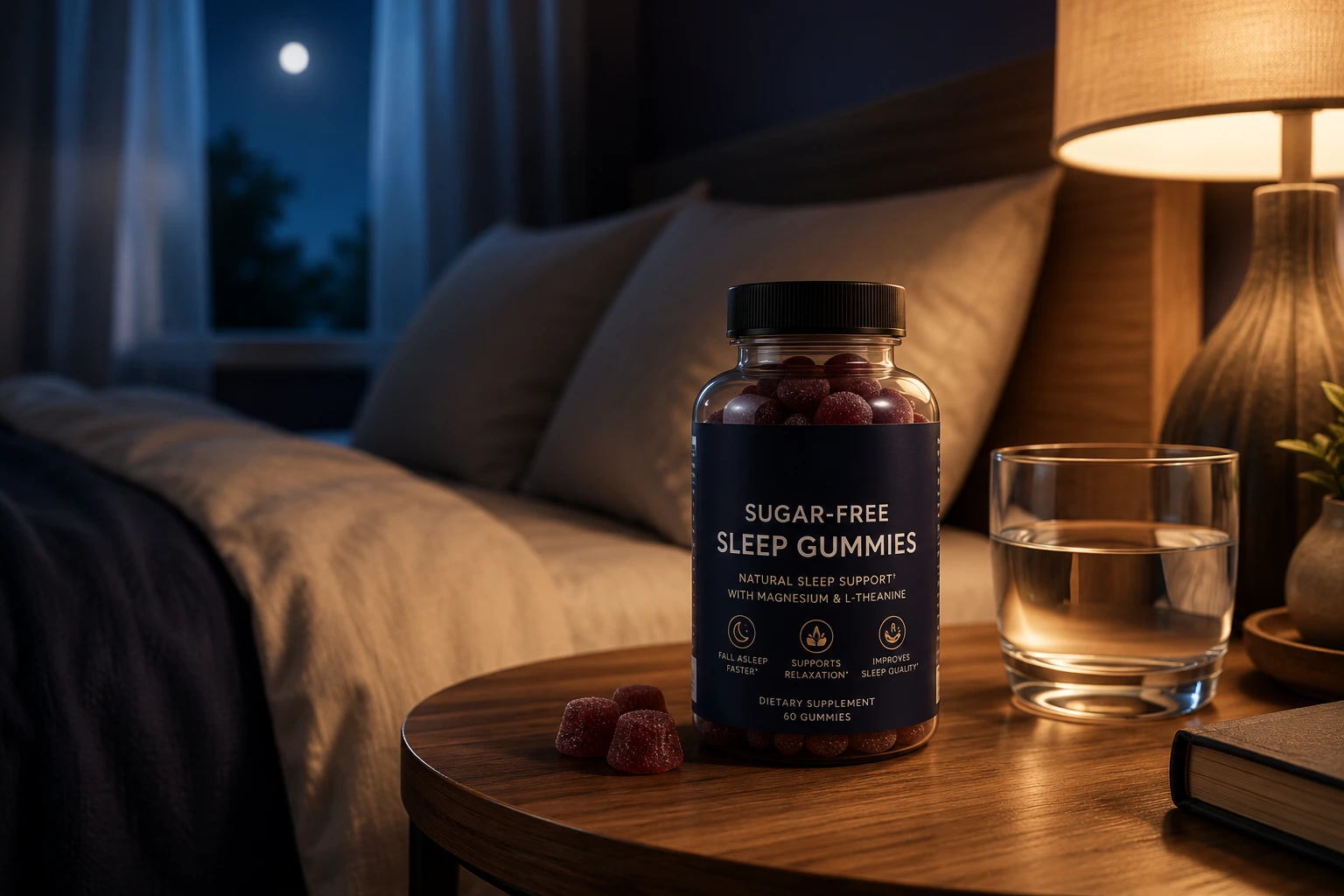
Sugar-Free Sleep Gummies: Do They Work as Well as Regular Ones?
Introduction
Yes—sugar-free sleep gummies can work just as well as regular gummies. Whether a sleep gummy supports better sleep depends primarily on its active ingredients, dosage, and overall formulation—not on whether it contains sugar.
For many people, choosing a sugar-free option is less about improving effectiveness and more about reducing added sugar, supporting blood sugar goals, following a ketogenic lifestyle, or improving long-term dietary habits.
This guide explains how sugar-free sleep gummies compare with regular formulas, who may benefit most from them, what ingredients actually influence sleep quality, and how to choose a product worth buying.
Table of Contents
- Do Sugar-Free Sleep Gummies Work?
- Sugar-Free vs Regular Gummies
- Who Should Choose Sugar-Free Gummies?
- Which Ingredients Matter Most?
- Are There Any Downsides?
- Buying Guide
- Bottom Line
- FAQ
Do Sugar-Free Sleep Gummies Work?
Quick Answer
In most cases, yes.
The sweetener used in a sleep gummy has very little influence on how well it supports sleep. What matters is whether the product contains evidence-based ingredients in effective amounts.
For example, a gummy containing an appropriate dose of magnesium glycinate is likely to provide similar sleep support regardless of whether it is sweetened with cane sugar, stevia, or monk fruit.
Instead of focusing on the sugar content alone, evaluate:
- Active ingredients
- Clinically relevant dosages
- Ingredient quality
- Third-party testing
- Manufacturing standards
These factors are much stronger predictors of product quality than the choice of sweetener.
Related reading: If you’re looking for non-hormonal sleep support, our guide to Sleep Supplements Without Melatonin explains several evidence-based alternatives that focus on relaxation rather than replacing your body’s natural sleep hormones.
Sugar-Free vs Regular Sleep Gummies
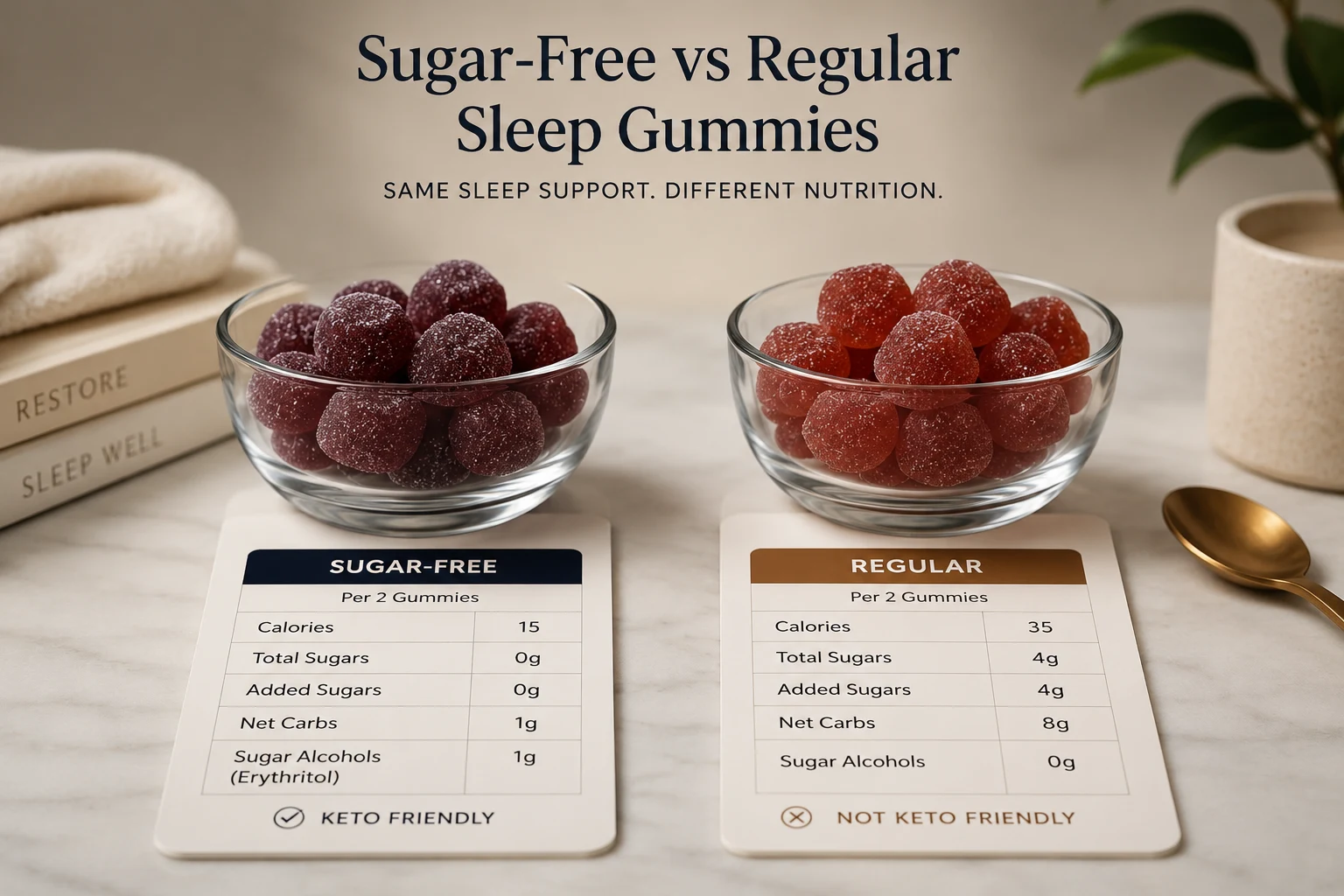
Although they may deliver similar sleep-support benefits, sugar-free and regular gummies differ in several practical ways.
| Feature | Sugar-Free Gummies | Regular Gummies |
|---|---|---|
| Sleep effectiveness | Similar when active ingredients match | Similar when active ingredients match |
| Added sugar | None or very little | Usually 2–5 g per serving |
| Calories | Slightly lower | Slightly higher |
| Keto friendly | Often yes | Usually no |
| Blood sugar impact | Generally lower | Higher |
| Taste | Depends on sweetener | Often sweeter |
| Digestive tolerance | Sugar alcohols may cause bloating in some people | Usually fewer issues related to sweeteners |
For occasional use, the nutritional difference between the two may be relatively small. However, if you take a sleep supplement every night, reducing added sugar can become more meaningful over time.
For someone consuming a gummy with 4 grams of added sugar every evening, that adds up to roughly 1.5 kilograms (about 3.3 pounds) of sugar each year.
That doesn’t mean regular gummies are unhealthy—it simply illustrates why some people prefer lower-sugar options for long-term use.
Who Should Choose Sugar-Free Sleep Gummies?
Sugar-free formulas aren’t automatically better—they’re simply a better fit for certain lifestyles and health goals.
They may be worth considering if you:
- Follow a ketogenic or low-carbohydrate diet
- Want to reduce added sugar intake
- Monitor blood glucose as advised by your healthcare provider
- Prefer taking supplements without unnecessary sweeteners
- Use sleep supplements consistently over long periods
What About Keto Sleep Gummies?
Many keto sleep gummies are simply sugar-free gummies formulated with low-carbohydrate sweeteners such as:
- Stevia
- Monk fruit extract
- Erythritol
- Allulose (in some products)
However, “keto” on the label doesn’t guarantee a better sleep supplement. Always review the active ingredients and nutrition facts rather than relying on front-of-package marketing claims.
What Ingredients Actually Matter?
If sugar isn’t the deciding factor, what is?
Sleep researchers generally focus on ingredients with plausible biological mechanisms and supportive evidence rather than the gummy base itself.
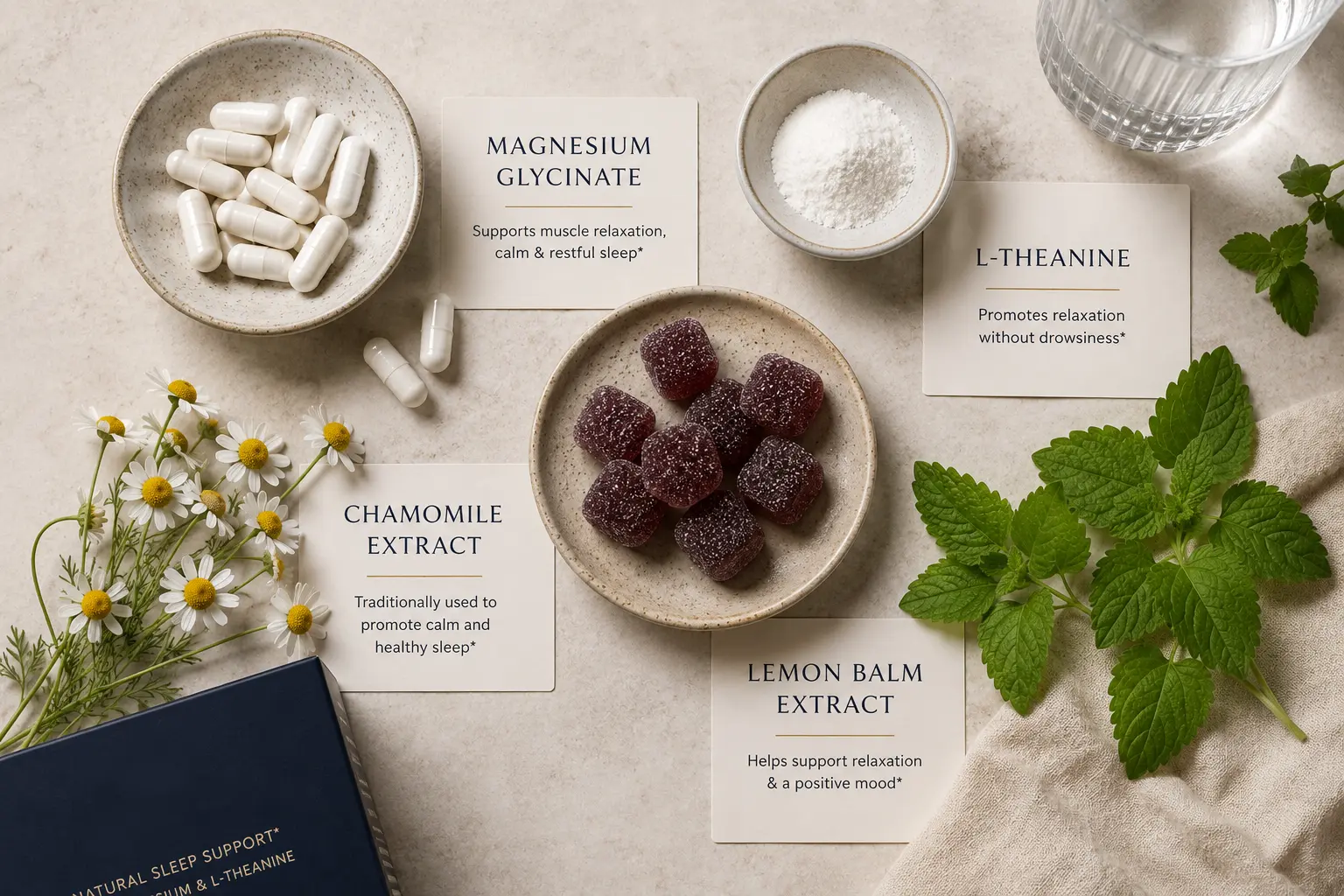
Depending on the product, these may include:
Magnesium
Magnesium supports normal nervous system function and muscle relaxation and may benefit people whose magnesium intake is inadequate.
For a deeper explanation, see our complete guide to Magnesium Glycinate for Sleep: Dosage, Timing & What Science Says.
L-Theanine
An amino acid naturally found in tea that may promote relaxation without causing sedation.
Apigenin
A plant flavonoid found in chamomile that has gained attention for its potential calming effects.
Botanical Extracts
Some formulations also include ingredients such as lemon balm or passionflower, although evidence varies between herbs.
The key takeaway is simple:
A well-formulated sugar-free gummy is generally more valuable than a poorly formulated regular gummy—and vice versa. The ingredient profile deserves far more attention than the sweetener alone.
Are There Any Downsides to Sugar-Free Sleep Gummies?
Choosing a sugar-free formula can reduce added sugar intake, but it isn’t entirely free of trade-offs. The main consideration isn’t sleep effectiveness—it’s digestive tolerance and ingredient quality.
Sugar Alcohols May Cause Digestive Discomfort
Many sugar-free gummies use sugar alcohols such as:
- Erythritol
- Maltitol
- Sorbitol
- Xylitol
These ingredients provide sweetness with fewer calories than sugar, but they aren’t absorbed equally by everyone.
Some people may experience:
- Bloating
- Gas
- Mild stomach cramps
- Loose stools (particularly with larger servings)
Sensitivity varies considerably. Many people tolerate erythritol well, while others may experience discomfort even with moderate amounts.
If you’ve never used sugar-free gummies before, start with the recommended serving rather than taking extra gummies before bed.
Natural Sweeteners Are Often Better Tolerated
Some newer formulations rely on sweeteners such as:
- Stevia
- Monk fruit extract
- Allulose
These may reduce digestive issues for some users, although taste preferences differ.
The best option is usually the one you can take consistently without unpleasant side effects.
How to Choose a High-Quality Sugar-Free Sleep Gummy
The supplement aisle is crowded with products that advertise “sugar-free,” “natural,” or “keto-friendly.” Those labels alone don’t tell you whether a gummy is well formulated.
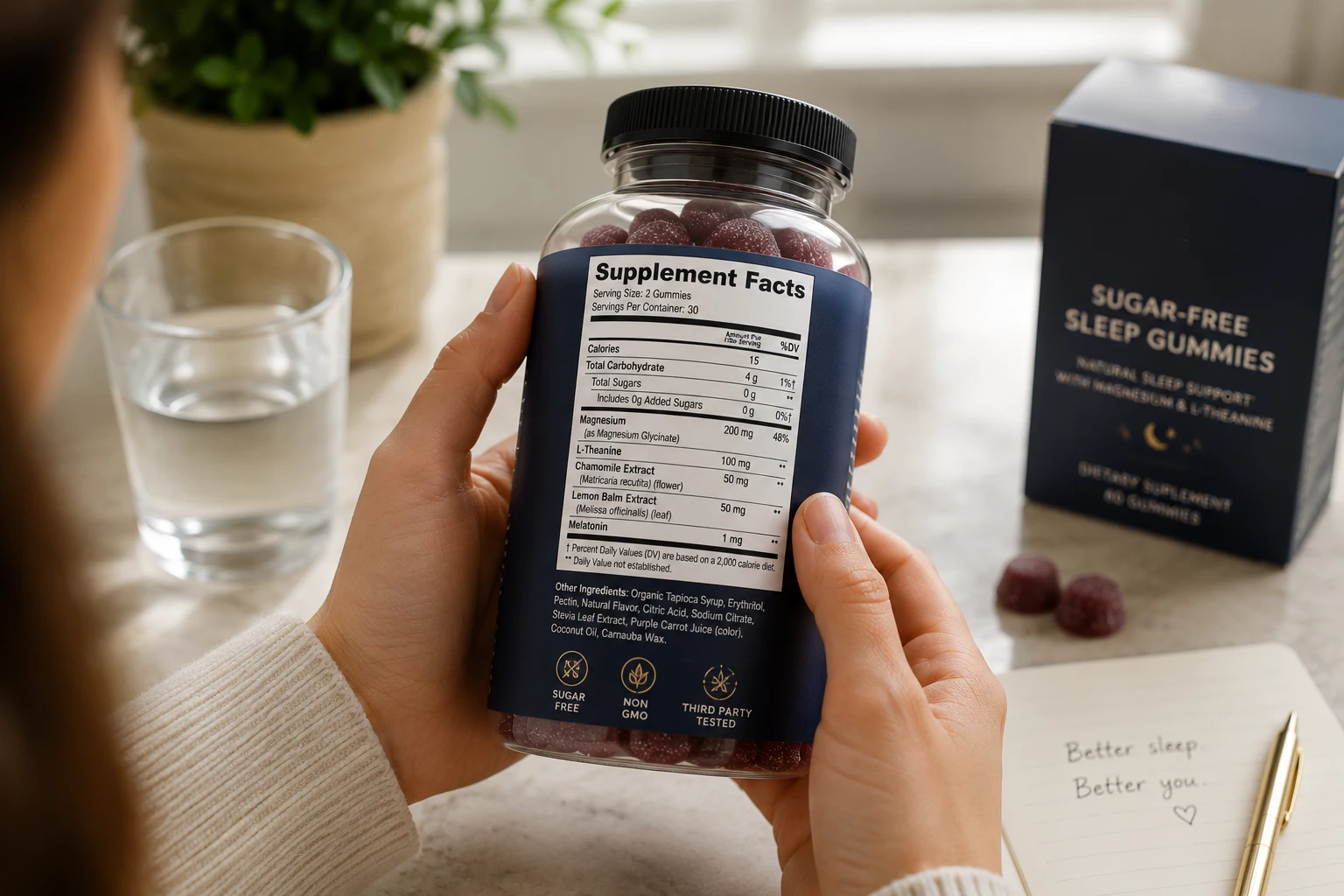
Instead, use the following checklist.
1. Look Beyond the Front Label
Marketing claims should never replace the Supplement Facts panel.
Check:
- Active ingredients
- Amount per serving
- Number of gummies required
- Added botanicals
- Sweetener type
A product with meaningful ingredient doses is generally more valuable than one with dozens of trendy ingredients included in tiny amounts.
2. Prefer Transparent Ingredient Labels
Quality manufacturers clearly identify:
- Ingredient forms (for example, magnesium glycinate instead of simply “magnesium”)
- Standardized botanical extracts where applicable
- Total active amount per serving
Avoid products that hide proprietary blends without disclosing ingredient quantities.
3. Look for Third-Party Testing
Independent testing helps verify that a supplement contains what its label claims and is screened for contaminants.
While certification standards vary, transparency about manufacturing practices is a positive quality indicator.
For more guidance, read our article on How to Read a Supplement COA: A Buyer’s Trust Checklist.
4. Match the Formula to Your Sleep Goals
Different ingredients may suit different situations.
| Sleep Goal | Ingredients Often Used |
|---|---|
| Evening relaxation | Magnesium glycinate, L-theanine |
| Stress management | Magnesium, lemon balm |
| Bedtime routine support | Chamomile, apigenin |
| Melatonin-free preference | Magnesium, L-theanine, botanicals |
Choosing a formula that matches your needs is usually more important than choosing between sugar-free and regular gummies.
Bottom Line
For most adults, sugar-free sleep gummies work just as well as regular gummies when they contain the same effective ingredients at similar doses.
The biggest differences involve nutrition and personal preference—not sleep performance.
Sugar-free options may be particularly appealing if you:
- Want to reduce added sugar
- Follow a ketogenic or lower-carbohydrate eating pattern
- Take a sleep supplement regularly
- Prefer cleaner ingredient profiles
Regardless of which type you choose, prioritize products that provide evidence-based ingredients, transparent labeling, and third-party quality testing.
If you’re exploring natural ways to improve sleep without relying on melatonin, building a consistent bedtime routine alongside a well-formulated supplement is likely to have a greater impact than choosing between sugar and sugar-free alone.
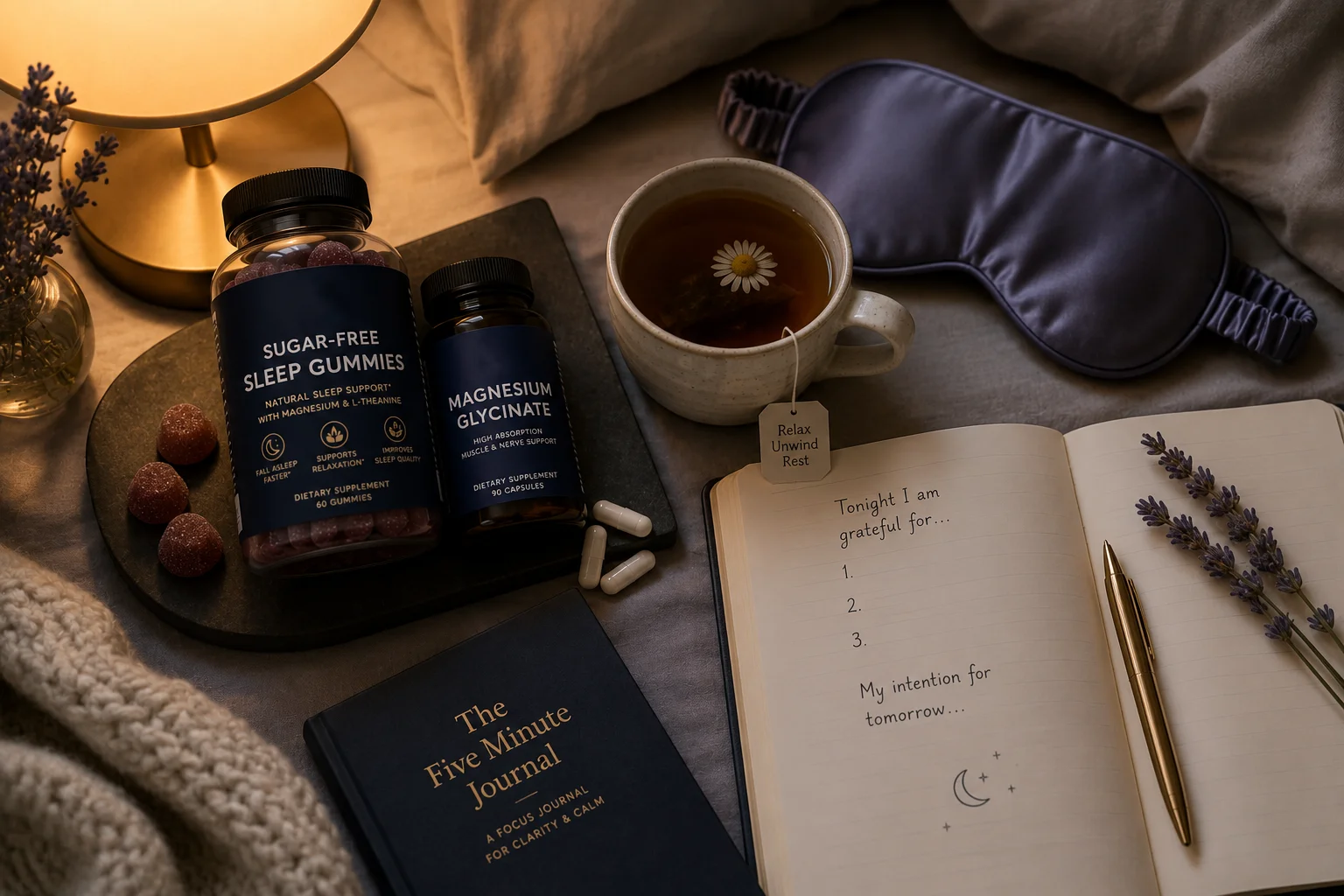
At TideRest, we believe effective sleep support starts with evidence-based ingredients—not unnecessary sugar or exaggerated claims.
Our educational resources focus on helping you understand how ingredients like magnesium glycinate, L-theanine, and other non-melatonin options may support healthy sleep, so you can choose supplements with confidence.
Explore more:
- Magnesium Glycinate for Sleep: Dosage, Timing & What Science Says
- Sleep Supplements Without Melatonin: 5 Evidence-Based Options
- Low-Dose Melatonin (0.3 mg): Why Sleep Researchers Say Less Is More
 FAQ
FAQ
 References
- National Institutes of Health Office of Dietary Supplements. Magnesium Fact Sheet for Health Professionals.
- American Diabetes Association. Nutrition guidance and sugar substitutes.
- International Food Information Council (IFIC). Low- and no-calorie sweeteners overview.
- Sleep Foundation. Magnesium and sleep.
- Peer-reviewed studies on magnesium, L-theanine, and sleep quality.
 Additional Compliance Note
Medical Disclaimer: This article is for educational purposes only and should not be interpreted as medical advice. Dietary supplements are not intended to diagnose, treat, cure, or prevent any disease. If you are pregnant, breastfeeding, under 18 years of age, have kidney disease, diabetes, or take prescription medications, consult a qualified healthcare professional before starting any new supplement. Individual responses to sleep supplements vary, and improving sleep hygiene remains an essential part of long-term sleep health.