
The Best Mouth Tape for Beards: 5 Adhesives That Actually Stick
Introduction
Most mouth tape fails on beards because traditional adhesives are designed for smooth skin — not uneven facial hair.
For people with:
- stubble
- mustaches
- short beards
- full facial hair
the wrong tape usually:
- peels off overnight
- loses grip from beard oil
- feels uncomfortable
- painfully pulls facial hair in the morning
The best mouth tape for beard users uses flexible, breathable adhesives that maintain stability without excessive pulling.
This guide explains:
- which adhesive systems work best on facial hair
- how beard-friendly mouth tape differs from regular tape
- which designs reduce beard interference
- how to improve overnight hold
- what to look for before buying
Table of Contents
- Why Most Mouth Tape Fails on Beards
- What Makes Mouth Tape Beard-Friendly
- Quick Comparison: Which Adhesive Works Best?
- 5 Adhesive Types That Actually Stick
- The Best Mouth Tape Shapes for Facial Hair
- How to Apply Mouth Tape With a Beard
- Common Reasons Beard Mouth Tape Fails
- How to Remove Mouth Tape Without Pulling Beard Hair
- Why TideRest Uses a Hybrid Flexible Adhesive System
- Final Verdict
- FAQ
Why Most Mouth Tape Fails on Beards
Facial hair creates an uneven surface that weakens adhesive contact.
Traditional mouth tape performs best on:
- smooth skin
- oil-free surfaces
- flat pressure zones
Beards interfere with all three.
Common Reasons Beard Mouth Tape Fails
Beard Oil & Moisture
Natural facial oils reduce adhesive grip overnight.
Thick Hair Density
Dense facial hair limits direct skin contact.
Rigid Adhesive Materials
Some aggressive tapes either:
- fail quickly
- or stick too aggressively and pull beard hair painfully
Excessive Tape Surface Area
Oversized tape creates more beard interference and edge lifting.
What Makes Mouth Tape Beard-Friendly
The best beard friendly mouth tape balances:
- flexibility
- comfort
- breathability
- overnight stability
Look for these features:
| Feature | Why It Matters |
|---|---|
| Flexible adhesive | Adapts to uneven facial hair |
| Breathable material | Reduces irritation |
| Moderate adhesion | Minimizes beard pulling |
| Moisture resistance | Improves overnight hold |
| Smaller contact zones | Reduces edge peeling |
Quick Comparison: Which Adhesive Works Best for Beards?
| Adhesive Type | Best For | Strengths | Weaknesses |
|---|---|---|---|
| Flexible Acrylic | Stubble / Short beards | Strong hold, moisture resistant | Less ideal for thick full beards |
| Silicone-Based | Sensitive skin / Medium beards | Gentle removal, flexible comfort | Can loosen in humidity |
| Hydrocolloid Edge | Thick full beards | Excellent edge stability | Higher cost |
| Cloth Hybrid | Side sleepers | Soft feel, flexible movement | Can absorb moisture |
| Micro-Porous Medical | Minimal facial hair | Lightweight and breathable | Lower overnight hold |

5 Adhesive Types That Actually Stick
1. Flexible Acrylic Adhesives
Flexible acrylic systems are often the most reliable overall option for short beards and stubble.
Why they work:
- strong overnight stability
- better sweat resistance
- flexible movement adaptation
Best for:
- light facial hair
- short beards
- trimmed mustaches
Potential downside:
- reduced effectiveness on very dense full beards
2. Silicone-Based Adhesives
Silicone-based adhesives prioritize comfort and gentler removal.
Advantages:
- less beard pulling
- softer feel
- better for sensitive skin
Best for:
- medium beards
- irritation-prone skin
- beginners
Potential downside:
- lower humidity resistance
3. Hydrocolloid Edge Adhesives
Hydrocolloid-style perimeter adhesion works around beard density instead of directly through thick hair.
Advantages:
- improved edge stability
- excellent performance on coarse beards
- reduced center lifting
Best for:
- thick full beards
- coarse facial hair
Potential downside:
- more expensive manufacturing
4. Cloth Hybrid Adhesives
Cloth-backed hybrid systems combine flexible fabric with moderate-strength adhesive layers.
Advantages:
- softer overnight feel
- improved flexibility
- better movement comfort
Best for:
- side sleepers
- users sensitive to rigid tape
Potential downside:
- moisture absorption
5. Micro-Porous Medical Adhesives
Micro-porous tape uses lightweight breathable adhesive structures.
Advantages:
- breathable
- lightweight
- customizable
Best for:
- minimal facial hair
- patch-style taping
Potential downside:
- weaker overnight stability
The Best Mouth Tape Shapes for Facial Hair
Adhesive matters — but tape shape matters too.
Some designs reduce beard interference significantly.
Vertical Strip Design
A vertical strip centered over the lips often works best for facial hair users.
Benefits:
- smaller beard contact area
- less edge peeling
- reduced facial hair pulling
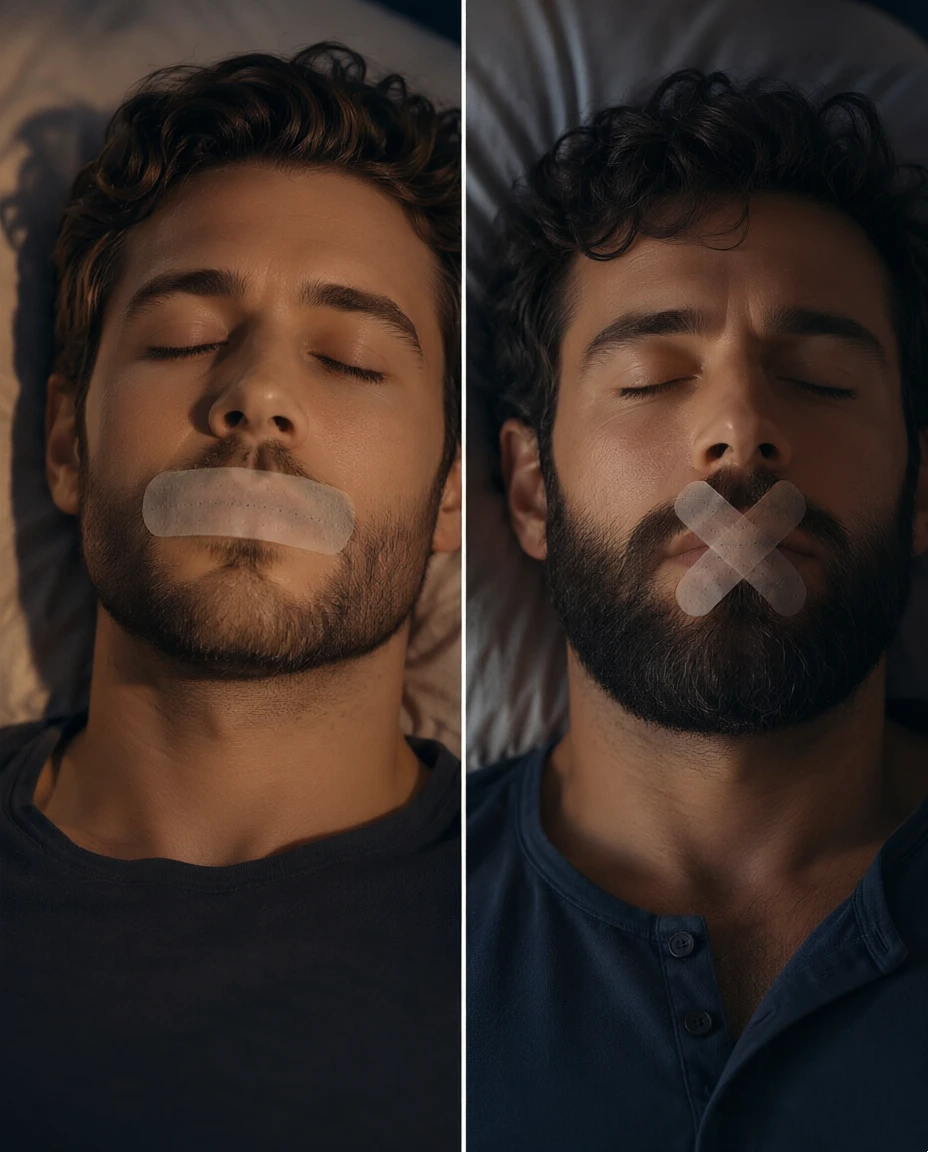
X-Shape Mouth Tape
X-shaped tape distributes pressure across multiple smaller contact points.
Benefits:
- improved flexibility
- better movement adaptation
- reduced overnight lifting
Ventilated Mouth Tape
Some beard users prefer:
- center vents
- breathable openings
- reduced full-seal pressure
This can improve comfort for beginners.
How to Apply Mouth Tape With a Beard
Application technique matters almost as much as the adhesive itself.
Step 1: Clean the Area
Wash away:
- beard oil
- moisturizer
- sweat residue
Dry thoroughly before application.
Step 2: Trim Only if Necessary
Most users do not need to shave.
However, trimming excess hair directly around the lips may improve adhesion.
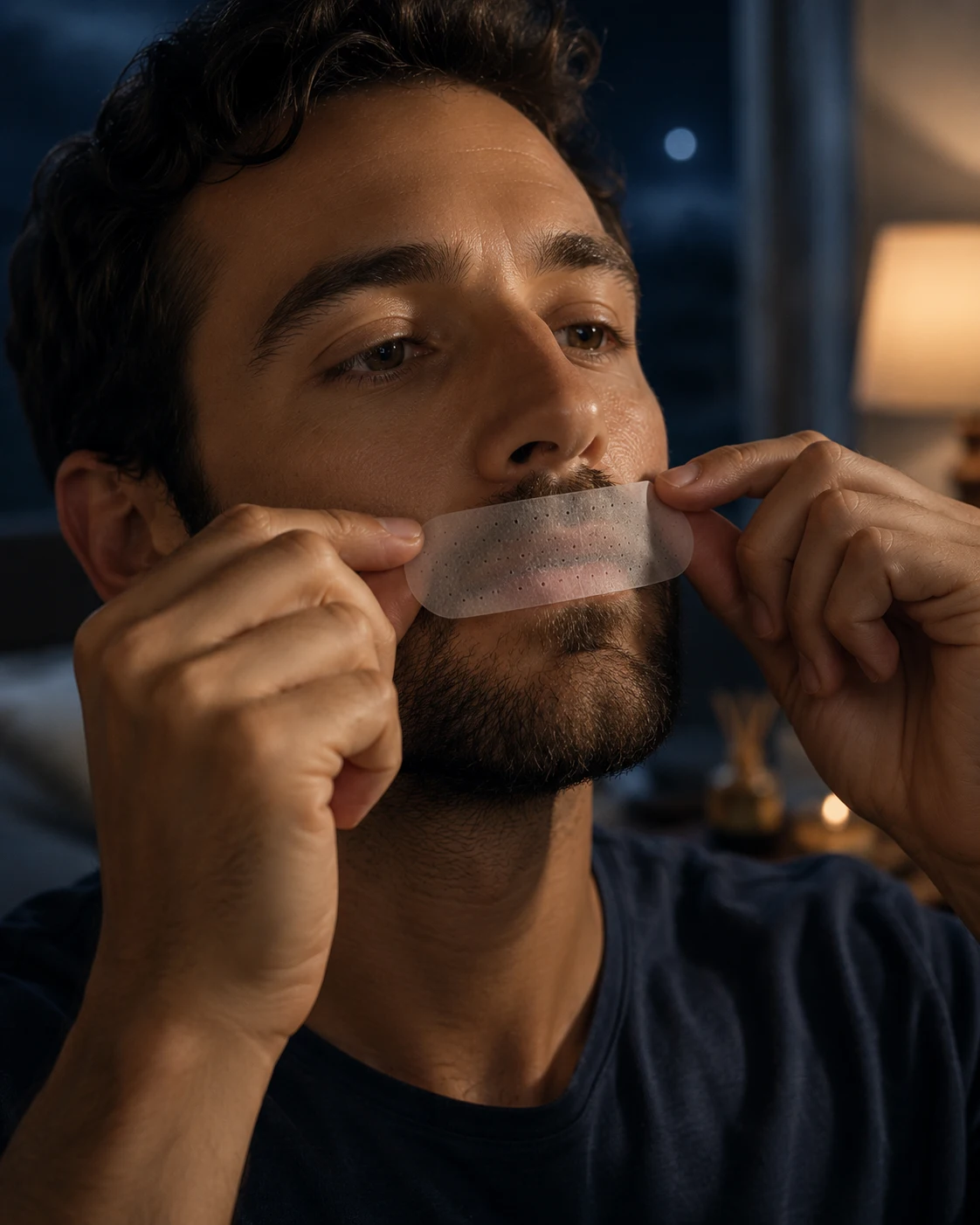
Step 3: Warm the Adhesive
Press gently for 10–15 seconds.
Body heat improves adhesive activation.
Step 4: Avoid Stretching the Tape
Overstretching increases overnight peeling.
Step 5: Test Before Overnight Use
Start with:
- short daytime sessions
- 20–30 minute wear periods
This helps identify discomfort early.
Common Reasons Beard Mouth Tape Fails
Many users accidentally reduce tape performance.
| Mistake | Result |
|---|---|
| Applying after beard oil | Tape peels quickly |
| Applying on damp skin | Weak adhesion |
| Using oversized tape | More beard interference |
| Choosing rigid tape | Poor flexibility |
| Removing aggressively | Beard irritation |
How to Remove Mouth Tape Without Pulling Beard Hair
Morning removal technique matters.
To reduce beard pulling:
Use Warm Water
Moisture helps loosen adhesive tension.
Peel Slowly From The Edges
Never rip tape off quickly.
Hold Facial Hair Down Gently
This reduces hair tension during removal.
Avoid Overly Aggressive Adhesives
Stronger does not always mean better for facial hair.
Why TideRest Uses a Hybrid Flexible Adhesive System
Most beard users need two things simultaneously:
- overnight stability
- gentle morning removal
Traditional aggressive adhesives usually fail to balance both.
That’s why TideRest uses a hybrid flexible adhesive system designed specifically for uneven facial hair surfaces.
The system combines:
- the overnight hold of flexible acrylic technology
- the comfort-focused feel of silicone-style adhesion
- breathable low-tension materials for beard compatibility
This approach helps reduce:
- beard pulling
- edge peeling
- moisture-related lifting
- overnight discomfort
Especially for:
- stubble
- mustaches
- short beards
- uneven facial hair growth
Instead of maximizing stickiness alone, the goal is balanced overnight performance with skin-friendly comfort.
Final Verdict
The best mouth tape for beard users is not necessarily the strongest adhesive — it is the adhesive that balances:
- flexibility
- comfort
- breathability
- overnight stability
For most facial hair users:
- flexible acrylic systems perform best overall
- silicone-based systems maximize comfort
- X-shape and vertical-strip designs reduce beard interference
The biggest improvements usually come from:
- choosing beard-friendly materials
- reducing beard oil before bed
- using the correct tape shape
- applying the tape properly
For many users, those changes make the difference between tape that falls off in an hour and tape that stays comfortable all night.
Tired of Mouth Tape Pulling Your Beard Every Morning?
Explore TideRest’s beard-friendly sleep tape designed for:
- flexible overnight hold
- gentler morning removal
- breathable nighttime comfort
- reduced beard interference
→ Explore Beard-Friendly Sleep Tape
 FAQ Section
 References & Scientific Sources
- National Institutes of Health — Nasal Breathing & Sleep Physiology
- Sleep Foundation — Mouth Taping Overview
- Cleveland Clinic — Mouth Breathing and Sleep Health
- American Academy of Sleep Medicine — Snoring & Sleep Apnea Guidance
 Additional Compliance Note
Mouth tape products are not intended to diagnose, treat, cure, or prevent any disease. Users with breathing disorders or sleep apnea should consult a healthcare professional before use.