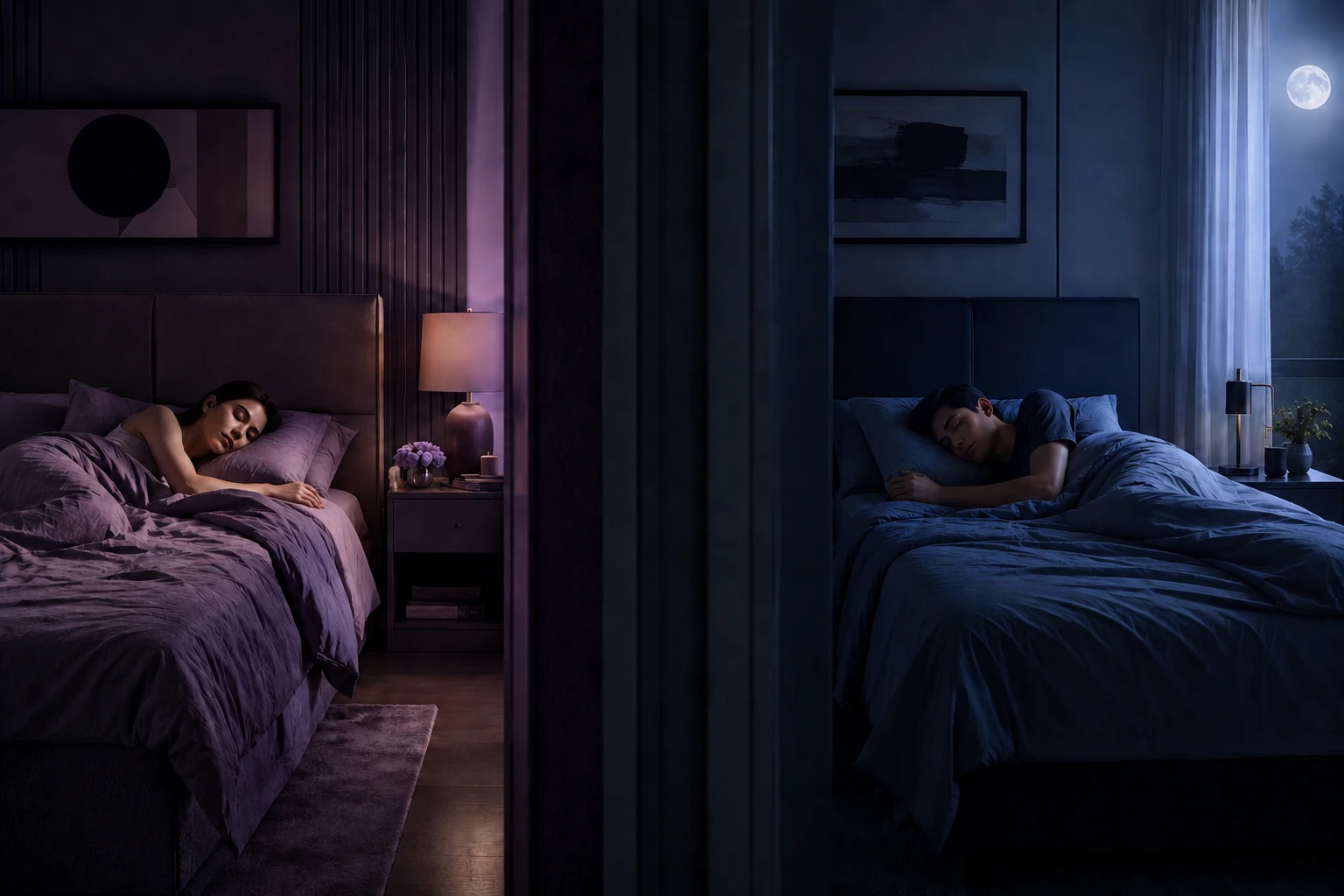
Sleep Divorce: Why 1 in 3 Couples Now Sleep Apart (and Sleep Better)
Introduction
For some couples, “sleep divorce” starts after months of midnight nudges, blanket battles, or listening to a partner snore like distant thunder at 2 AM.
The goal is usually not emotional distance — it’s better sleep.
A growing number of couples are choosing to sleep separately to reduce nighttime disruptions, improve recovery, and protect relationship quality. What once carried social stigma is increasingly viewed as a practical sleep-health strategy.
And surprisingly, many couples report feeling closer after finally getting enough rest.
This guide explains:
- what sleep divorce means
- why more couples are trying it
- the science behind partner sleep disruption
- the potential benefits and drawbacks
- how to make it work without harming intimacy
What Is a Sleep Divorce?
A sleep divorce refers to couples intentionally sleeping separately to improve sleep quality.
This can involve:
- separate beds
- separate bedrooms
- split sleep schedules
- occasional solo sleeping nights
Importantly, sleep divorce is usually not about avoiding a partner emotionally. In many cases, it is simply an attempt to reduce chronic sleep disruption.
Common reasons couples sleep separately include:
- loud snoring
- insomnia
- restless movement
- different sleep schedules
- CPAP use
- temperature disagreements
- light sleeping
- frequent nighttime waking
Why Are More Couples Sleeping Separately?
According to a survey from the American Academy of Sleep Medicine (AASM), more than one-third of Americans occasionally or consistently choose to sleep in another bed to accommodate a bed partner.
Sleep experts say modern life has amplified sleep incompatibility between partners.
Increased Sleep Awareness
People are becoming more aware of how poor sleep affects:
- mental health
- stress resilience
- hormones
- productivity
- emotional regulation
As sleep becomes a major wellness priority, couples are more willing to optimize their sleep environment — even if that means sleeping separately.
Different Sleep Schedules
Modern lifestyles often create mismatched sleep patterns.
One partner may naturally fall asleep at:
- 9:30 PM
while the other prefers:
- midnight or later
Remote work, shift work, parenting, and screen-heavy routines can all increase nighttime disruption.
Snoring and Sleep Disorders
Snoring remains one of the most common reasons couples stop sharing a bed.
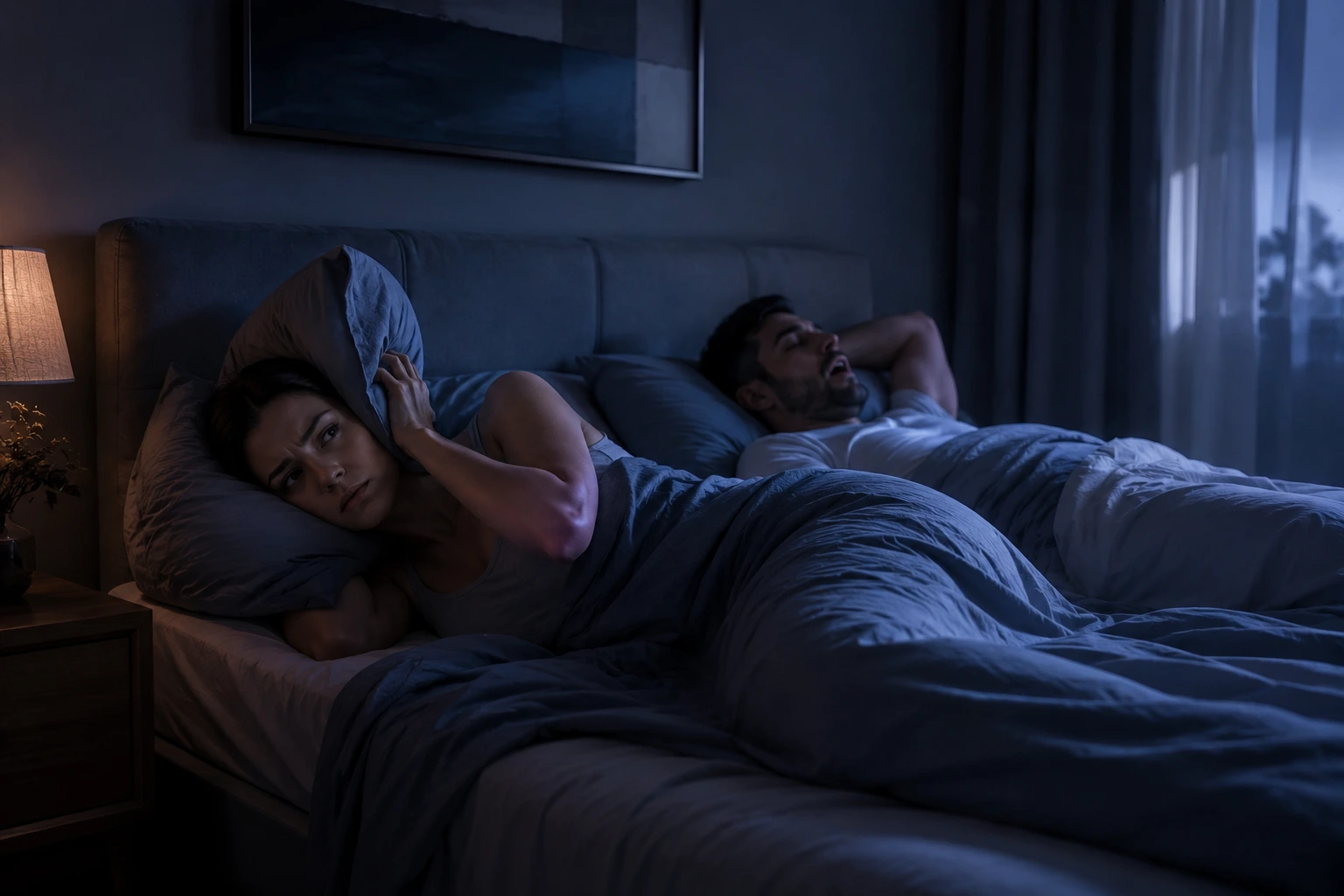
Conditions like:
- sleep apnea
- insomnia
- chronic pain
- nighttime anxiety
can repeatedly interrupt sleep for both partners.
The Rise of “Sleepmaxxing”
The broader sleep optimization movement — sometimes called “sleepmaxxing” — has normalized the idea that better sleep is a health investment, not a luxury.
People are increasingly focused on:
- sleep recovery
- circadian rhythm health
- nervous system regulation
- personalized sleep environments
This cultural shift has made sleep divorce feel less taboo and more practical.
Sleep Compatibility Matters More Than Sleeping Together
Some couples naturally have highly compatible sleep habits.
Others have dramatically different needs around:
- noise
- movement
- room temperature
- light exposure
- bedtime timing
Relationship experts increasingly view “sleep compatibility” as a legitimate health factor rather than a reflection of emotional closeness.
In other words:
sharing a mattress is not necessarily the same thing as sharing a healthy sleep routine.
How Partner Sleep Disruption Affects Health
Sleeping next to another person is not always restful.
Research suggests partner-related disturbances may reduce:
- total sleep time
- REM sleep quality
- sleep efficiency
Common disruptions include:
- snoring
- tossing and turning
- alarms
- bathroom trips
- device use in bed
- conflicting temperature preferences
Poor sleep is associated with:
- elevated cortisol
- irritability
- emotional reactivity
- lower stress tolerance
Ironically, some relationship conflict may be driven more by exhaustion than by the relationship itself.
Sleep Divorce Benefits
For some couples, sleeping separately can improve both sleep quality and daytime relationship satisfaction.
Better Sleep Quality
The biggest benefit is fewer interruptions during the night.
Many couples report:
- falling asleep faster
- waking less often
- deeper sleep
- improved daytime energy
Reduced Resentment
Repeated sleep disruption can quietly build frustration over time.
Better sleep may improve:
- patience
- emotional regulation
- communication
- conflict recovery
Some couples discover they actually get along better after improving sleep quality.
Improved Physical Recovery
Consistent deep sleep supports:
- immune health
- muscle recovery
- stress resilience
- cognitive performance
For light sleepers or people with insomnia, uninterrupted sleep can significantly improve overall wellbeing.
Personalized Sleep Environments
Separate sleeping spaces allow each partner to customize:
- mattress firmness
- bedding temperature
- sound environment
- lighting conditions
- nighttime routines
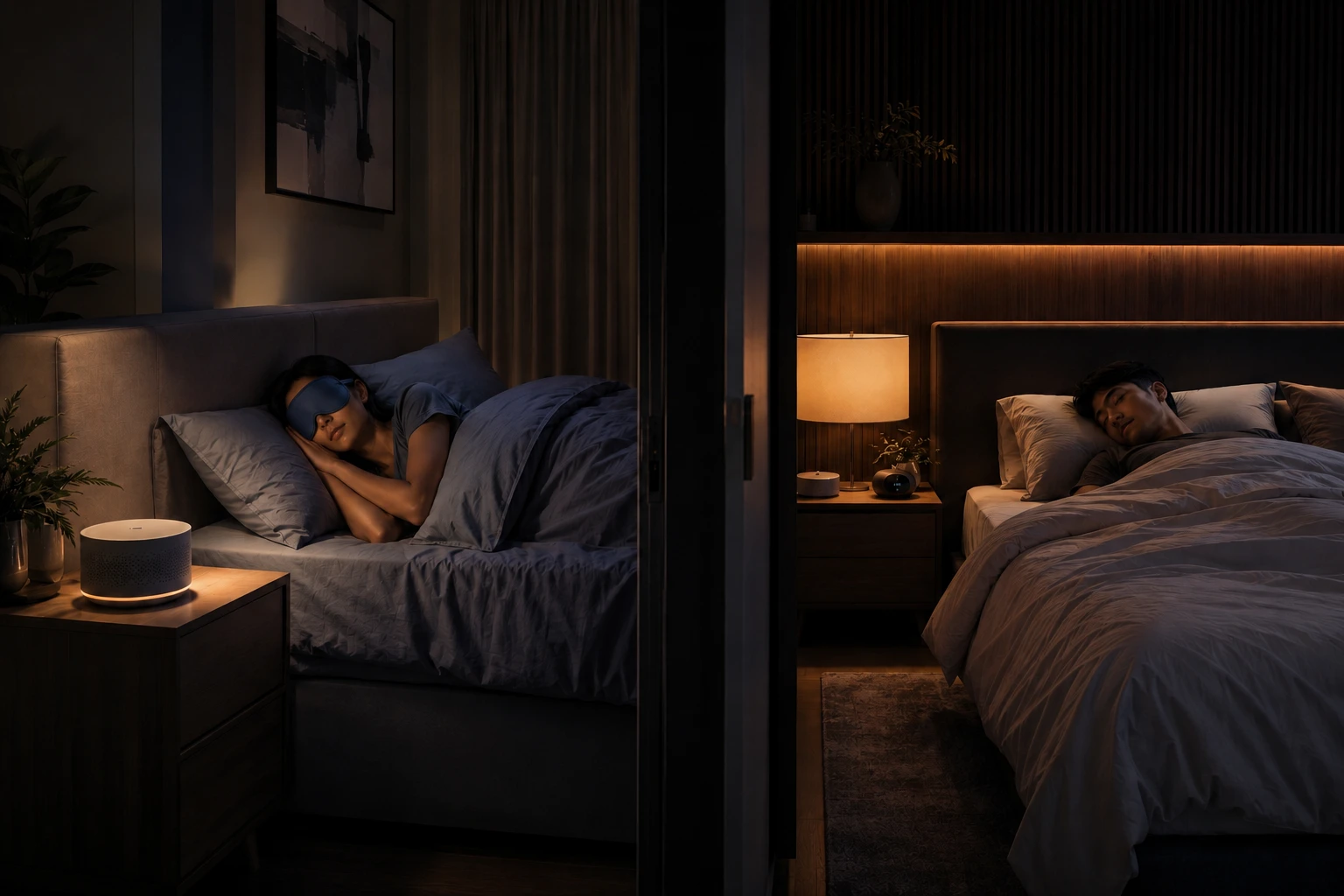
One partner may prefer:
- white noise
while the other wants:
- complete silence
Separate setups reduce constant compromise.
Potential Drawbacks of Sleep Divorce
Sleep divorce is not automatically the right solution for every couple.
Some couples experience challenges related to:
- intimacy
- emotional connection
- communication
- social expectations
Reduced Physical Closeness
For many couples, bedtime is an important bonding ritual.
Sleeping separately may reduce:
- cuddling
- spontaneous affection
- late-night conversations
This is why intentional connection matters.
Misunderstandings or Emotional Distance
If not discussed openly, one partner may interpret separate sleeping as rejection.
The healthiest sleep divorce arrangements are collaborative and mutual — not avoidance-based.
Social Stigma
Some people still associate separate bedrooms with relationship failure.
In reality, healthy relationships depend more on:
- communication
- emotional support
- trust
- shared connection
than whether two people sleep in the same bed every night.
How to Make Sleep Divorce Work
Successful sleep divorce arrangements are usually flexible, intentional, and openly communicated.
Treat Sleep as a Health Issue
Frame the conversation around:
- recovery
- stress reduction
- sleep quality
- overall wellbeing
—not blame.
Separate Sleep From Intimacy
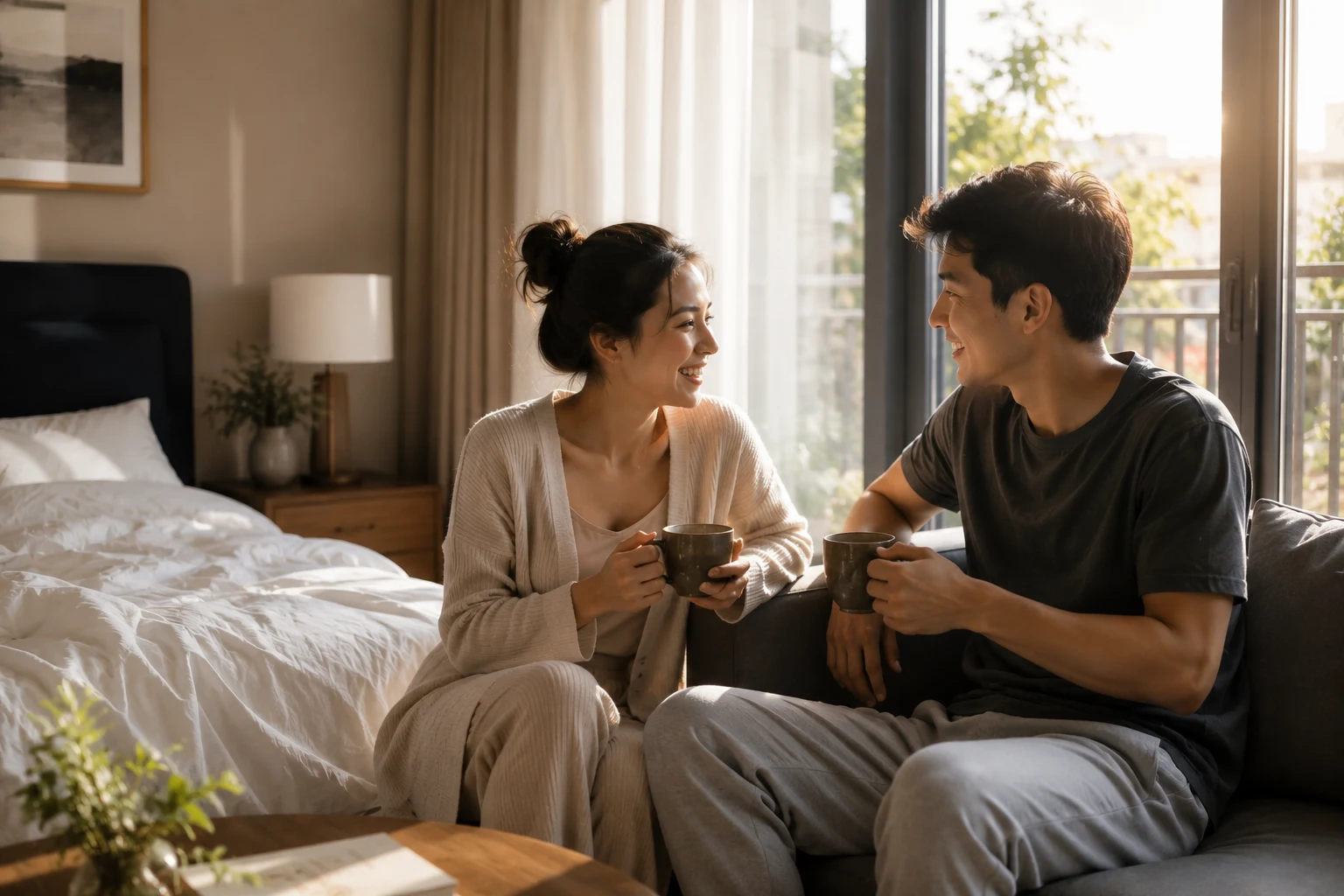
Many couples maintain closeness through:
- shared bedtime routines
- cuddling before sleep
- morning coffee rituals
- intentional quality time
Sleeping separately does not automatically reduce intimacy.
Try a Partial Sleep Divorce First
Some couples only sleep separately:
- during stressful weeks
- before important workdays
- during illness
- when snoring becomes severe
It does not have to be permanent or all-or-nothing.
Optimize Both Sleep Environments
Creating a better sleep setup can make a major difference.
Helpful sleep tools may include:
- white noise machines
- blackout sleep masks
- cooling bedding
- weighted blankets
- sunrise alarm clocks
The goal is restorative sleep — not emotional distance.
Is Sleep Divorce Healthy for Relationships?
For many couples, yes.
Research increasingly suggests that relationship quality depends more on:
- emotional responsiveness
- communication
- daytime connection
- mutual support
than whether couples physically sleep beside each other every night.
In some cases, improving sleep quality may actually improve relationship satisfaction.
The healthiest approach is individualized rather than socially expected.
When Sleep Divorce May Not Be Enough
If sleep disruption is severe or persistent, an underlying sleep disorder may need medical attention.
Consider speaking with a healthcare professional if symptoms include:
- loud chronic snoring
- gasping during sleep
- excessive daytime fatigue
- insomnia lasting several weeks
- suspected sleep apnea
Treating the root sleep issue may help couples sleep together more comfortably.
Final Verdict
Sometimes the most romantic thing you can do for a relationship is let both people finally get a good night’s sleep.
Sleep divorce is becoming more common because many couples are realizing that better rest can lead to:
- less resentment
- better moods
- healthier communication
- improved overall wellbeing
The goal is not distance.
The goal is waking up feeling like yourselves again.
Build a Better Sleep Environment Together
Explore evidence-based sleep tools designed to support deeper, less disrupted sleep:
- white noise machines
- blackout sleep masks
- weighted blankets
- calming nighttime routines
Related Guides
- Ultimate Guide to Natural Sleep Aids
- Sleepmaxxing 101
- White Noise vs Pink Noise vs Brown Noise
- The Perfect Nightly Routine
 FAQ Section
 Suggested Scientific References
- American Academy of Sleep Medicine (AASM)
- National Sleep Foundation
- NIH Sleep Health Resources
- Sleep Foundation — Relationship & Sleep Research
- Peer-reviewed studies on partner sleep disruption and sleep quality
 Additional Note
Good sleep and healthy relationships are deeply connected. Sleep strategies should support both physical recovery and emotional wellbeing.