

Magnesium Glycinate for Sleep: Dosage, Timing & What Science Says
Introduction
Magnesium glycinate may help improve sleep quality by supporting relaxation, reducing stress, and regulating key neurotransmitters involved in sleep.
According to the National Institutes of Health (NIH), magnesium plays an essential role in nervous system function and sleep regulation.
If you’re struggling to fall asleep or stay asleep, this guide explains exactly how magnesium glycinate works, the right dosage, the best timing, and what scientific evidence says.
What Is Magnesium Glycinate?
Magnesium glycinate is a form of magnesium bound to glycine, an amino acid that promotes calmness and relaxation.
It is commonly used for sleep because it is:
- Highly absorbable
- Gentle on digestion
- Associated with calming effects
👉 This makes it one of the most recommended magnesium forms for sleep support.
How Magnesium Glycinate Helps You Sleep
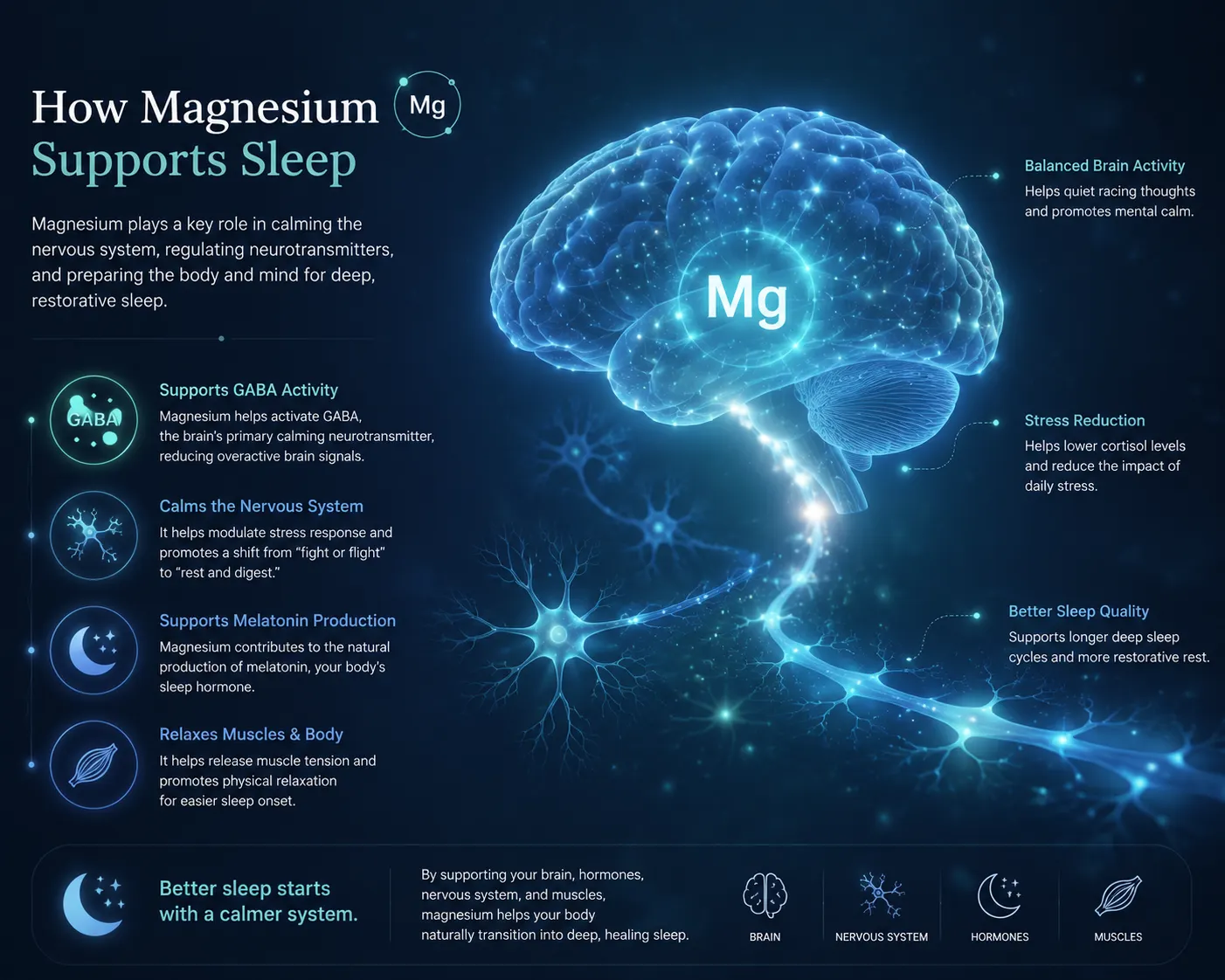
Magnesium supports sleep by regulating the nervous system and promoting relaxation.
Nervous System Relaxation
Magnesium activates the parasympathetic nervous system, helping your body transition into a relaxed state.
Supports GABA Activity
Magnesium helps regulate GABA, a neurotransmitter that reduces brain activity and promotes sleep.
Reduces Stress Hormones
Magnesium may help lower cortisol levels, which are often elevated in people with poor sleep.
Many people with sleep difficulties may have suboptimal magnesium levels, and supplementation may have a more noticeable effect in these individuals.
What Does the Science Say?
Scientific research suggests that magnesium supplementation may improve sleep, especially in individuals with low magnesium levels. The effect is mild (Cohen’s d≈0.2) and varies from person to person.
A randomized controlled trial found that magnesium supplementation improved sleep efficiency, increased sleep time, and reduced insomnia symptoms in older adults (Abbasi et al., 2012; https://www.ncbi.nlm.nih.gov/pmc/articles/PMC3703169/).
According to the Sleep Foundation (https://www.sleepfoundation.org/magnesium), magnesium may help regulate melatonin and support relaxation.
The National Institutes of Health (https://ods.od.nih.gov/factsheets/Magnesium-HealthProfessional/) also notes that magnesium is involved in hundreds of biochemical processes, including those related to stress response and sleep.
👉 Overall, magnesium supports sleep indirectly by promoting relaxation rather than acting as a sedative.
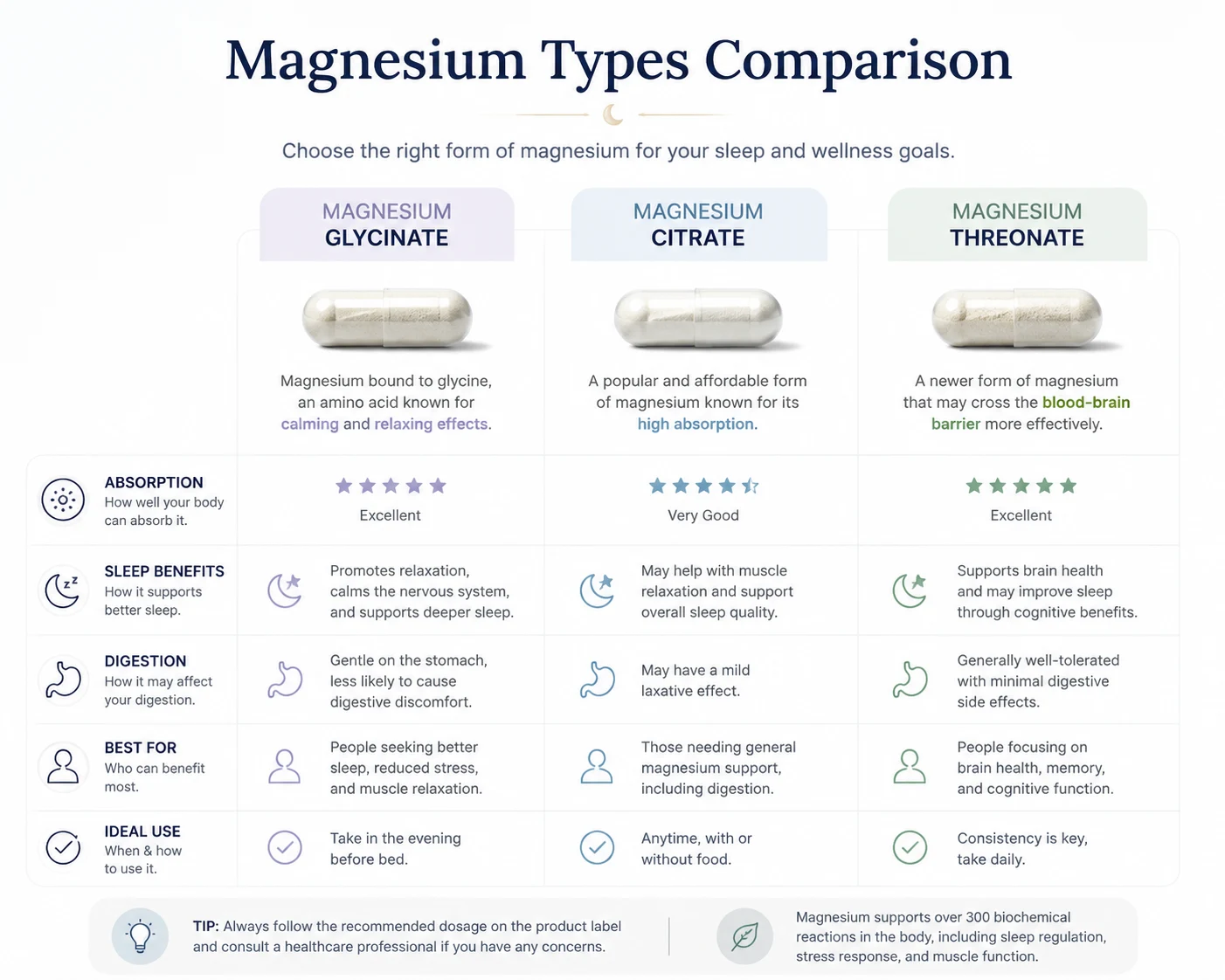
Magnesium Glycinate vs Other Forms
| Type | Best For | Notes |
|---|---|---|
| Glycinate | Sleep & anxiety | One of the best overall for sleep, high absorption, gentle on digestion |
| Citrate | Digestion | May have laxative effects, lower absorption than glycinate |
| Threonate | Brain function | Higher cost, may support cognitive function alongside sleep |
👉 Compare forms in detail:
→ Magnesium glycinate vs threonate
Magnesium Glycinate Dosage for Sleep
For most adults, the typical magnesium glycinate dosage for sleep ranges from 200 to 400 mg per day.(note: this refers to elemental magnesium; the total weight of magnesium glycinate compound is higher—e.g., 1786mg magnesium glycinate ≈ 250mg elemental magnesium).
How to Adjust Your Dose
- Start with 200 mg (elemental magnesium)
- Increase gradually if needed
- Stay within recommended Dietary Allowance (RDA) and Tolerable Upper Intake Level (UL): the UL for supplemental magnesium is 350 mg/day for adults, and the total daily intake (from food + supplements) should not exceed 420 mg/day for adults.
👉 Higher stress levels may increase magnesium needs.
⚠️ Safety Considerations
Magnesium glycinate is generally safe for most people. However, consult a healthcare professional before use if you:
- Have kidney disease or impaired kidney function
- Are taking medications such as antibiotics or osteoporosis treatments
- Have underlying medical conditions
- Are pregnant, breastfeeding, or under 18 years old (special dosage guidance is needed for these groups)
When to Take Magnesium for Sleep
Magnesium glycinate is typically taken 30 to 60 minutes before bedtime to support relaxation and sleep onset. It can be taken on an empty stomach or with a light snack; avoid taking it with a heavy meal, as this may reduce absorption.

Timing Based on Your Sleep Issue
- Trouble falling asleep → take before bed
- Night waking → take consistently each evening
- Stress-related insomnia → combine with a relaxation routine
👉 Consistency is more important than exact timing.
Who Should Consider Magnesium Glycinate?
Magnesium glycinate may be helpful if you:
- Experience stress or anxiety at night
- Have difficulty falling asleep
- Wake up frequently
- Prefer a natural alternative to melatonin
- Have suboptimal magnesium levels (e.g., those with poor diet, stress, or certain medical conditions)
👉 Explore more options:
→ /alternatives-to-melatonin
How to Choose a High-Quality Supplement
Look for:
- Chelated magnesium glycinate
- Third-party testing (to ensure no contamination with mold or heavy metals)
- Transparent labeling (clearly indicating elemental magnesium content)
- Minimal additives

We are developing a magnesium-based sleep formula designed around absorption and real-world effectiveness.
Are There Any Side Effects?
Magnesium glycinate is generally well tolerated.
Possible side effects include:
- Mild drowsiness
- Rare digestive discomfort (more likely if taken in excess of the UL)
Final Verdict
Magnesium glycinate is a well-supported, low-risk option for improving sleep, particularly for people dealing with stress or nervous system imbalance.
It works by supporting relaxation rather than forcing sleep.
Improve Your Sleep Naturally
- Best magnesium for sleep → /best-magnesium-for-sleep
- Compare magnesium types → Magnesium L-Threonate vs Glycinate: Which Is Better for Sleep?