
The Huberman Sleep Stack: Breaking Down the Viral 3-Supplement Protocol
Introduction
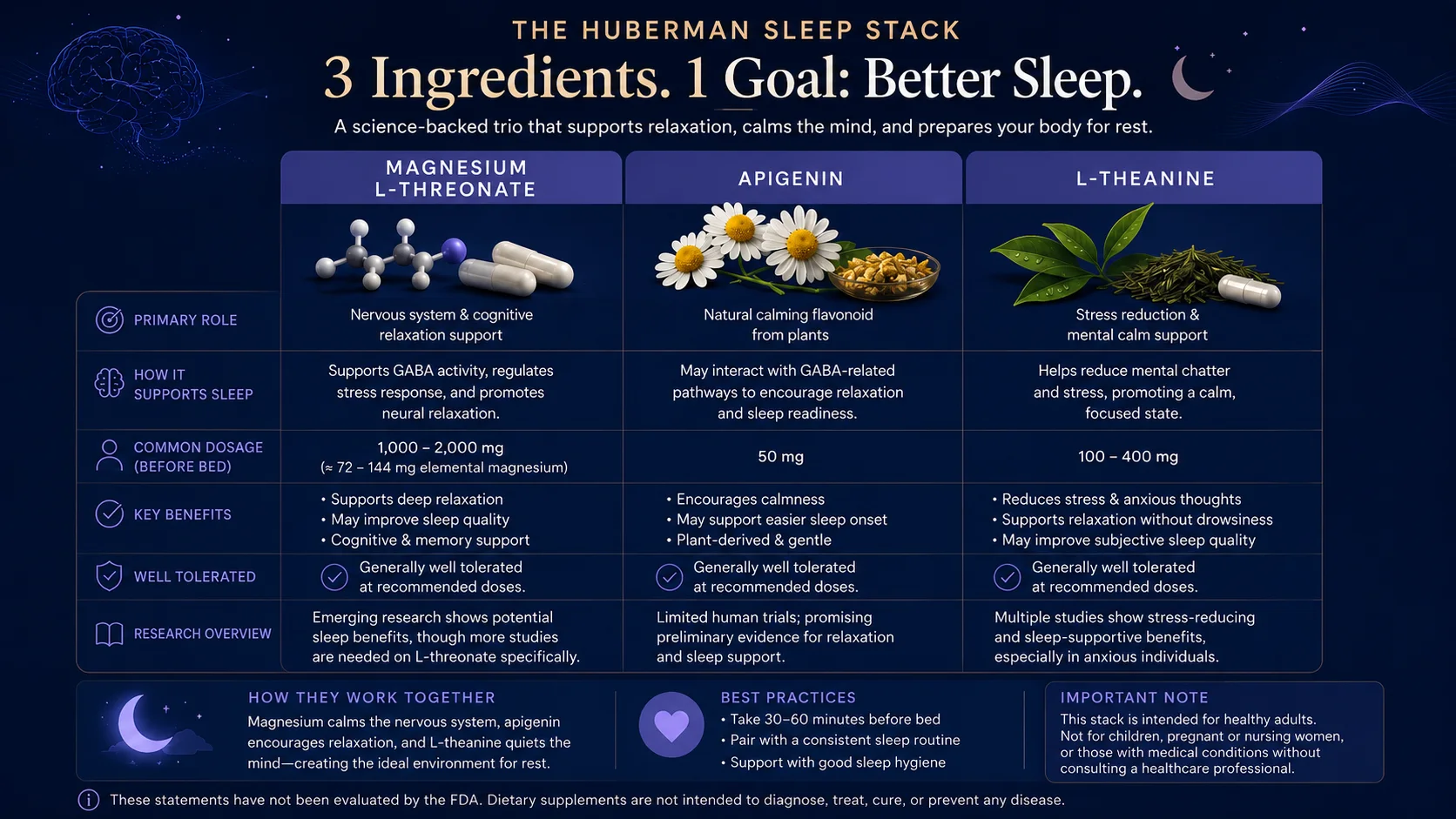
The “Huberman sleep stack” is a popular nighttime supplement routine built around three ingredients:
- magnesium L-threonate
- apigenin
- L-theanine
The protocol became widely discussed after neuroscientist and podcaster Andrew Huberman shared aspects of his personal sleep-support routine on podcasts and social media.
Unlike pharmaceutical sleep medications designed to heavily sedate the body, the Huberman sleep protocol focuses on supporting a calmer, more sleep-ready nervous system.
The stack is commonly used to support:
- nighttime relaxation
- reduced mental overstimulation
- smoother sleep onset
- calmer evening routines
- deeper overnight recovery feeling
For adults searching for non-melatonin sleep support, the Huberman sleep stack has become one of the most discussed natural nighttime protocols online.
This guide explains:
- what the Huberman sleep stack includes
- how each ingredient may support sleep
- what current scientific evidence suggests
- dosage considerations and safety guidance
- possible side effects and contraindications
- whether the stack may be worth considering for healthy adults
What Is the Huberman Sleep Stack?
The Huberman sleep stack refers to a three-supplement combination commonly associated with nighttime relaxation and recovery support.
Core Ingredients & Primary Purpose
| Ingredient | Primary Purpose |
|---|---|
| Magnesium L-threonate | Nervous system and cognitive relaxation support |
| Apigenin | Natural calming flavonoid found in chamomile and other botanicals |
| L-theanine | Stress reduction and mental calm support |
The protocol is widely regarded as a melatonin-free sleep support strategy.
Rather than forcing drowsiness directly, the stack is designed to help reduce common barriers to restful sleep, including:
- racing nighttime thoughts
- stress-related tension
- nervous system hyperarousal
- elevated evening cortisol response
- difficulty mentally “switching off”
Many users describe the goal not as feeling sedated, but as feeling:
“more mentally settled before bed.”
Why Did the Stack Become So Popular?
Several overlapping trends helped the Huberman sleep stack go viral.
1. The Rise of “Sleepmaxxing”
Online wellness communities increasingly focus on proactive sleep optimization rather than simply reacting to insomnia symptoms.
The stack fits naturally into the broader “sleepmaxxing” movement, which emphasizes:
- recovery routine optimization
- nervous system regulation
- wearable sleep tracking
- evening habit stacking
- non-pharmaceutical sleep support
2. Growing Skepticism Around Melatonin
Many adults report unwanted effects from frequent melatonin use, including:
- vivid dreams
- morning grogginess
- next-day brain fog
- inconsistent effects over time
- concerns around long-term nightly use
As a result, interest in gentler, non-melatonin sleep support has grown rapidly.
3. Podcast & Social Media Influence
Short clips discussing the stack spread widely across:
- TikTok
- YouTube
- biohacking and wellness communities
Search volume for terms like:
- “huberman sleep stack supplement”
- “magnesium threonate apigenin l-theanine”
- “huberman sleep protocol”
rose significantly alongside mainstream social media coverage.
The 3 Core Ingredients Explained
Magnesium L-Threonate
What It Is
Magnesium L-threonate is a specialized magnesium formulation developed for enhanced nervous system delivery compared to many traditional magnesium forms.
It is commonly associated with supporting:
- cognitive function
- mental calmness
- nervous system relaxation
- overall sleep quality support
Unlike magnesium citrate, magnesium L-threonate is typically chosen less for digestive support and more for neurological and cognitive relaxation benefits.
How It May Support Sleep
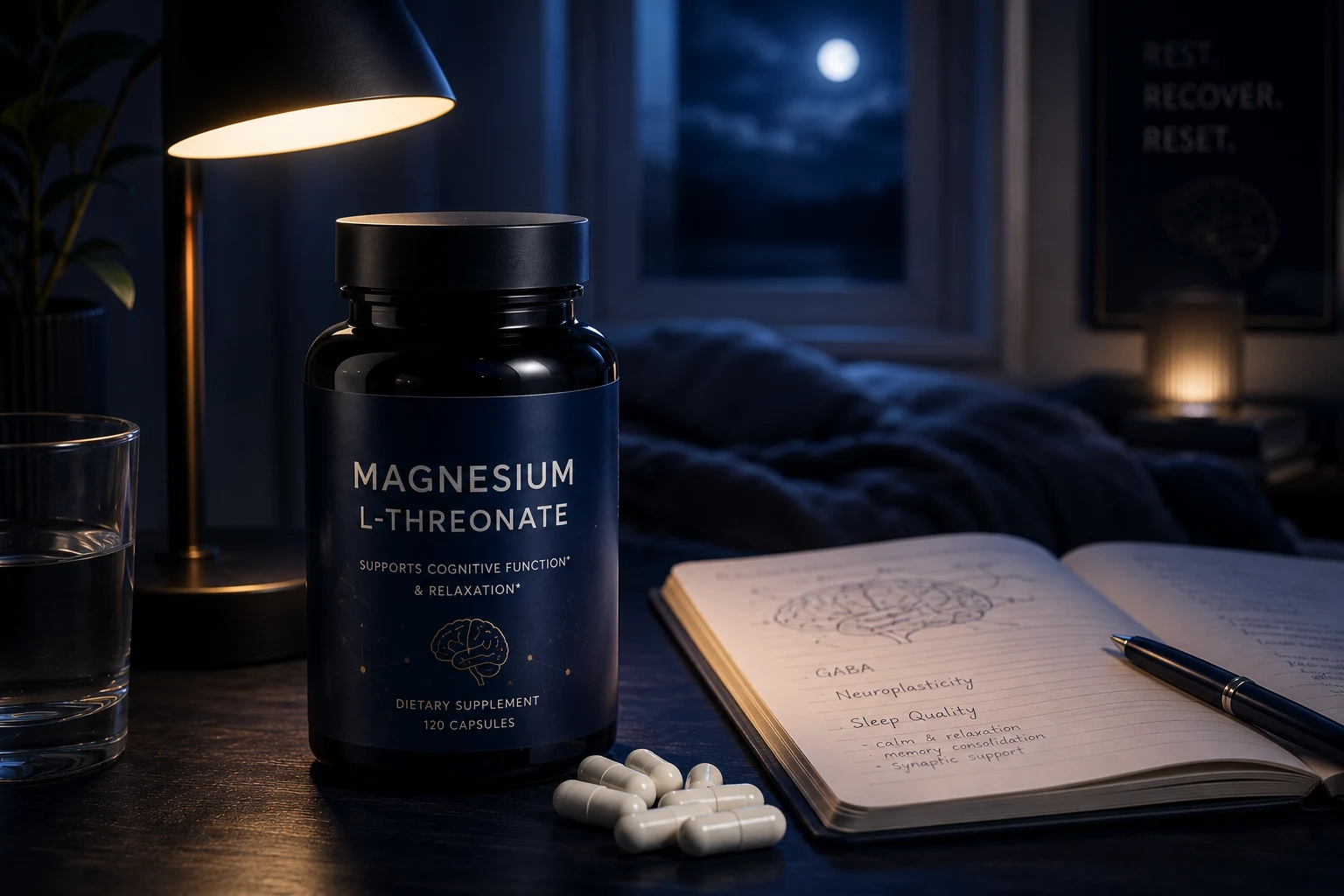
Magnesium plays an important role in regulating:
- GABA pathway activity
- nervous system balance
- stress signaling
- muscle relaxation
For adults dealing with nighttime overstimulation or difficulty mentally unwinding, magnesium may help support a calmer transition into sleep.
Some users report:
- fewer racing thoughts
- improved nighttime relaxation
- a more “settled” evening feeling
Typical Dosage
The commonly referenced Huberman-style dosage range is:
- 1,000–2,000 mg magnesium L-threonate compound
This typically provides approximately:
- 72–144 mg elemental magnesium
⚠️ Important: Magnesium supplement labels often list total compound weight rather than elemental magnesium content. Always verify the actual elemental magnesium dosage.
What Current Research Suggests
Research on magnesium and sleep support remains promising but mixed overall.
Some studies suggest magnesium supplementation may help:
- support sleep efficiency
- encourage relaxation
- reduce nighttime awakenings in certain adults
However, dedicated long-term human research specifically focused on magnesium L-threonate for sleep remains limited and evolving.
Apigenin
What Is Apigenin?
Apigenin is a naturally occurring plant flavonoid found in:
- chamomile
- parsley
- celery
- oregano
Chamomile tea’s calming reputation is partly linked to its natural apigenin content.
How Apigenin May Work
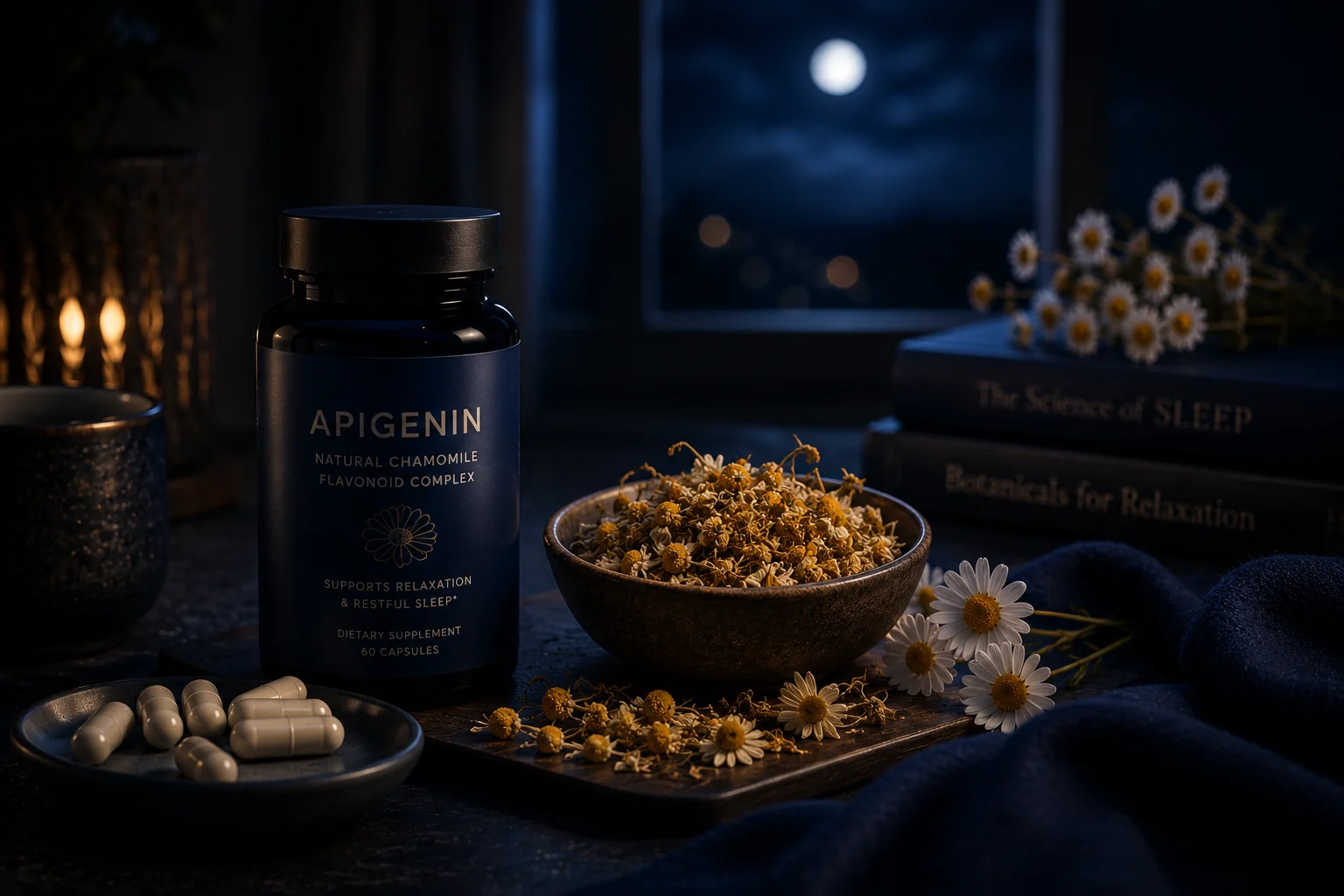
Apigenin may gently interact with GABA-related pathways associated with natural relaxation and nighttime calmness.
Because of this, it has become increasingly popular in nighttime wellness supplements and sleep-focused routines.
Many users describe apigenin as helping create a calmer nighttime atmosphere rather than causing heavy sedation.
Typical Dosage
The commonly referenced dosage in the Huberman sleep protocol is:
- 50 mg apigenin before bedtime
Potential Benefits
Anecdotal user reports commonly include:
- calmer nighttime mindset
- smoother transition into sleep
- reduced repetitive nighttime thoughts
- improved evening relaxation
High-quality long-term clinical evidence for standalone apigenin sleep benefits remains limited.
L-Theanine
What Is L-Theanine?
L-theanine is a naturally occurring amino acid most abundant in green tea.
It is widely studied for:
- stress reduction
- relaxation support
- calm mental focus
- nervous system balance
How It May Help Sleep
L-theanine does not typically function as a direct sedative.
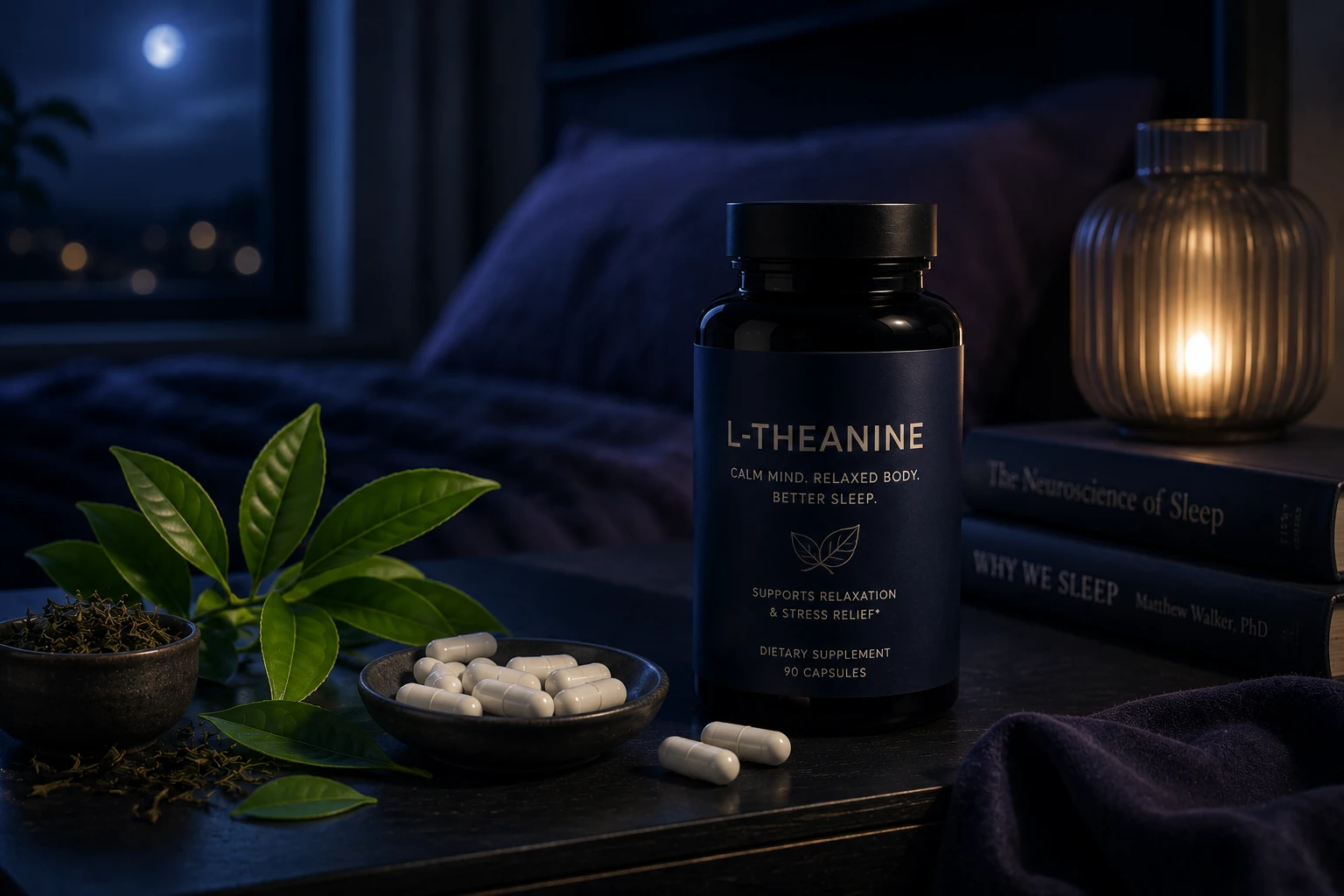
Instead, it may help reduce:
- excessive cognitive hyperactivity
- anxious mental looping
- stress-related nervous system activation
Many users describe the effect as:
“feeling mentally quieter without feeling drugged.”
This is one reason L-theanine has become popular among adults seeking calmer nighttime recovery without strong next-day drowsiness.
Typical Dosage
Common bedtime dosage range:
- 100–400 mg L-theanine
Research Overview
Published research suggests L-theanine may:
- support subjective sleep quality
- reduce perceived stress
- encourage baseline relaxation
The strongest evidence currently centers around stress reduction and relaxation support rather than direct sedative effects.
Does the Huberman Sleep Stack Actually Work?
Short Answer
For some healthy adults — particularly those dealing with stress-related sleep disruption, nighttime overthinking, or nervous system overstimulation — the stack may provide mild but noticeable benefits.
The effects are typically subtle and gradual rather than immediate or pharmaceutical-strength.
This is not intended to function like a prescription sleep medication.
What Users Commonly Report
Positive anecdotal reports often include:
- feeling calmer before bed
- smoother sleep onset
- fewer racing nighttime thoughts
- improved overnight recovery feeling
- less morning grogginess compared to melatonin
Individual results vary significantly based on:
- stress levels
- caffeine intake
- sleep hygiene habits
- baseline health
- nervous system sensitivity
Important Limitations
The stack is unlikely to fully resolve sleep issues caused by:
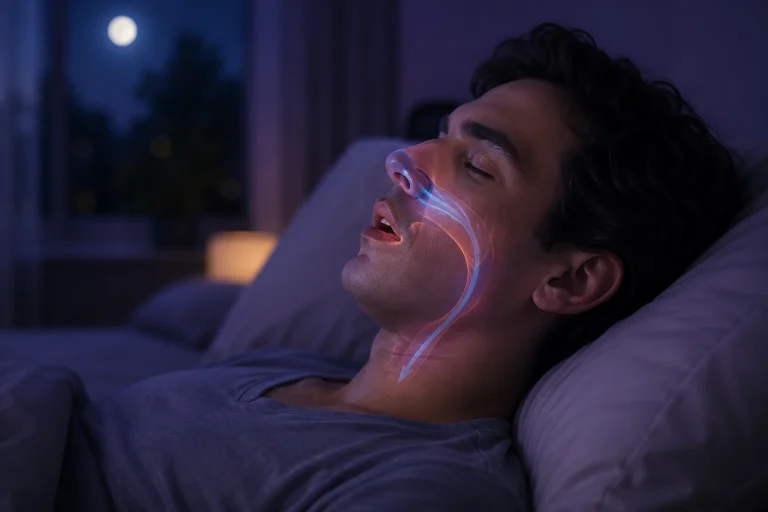
- untreated sleep apnea
- severe circadian rhythm disruption
- excessive stimulant use
- chronic sleep deprivation
- poor sleep hygiene
- unmanaged long-term stress
Supplements generally work best when combined with foundational healthy sleep behaviors.
Who May Benefit Most From the Huberman Sleep Stack?
This protocol may appeal most to:
- adults experiencing stress-related sleep disruption
- people with nighttime mental overstimulation
- individuals looking for melatonin-free sleep support
- wellness-focused “sleep optimization” users
- adults seeking gentler nighttime relaxation support
Many users are not necessarily trying to “force sleep,” but instead trying to create a calmer physiological state before bed.
Who May Prefer a Simpler Approach?
Not everyone needs a multi-supplement nighttime stack.
Some adults may benefit more from starting with:
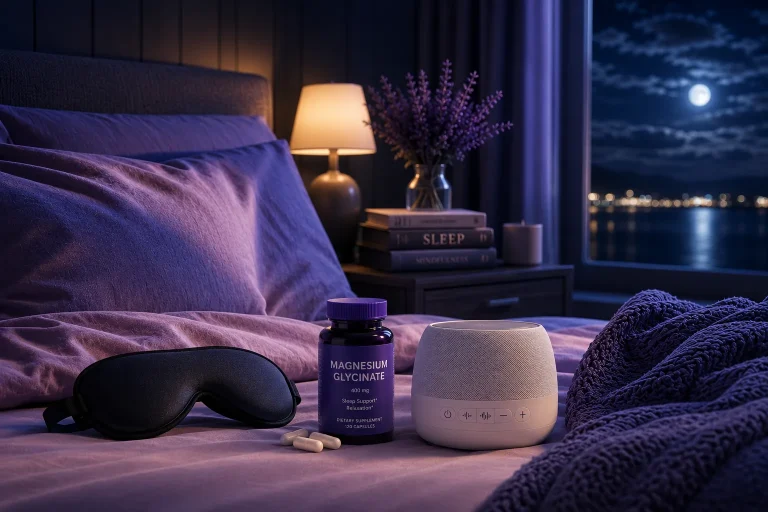
- magnesium glycinate alone
- reduced evening blue light exposure
- earlier caffeine cutoffs
- consistent sleep and wake times
- stress management practices
- improved bedtime routines
A simpler, sustainable nighttime routine is often easier to maintain long term.
Huberman Sleep Stack vs Melatonin
| Factor | Huberman Sleep Stack | Melatonin |
|---|---|---|
| Main purpose | Relaxation & nervous system support | Circadian rhythm signaling |
| Typical effect | Mild, gradual calming support | More noticeable drowsiness |
| Morning grogginess risk | Generally lower | More common at higher doses |
| Best suited for | Stress-related sleep restlessness | Jet lag & schedule shifts |
| Long-term use status | Research still evolving | Tolerance concerns commonly discussed |
Many adults exploring the Huberman sleep stack are specifically looking for:
- nightly sleep support without melatonin
- gentler nighttime relaxation
- reduced next-morning grogginess
- calmer sleep optimization routines
Magnesium Glycinate vs Magnesium L-Threonate
This is one of the most common questions surrounding the Huberman sleep protocol.
| Magnesium Form | Often Preferred For |
|---|---|
| Magnesium Glycinate | Whole-body relaxation, stress support, digestive tolerance |
| Magnesium L-Threonate | Cognitive relaxation, nighttime mental calm, brain-focused formulations |
Magnesium glycinate is often considered:
- more budget-friendly
- easier to tolerate
- better for generalized relaxation support
Magnesium L-threonate is often preferred for:
- cognitive-focused nighttime routines
- mental overstimulation
- premium brain-focused supplement formulations
Most users compare the two based on:
- cost
- relaxation effects
- cognitive benefits
- overall tolerance
Related reading:
- Magnesium L-Threonate vs Glycinate
- /blog/supplements/best-magnesium-for-sleep/
Suggested Timing Example
| Supplement | Typical Timing |
|---|---|
| Magnesium L-threonate | 30–60 minutes before bed |
| Apigenin | Shortly before bedtime |
| L-theanine | Evening or before sleep |
Consistency is generally more important than exact timing.
Safety & Medical Considerations
These ingredients are generally considered low-risk for healthy adults when used responsibly and within standard dosage ranges.
However, side effects and medication interactions are still possible.
Possible Side Effects
Magnesium L-Threonate
Possible side effects may include:
- mild digestive discomfort
- headaches
- daytime drowsiness
Apigenin
Possible concerns may include:
- medication interactions
- excessive sedation in sensitive individuals
L-Theanine
Possible side effects may include:
- dizziness
- vivid dreams
- mild tension headaches
Who Should Speak With a Healthcare Professional First?
Consult a qualified healthcare provider before trying this stack if you:
- are pregnant or breastfeeding
- take antidepressants, sedatives, or anti-anxiety medications
- have kidney or liver disease
- take blood pressure medication or blood thinners
- have a diagnosed sleep disorder
- are under 18 years old
⚠️ This supplement stack is intended for adults only and should not be used by children or teenagers without professional medical supervision.
Long-Term Use Considerations
Formal long-term human safety data on combined daily use of magnesium L-threonate, apigenin, and L-theanine remains limited.
Some adults choose to periodically reassess their supplement routine with a healthcare professional, especially during extended daily use.
Final Verdict
The Huberman sleep stack became popular because it aligns with growing interest in:
- proactive sleep optimization
- nervous system regulation
- non-melatonin nighttime support
- calmer evening recovery routines
The combination of magnesium L-threonate, apigenin, and L-theanine may help some healthy adults feel calmer, mentally quieter, and more prepared for restful sleep.
At the same time, several important considerations remain:
- scientific evidence is still evolving
- benefits are usually modest rather than dramatic
- supplements cannot replace healthy sleep habits and lifestyle fundamentals
For most people, the greatest improvements in sleep quality still come from combining evidence-based supplementation with consistent nightly routines, stress management, and good sleep hygiene.
Explore Smarter Non-Melatonin Sleep Support
Looking for calmer nighttime recovery without relying on strong sedatives or high-dose melatonin?
Explore:
- magnesium sleep support guides
- evidence-based nighttime routines
- natural non-melatonin sleep strategies
- calmer sleep optimization frameworks
Suggested reading:
- Magnesium Glycinate for Sleep
- /blog/supplements/sleep-supplements-without-melatonin/
- /blog/environment/how-to-sleep-better-without-drugs/
 FAQ
FAQ
 Sources & References
- National Institutes of Health — Magnesium Fact Sheet
- Sleep Foundation — Magnesium and Sleep
- Peer-reviewed literature on L-theanine and stress reduction
- Peer-reviewed literature on apigenin and flavonoids
- Public podcast discussions and interviews featuring Andrew Huberman discussing sleep supplementation
 FDA Disclaimer
These statements have not been evaluated by the Food and Drug Administration (FDA). Dietary supplements are not intended to diagnose, treat, cure, or prevent any disease. This content is for general informational purposes only and is not a substitute for professional medical advice, diagnosis, or treatment.