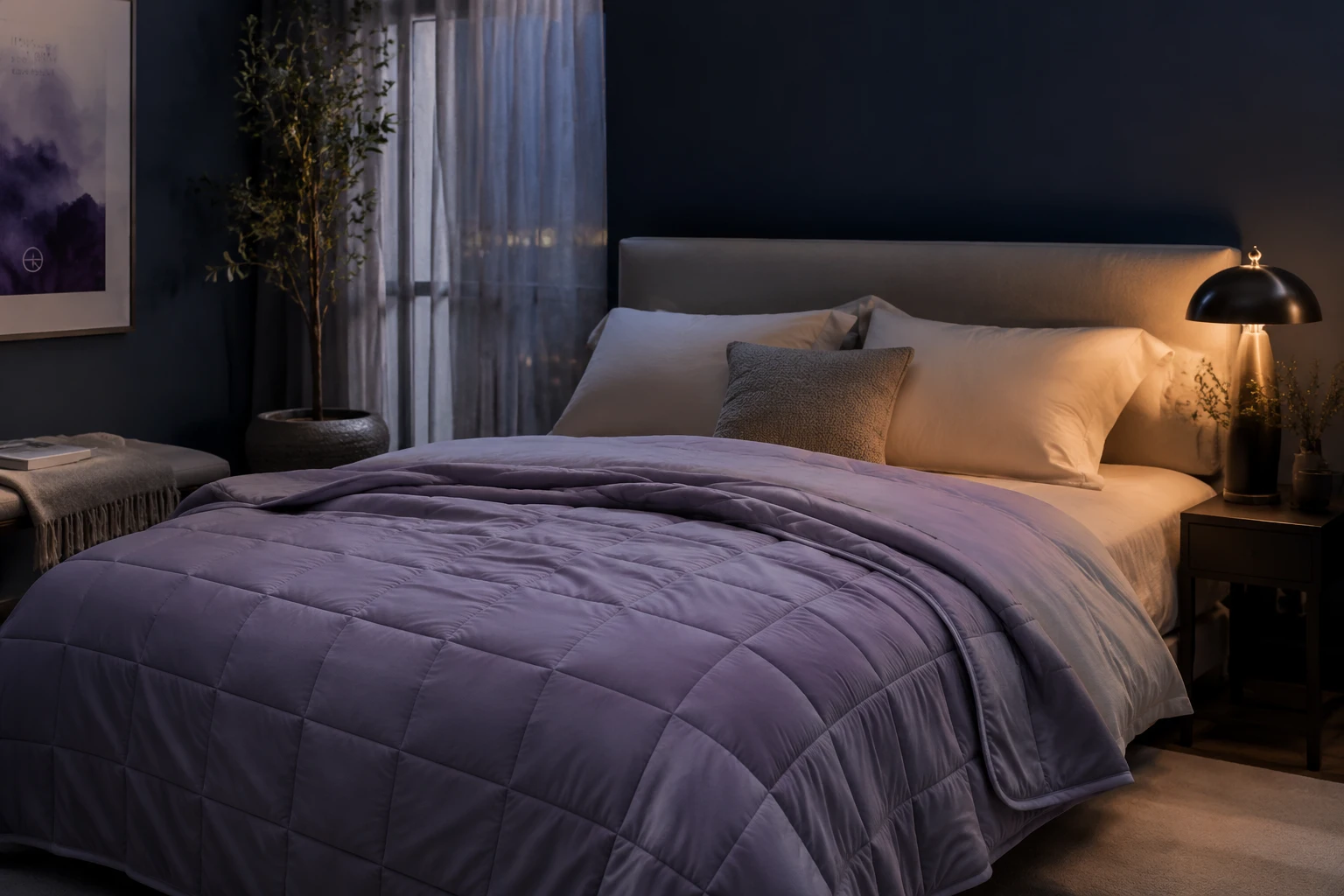
Weighted Blankets That Don’t Overheat: Cooling Fabrics Ranked
Introduction
Weighted blankets are designed to provide gentle pressure and a more comfortable sleep environment, but many users stop using them because they feel too warm during the night.
The challenge is not that weighted blankets naturally create heat. Instead, overheating usually happens when a blanket combines:
- heat-trapping fabrics
- poor airflow
- excessive weight
- unsuitable bedroom conditions
The best weighted blanket that doesn’t overheat is usually made with breathable, moisture-managing materials such as bamboo-derived fabrics, Tencel™ (Lyocell), or lightweight cotton.
This guide compares the most common weighted blanket fabrics, explains why some materials sleep cooler than others, and shows how to choose a breathable weighted blanket for hot sleepers.
Quick Answer: What Is the Coolest Weighted Blanket Material?
For most hot sleepers, the best cooling weighted blanket materials are:
| Material | Cooling Ability | Best For |
|---|---|---|
| Bamboo-derived fabric | Excellent | Hot sleepers and humid climates |
| Tencel™ / Lyocell | Excellent | Moisture control and premium comfort |
| Lightweight cotton | Very good | Natural breathability and everyday use |
| Linen blends | Very good | Maximum airflow |
| Microfiber / polyester | Moderate to low | Budget options |
Best overall choice:
A weighted blanket made with bamboo, Tencel™, or breathable cotton usually provides better temperature regulation than thick synthetic covers.
However, fabric is only one factor. The filling material, blanket weight, room temperature, and bedding layers all influence how warm a weighted blanket feels.
Why Do Some Weighted Blankets Overheat?
A weighted blanket feels warmer for three main reasons.
1. Heat-Trapping Outer Fabrics
The outer cover is the first factor affecting temperature.
Some synthetic fabrics, especially dense polyester or microfiber materials, can feel soft but limit airflow.
When body heat builds during sleep, less breathable fabrics may slow down heat release.
A cooling weighted blanket should prioritize:
- natural fibers
- moisture management
- airflow-friendly construction
2. Excessive Weight Can Reduce Airflow
The weight itself does not generate heat.
Most weighted blankets use materials such as glass beads to create pressure, not warmth.
However, a heavier blanket covers more of your body and can reduce ventilation between your skin and bedding.
This is why selecting the correct blanket weight matters.
A previous TideRest guide explains the commonly used 10% body weight guideline and how to choose an appropriate weighted blanket without unnecessarily increasing bulk.
Related guide:
→ How Heavy Should a Weighted Blanket Be? The 10% Rule Explained
3. Bedroom Temperature Affects Blanket Comfort
Even the most breathable weighted blanket may feel too warm in a hot sleeping environment.
Temperature regulation depends on the complete sleep setup:
- bedroom temperature
- humidity
- pajamas
- mattress materials
- bedding layers
Most sleep experts recommend a cooler bedroom environment, often around:
60–67°F (15–19°C)
A breathable weighted blanket works best when combined with an optimized sleep environment.
Related guide:
→ How to Build the Perfect Sleep Environment: A Room-by-Room Guide
Cooling Weighted Blanket Fabrics Ranked

1. Bamboo Fabric: Best Overall Cooling Performance
Bamboo-derived fabrics are among the most popular materials used in cooling weighted blankets because they combine:
- softness
- moisture management
- lightweight comfort
- improved airflow
Many bamboo fabrics are made from regenerated bamboo fibers, commonly known as bamboo viscose.
They are often chosen for bedding because they feel smooth against the skin and help manage moisture during sleep.
Best For:
- hot sleepers
- people living in humid environments
- summer sleeping
- users who dislike heavy bedding
Potential Limitation:
Not all bamboo fabrics perform the same.
Some products blend bamboo fibers with synthetic materials, which may reduce breathability.
Always check the actual fabric composition rather than relying only on the word “cooling.”
2. Tencel™ (Lyocell): Best Moisture Management
Tencel™ (Lyocell) is a sustainable fiber made from responsibly sourced wood pulp.
It is known for:
- silky softness
- moisture absorption
- smooth surface texture
- temperature-regulating comfort
Because Tencel™ helps move moisture away from the skin, it is commonly used in premium bedding designed for people who sleep warm.
Why Hot Sleepers Like Tencel:
When your body temperature changes during the night, moisture management becomes important.
A fabric that can absorb and release moisture more effectively may feel more comfortable compared with less breathable synthetic materials.
Best For:
- people who wake up sweaty
- warm sleepers
- premium bedding users
- sensitive skin preferences
3. Cotton: Best Natural Everyday Option
Cotton remains one of the most widely used weighted blanket fabrics because it offers:
- natural breathability
- durability
- easy maintenance
- familiar comfort
A lightweight cotton cover can provide good airflow while maintaining the traditional feel many users prefer.
Best For:
- year-round use
- moderate climates
- users who prefer natural fibers
Limitation:
Cotton absorbs moisture well but generally dries slower than Tencel or some bamboo-derived fabrics.
For people who experience significant night sweating, moisture management may be less effective.
4. Linen Blends: Best Airflow
Linen is known for its naturally loose fiber structure, which allows air to move more freely.
A linen weighted blanket cover may feel cooler because it creates less heat retention around the body.
Best For:
- warm climates
- summer bedrooms
- people who prefer a more natural texture
Limitation:
Linen can feel slightly textured compared with smoother fabrics such as bamboo or Tencel.
5. Microfiber and Polyester: Usually the Warmest Choice
Synthetic microfiber covers are popular because they are:
- affordable
- soft
- durable
- easy to manufacture
However, many synthetic fabrics are less breathable than natural fibers.
They may retain more heat, especially when combined with heavier blanket construction.
Best For:
- budget-focused buyers
- cooler bedrooms
Less Ideal For:
- hot sleepers
- people who experience night sweating
- warm climates
Cotton vs Bamboo vs Tencel: Which Cooling Fabric Is Best?
Choosing the right weighted blanket material depends on what type of temperature problem you experience.

Some people mainly need better airflow. Others need moisture management because they wake up sweaty.
The comparison below shows how the most popular breathable weighted blanket fabrics perform.
| Feature | Bamboo Fabric | Tencel™ / Lyocell | Cotton | Linen |
|---|---|---|---|---|
| Breathability | Excellent | Excellent | Very Good | Excellent |
| Moisture Management | Excellent | Excellent | Good | Good |
| Softness | Very Soft | Very Soft | Soft | Medium |
| Cooling Feel | Excellent | Excellent | Good | Excellent |
| Durability | Good | Good | Excellent | Excellent |
| Best Use Case | Hot sleepers | Sweaty sleepers | Everyday comfort | Warm climates |
Quick Decision Guide
Choose:
Bamboo if you want:
- a naturally cool feeling
- softness
- good moisture control
Tencel™ if you want:
- premium temperature regulation
- moisture management
- silky comfort
Cotton if you want:
- durability
- natural breathability
- all-season performance
Linen if you want:
- maximum airflow
- a lighter summer feel
There is no single “coldest” weighted blanket for everyone. The best choice depends on your sleep environment and personal comfort needs.
Other Features That Affect Weighted Blanket Temperature
Fabric matters, but the complete construction of a weighted blanket determines how warm it feels.
1. Filling Material and Blanket Thickness
Most modern weighted blankets use glass beads because they provide:
- even weight distribution
- a thinner profile
- less bulk compared with some traditional fillings
A thinner weighted blanket generally allows more airflow around the body.
When comparing products, look beyond weight alone.
A 15-pound blanket with a breathable construction may feel cooler than a lighter blanket made from heat-trapping materials.
2. Weight Distribution Design
High-quality weighted blankets usually divide filling into smaller compartments.
This helps:
- keep pressure evenly distributed
- prevent filling from shifting
- maintain a thinner structure
Poorly designed blankets may develop thicker areas where filling collects, reducing comfort and airflow.
3. Blanket Size Matters
A common mistake is choosing a weighted blanket that is too large.
An oversized blanket may:
- cover unnecessary areas of the bed
- trap additional warmth
- feel heavier than expected
A weighted blanket should generally provide comfortable body coverage without excessive material around the sides.
How To Choose a Weighted Blanket That Doesn’t Overheat
Before purchasing a cooling weighted blanket, evaluate these factors.
1. Check the Actual Fabric Composition
Do not rely only on marketing terms such as:
- “cooling”
- “temperature balancing”
- “ice fabric”
Look for specific materials:
✓ Bamboo-derived fibers
✓ Tencel™ / Lyocell
✓ Cotton
✓ Linen blends
The material label provides more useful information than a product slogan.
2. Choose the Right Weight
A heavier weighted blanket is not always better.
Too much weight may:
- feel restrictive
- reduce comfort
- increase warmth perception
Many users begin with a moderate weight based on body size and personal preference rather than selecting the heaviest option available.
Related guide:
→ How Heavy Should a Weighted Blanket Be? The 10% Rule Explained
3. Consider Your Sleeping Environment
A breathable weighted blanket performs best when combined with:
- cooler bedroom temperatures
- breathable pajamas
- lightweight sheets
- reduced bedding layers

For hot sleepers, the blanket is only one part of temperature regulation.
Related:
→ Sleep Environment Optimization Guide
Weighted Blanket Safety Considerations
Weighted blankets are designed for comfort and relaxation, but they are not suitable for everyone.
Choosing the right material is important, but safety should always come first.
Weighted Blanket Safety for Children
Children require additional safety considerations because they may not have the strength, coordination, or awareness to safely remove a heavy blanket.
According to consumer safety guidance:
- Weighted blankets are not recommended for infants and toddlers under 2 years old.
- A weighted blanket should never cover a child’s head, neck, or airway.
- Children should always be able to move freely and remove the blanket independently.
Parents and caregivers should consider professional guidance before introducing weighted blankets for children.
Organizations such as the Consumer Product Safety Commission (CPSC) and the American Academy of Pediatrics (AAP) emphasize the importance of safe sleep practices for children.
Who Should Consult a Healthcare Professional Before Using a Weighted Blanket?
Most healthy adults can use weighted blankets comfortably, but certain individuals should seek professional advice first.
Consider speaking with a healthcare provider before use if you have:
Obstructive Sleep Apnea (OSA)
People with sleep apnea experience repeated breathing interruptions during sleep.
A weighted blanket should not interfere with comfortable breathing or create additional discomfort.
If you use CPAP therapy or have diagnosed sleep apnea, discuss whether a weighted blanket is appropriate for your situation.
Related:
→ Can You Use Mouth Tape with CPAP? A Step-by-Step Guide
Severe Respiratory Conditions
People with significant breathing limitations should consider whether added pressure could affect comfort or movement during sleep.
Cardiovascular Conditions
Individuals with severe cardiovascular conditions should consult a healthcare professional before using weighted blankets, especially if pressure or restricted movement causes discomfort.
Pregnancy
Pregnancy changes comfort needs throughout different stages.
Pregnant individuals should consider:
- body position
- mobility
- personal comfort
- healthcare recommendations
before introducing a weighted blanket.
Mobility Limitations
A weighted blanket should always allow the user to:
- change sleeping positions
- remove the blanket independently
- move comfortably during the night
If a person cannot easily adjust or remove the blanket, it may not be appropriate.
How a Cooling Weighted Blanket Fits Into a Complete Sleep System
A weighted blanket works best when combined with other sleep-supporting habits and environmental improvements.
Temperature is only one part of quality sleep.
A complete sleep environment considers:
Light Control
Reducing unnecessary light exposure can support a more consistent nighttime environment.
Related:
→ 3D Contoured Sleep Masks for Side Sleepers: Why Shape Matters
Sound Management
White noise or other sound strategies may help create a more stable sleep environment.
Breathing Comfort
For people interested in nasal breathing strategies, appropriate approaches may complement a broader sleep routine.
Relaxation Routine
Weighted blankets are often used as part of a calming bedtime routine that may include:
- reading
- stretching
- relaxation exercises
- reduced evening stimulation
A weighted blanket is not a standalone solution. It is one element of a broader sleep optimization system.
Final Verdict: What Is the Best Weighted Blanket That Doesn’t Overheat?
The best weighted blanket that doesn’t overheat is usually made with breathable, temperature-friendly materials such as:
- Bamboo-derived fabric — best overall cooling balance
- Tencel™ / Lyocell — best moisture management
- Lightweight cotton — best everyday natural option
- Linen blends — best airflow performance
For hot sleepers, the most important factors are:
- breathable fabric
- correct blanket weight
- lightweight construction
- suitable bedroom temperature
A cooling weighted blanket does not need to feel cold. The goal is better temperature regulation, allowing comfort without excessive heat buildup.
Create a More Comfortable Sleep Environment
Better sleep often comes from improving multiple factors together.
Explore TideRest sleep optimization resources:
→ Sleep Environment Optimization Guide
→ Sleep Hygiene Checklist 2026
→ 3D Contoured Sleep Masks for Side Sleepers
Build a calmer, more personalized nighttime routine.
 FAQ Section
 References
Scientific and Safety Sources
- Consumer Product Safety Commission (CPSC)
Weighted product safety considerations and consumer guidance.
- American Academy of Pediatrics (AAP)
Safe sleep recommendations for infants and children.
- National Sleep Foundation
Sleep environment, bedroom temperature, and sleep comfort guidance.
- National Institutes of Health (NIH)
Sleep health research and environmental factors.
- Tencel™ / Lyocell Fiber Information
Material characteristics and sustainable fiber production information.
 Additional Note
This article is intended for educational purposes only and does not replace professional medical advice.
Weighted blankets are personal comfort products. Individual experiences vary depending on body size, sleeping position, health conditions, climate, and personal preference.
Always choose a weighted blanket that allows comfortable movement and does not interfere with breathing or mobility.