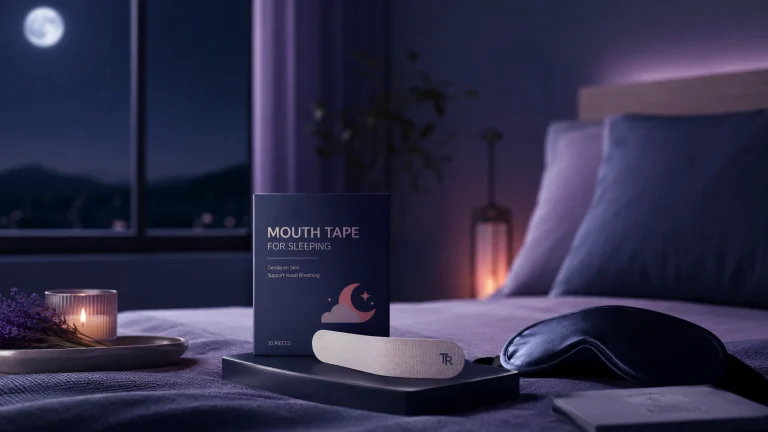
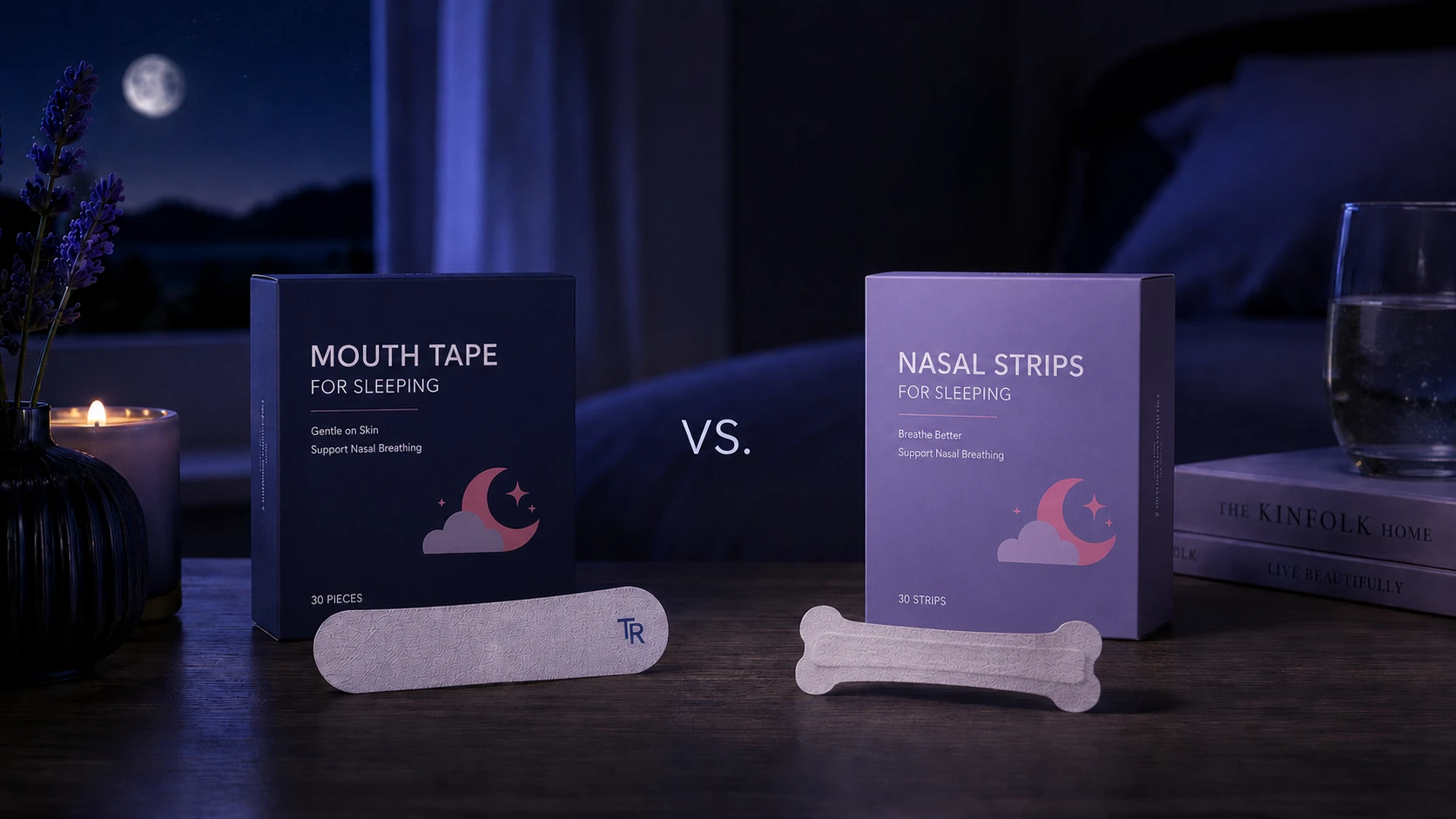
Mouth Tape vs Nasal Strips: Which Actually Stops Snoring?
Snoring may sometimes be associated with underlying sleep-related conditions, including obstructive sleep apnea (OSA). Products discussed in this article are non-medical sleep support products intended for general wellness use and are not designed to replace professional medical evaluation or prescribed treatment.
Introduction
Mouth tape and nasal strips are both designed to improve nighttime breathing, but they work in very different ways.
In general:
- Mouth tape may help reduce snoring linked to mouth breathing by encouraging nasal breathing during sleep.
- Nasal strips may help when snoring is related to nasal congestion or restricted airflow through the nose.
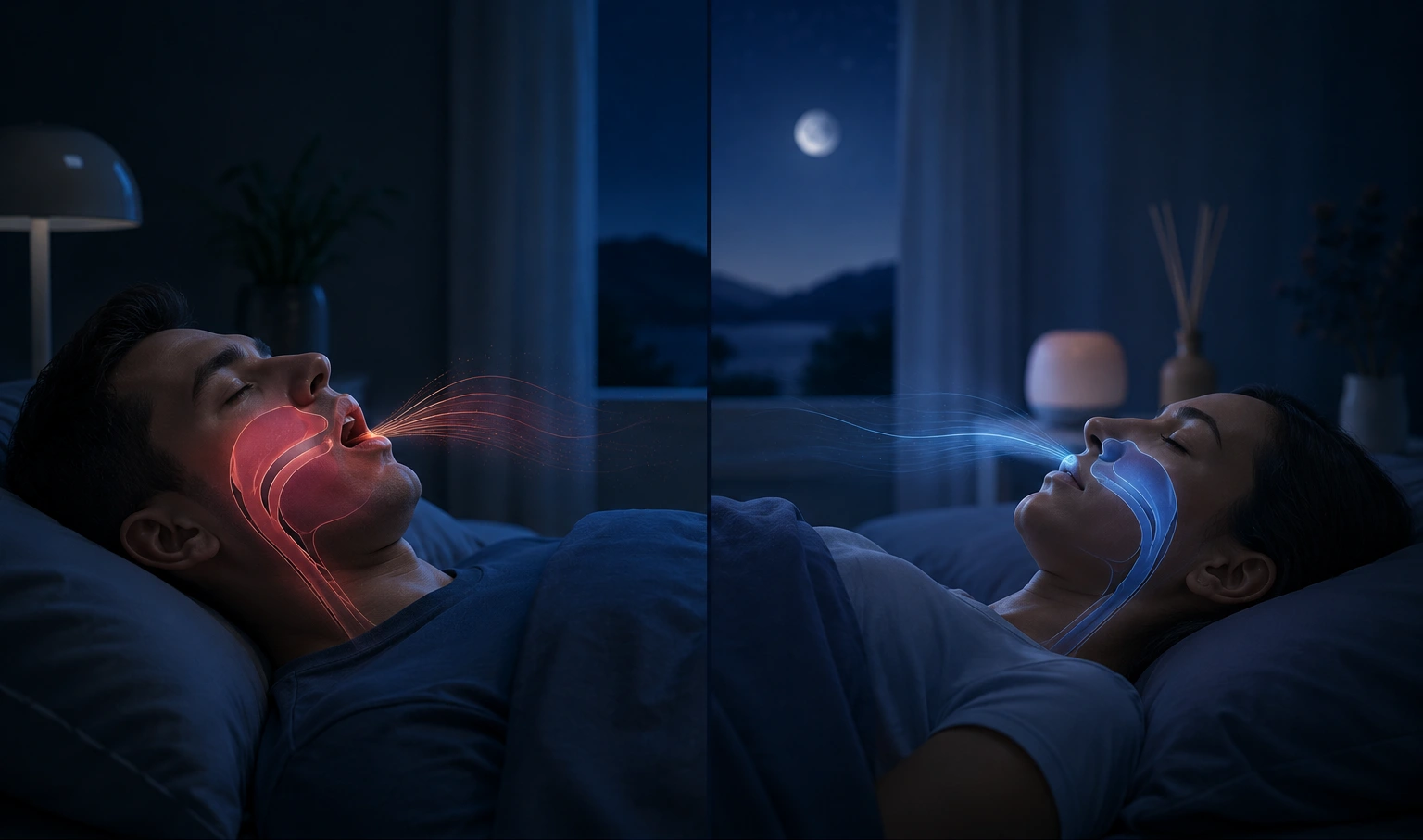
For some people, one solution works noticeably better than the other. In other cases, combining both may improve airflow and nighttime comfort more effectively.
This guide explains:
- how each option works
- who may benefit most
- comfort and safety considerations
- what current research says about nasal breathing
- how to choose the right approach for your sleep habits
What Causes Snoring in the First Place?
Snoring happens when airflow becomes partially restricted during sleep, causing tissues in the airway to vibrate.
Common contributors include:
- Mouth breathing
- Nasal congestion
- Sleeping on your back
- Alcohol before bed
- Weight gain
- Dry air
- Poor sleep posture
- Deviated septum or narrow nasal passages
Not all snoring has the same cause. That’s why different anti-snoring tools may work better for different people.
What Is Mouth Tape?
Mouth tape is a gentle adhesive strip placed over the lips during sleep to encourage the mouth to stay closed.

The goal is to support:
- nasal breathing
- reduced dry mouth
- quieter breathing
- improved airflow stability
Many users report benefits such as:
- less snoring
- reduced morning dry mouth
- fewer nighttime awakenings
- improved sleep comfort
Mouth taping has also become increasingly popular within broader sleep optimization and nasal breathing communities.
What Are Nasal Strips?
Nasal strips are flexible adhesive bands applied externally across the nose.

They work mechanically by:
- gently lifting the nasal passages open
- reducing airflow resistance
- improving nasal airflow
Nasal strips are commonly used for:
- temporary congestion
- allergies
- colds
- exercise recovery
- mild nighttime breathing restriction
Unlike mouth tape, nasal strips do not directly address mouth breathing habits.
Mouth Tape vs Nasal Strips: Quick Comparison
| Feature | Mouth Tape | Nasal Strips |
|---|---|---|
| Primary Goal | Encourage nasal breathing | Open nasal passages |
| Best For | Mouth breathing snoring | Congestion-related snoring |
| Works on Mouth Breathing | Yes | No |
| Helps Nasal Airflow | Indirectly | Directly |
| Dry Mouth Reduction | Often | Minimal |
| Beginner Friendly | Moderate adjustment period | Very easy |
| Adhesive Location | Lips | Nose |
| Common Drawback | Initial adjustment discomfort | May loosen overnight |
| Typical Use Case | Breathing habit support | Airflow assistance |
Which Works Better for Snoring?
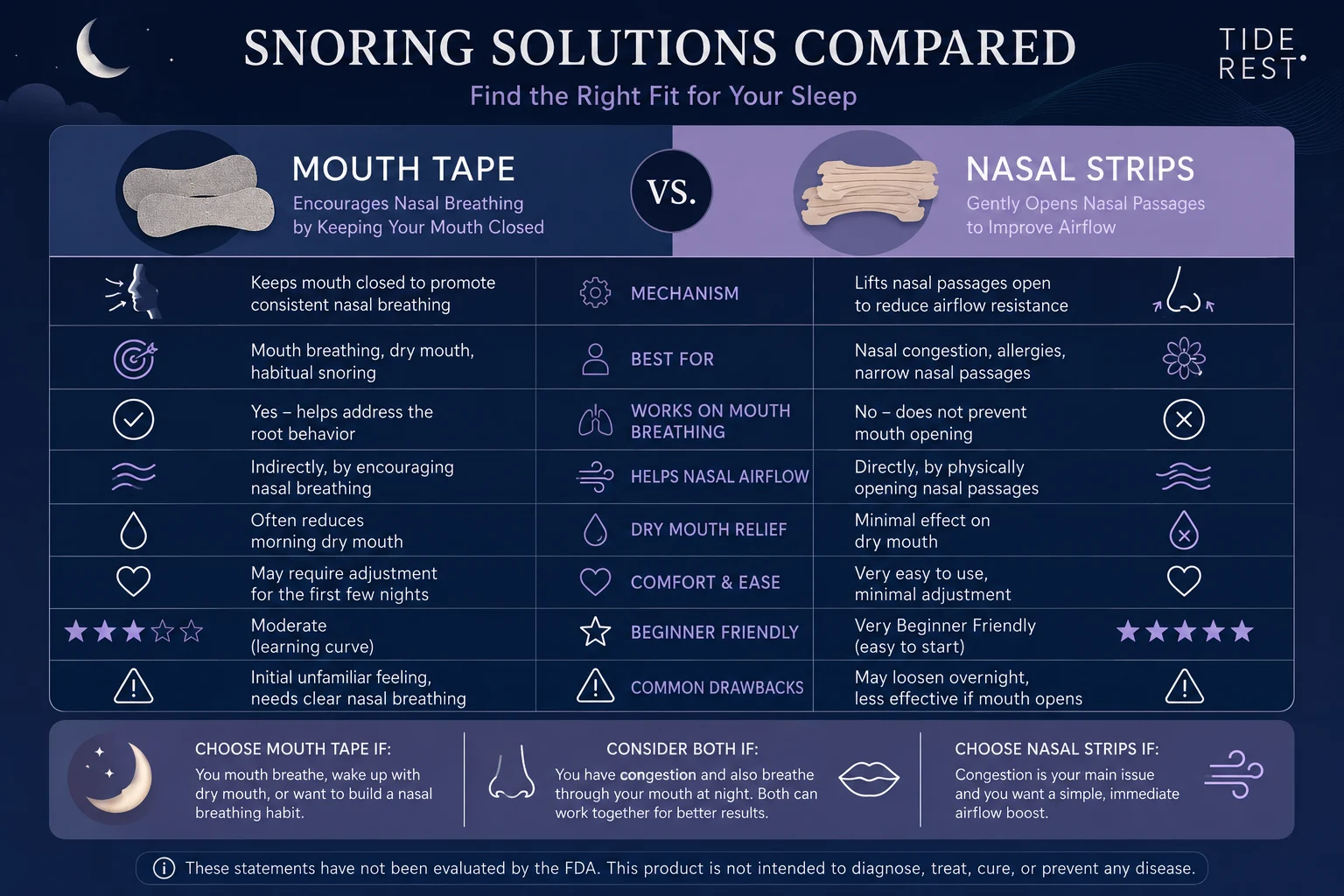
The answer depends on why you snore.
Mouth Tape May Work Better If You:
- wake up with dry mouth
- sleep with your mouth open
- notice noisy mouth breathing
- experience mild mouth-breathing-related snoring
- want to encourage more consistent nasal breathing
Mouth tape primarily addresses the habit of mouth breathing during sleep.
Nasal Strips May Work Better If You:
- feel congested at night
- have seasonal allergies
- struggle with narrow nasal passages
- already breathe mostly through your nose
- snore more during colds or sinus irritation
Nasal strips mainly focus on improving airflow through the nose.
Some People Benefit From Both
In some cases:
- nasal strips help improve airflow capacity
- mouth tape helps maintain nasal breathing overnight
This combination may feel more comfortable than mouth tape alone, especially for beginners transitioning away from mouth breathing.
What Does the Science Say About Nasal Breathing?
Research increasingly supports the importance of nasal breathing during sleep.
Nasal breathing may help:
- humidify incoming air
- improve nitric oxide production
- stabilize airflow
- reduce airway collapse risk
- improve overall breathing efficiency
Some studies also suggest mouth breathing may contribute to:
- dry mouth
- fragmented sleep
- increased snoring
- reduced sleep quality
However, research specifically focused on mouth taping remains limited and still evolving. Most sleep experts recommend an individualized approach rather than treating mouth tape as a universal solution.
Nasal Strip Effectiveness: What To Realistically Expect
Nasal strips can feel helpful quickly, especially when congestion is the primary issue.
Users commonly report:
- easier nasal breathing
- reduced stuffiness
- mild snoring reduction
- improved airflow sensation
However, nasal strips generally do not:
- retrain breathing habits
- prevent mouth opening during sleep
- address deeper airway obstruction
For chronic mouth breathers, nasal strips alone may not fully resolve snoring.
Is Mouth Tape Safe?
Mouth tape is generally intended only for healthy adults who can breathe comfortably through their nose.
Mouth tape may not be appropriate for people who:
- experience persistent nasal obstruction
- have severe congestion or sinus infections
- have untreated obstructive sleep apnea
- experience claustrophobia or panic symptoms
- have certain respiratory conditions such as severe asthma or COPD
- experience nighttime acid reflux
- have adhesive-related skin sensitivities
Beginners should:
- confirm they can breathe clearly through the nose first
- start gradually
- choose breathable skin-friendly tape
- discontinue use if discomfort occurs
If snoring is accompanied by choking, gasping, breathing pauses, or excessive daytime fatigue, professional medical evaluation is strongly recommended.
Comfort Comparison: Which Feels Easier?
Nasal Strips
Nasal strips are usually easier for beginners because:
- they do not cover the mouth
- adjustment is minimal
- airflow improvement may feel immediate
Mouth Tape
Mouth tape may require a short adaptation period because:
- the sensation can feel unfamiliar at first
- users must tolerate keeping the lips sealed
- comfortable nasal breathing is essential
That said, many long-term users report that mouth tape feels natural after several nights of consistent use.
Which Option Is Better for Sleep Quality?
Reducing snoring does not automatically guarantee better sleep quality.
The most effective solution is the one that:
- improves airflow comfortably
- reduces nighttime awakenings
- supports relaxed breathing
- feels sustainable long term
For many people:
- nasal strips offer faster airflow relief
- mouth tape offers breathing habit support
The better option depends on the underlying cause of nighttime breathing disruption.
How To Decide Between Mouth Tape and Nasal Strips
Choose Mouth Tape If:
- your mouth falls open during sleep
- you wake up with dry mouth
- your partner notices mouth breathing
- you want to encourage nasal breathing habits
Choose Nasal Strips If:
- congestion is your main issue
- your nose feels blocked at night
- you want the simplest beginner-friendly option
- you dislike adhesive near the lips
Consider Both If:
- you breathe partially through both the mouth and nose
- airflow feels restricted
- you are transitioning toward nasal breathing
- snoring has multiple contributing factors
A Practical Beginner Strategy
Many users find this progression easiest:
- Improve nasal airflow first
- Reduce nighttime congestion
- Experiment with nasal strips
- Try mouth tape gradually if mouth breathing persists
- Prioritize comfort and consistency
The goal is not to force unnatural breathing patterns, but to support more comfortable and stable nighttime airflow.
Final Verdict
When comparing mouth tape vs nasal strips, neither option is universally better.
- Mouth tape may work better for habitual mouth breathing and dry-mouth-related snoring.
- Nasal strips may work better for congestion and restricted nasal airflow.
- Some people benefit from combining both approaches.
The most effective anti-snoring strategy depends on identifying the underlying source of airflow disruption during sleep.
For many adults, improving nasal breathing — whether through airflow support, breathing habits, or sleep environment optimization — may contribute to quieter and more restorative sleep over time.
If you want to dive deeper into proper usage, potential risks and step-by-step beginner tips, check out our full guide: Mouth Tape for Sleeping: Benefits, Risks & How to Start Safely
🔗 Explore Better Sleep Through Nasal Breathing
Interested in improving nighttime breathing naturally?
Explore:
- mouth tape sleep routines
- nasal breathing optimization
- sleep environment upgrades
- non-melatonin sleep support strategies
→ Discover Natural Sleep Support with TideRest