
Nasal Breathing Benefits for Athletes: From Sleep to Performance
Quick Answer
Nasal breathing may help athletes improve breathing efficiency, carbon dioxide tolerance, endurance, recovery, and sleep quality. While mouth breathing is often necessary during maximal-intensity exercise, developing strong nasal breathing habits during daily life, aerobic training, and sleep can support long-term athletic performance.
Why Athletes Are Relearning How to Breathe
Most athletes spend years optimizing:
- Training programs
- Nutrition
- Recovery protocols
- Sleep routines
Yet many never consider how they breathe.
Breathing is unique because it affects both sides of performance:
- Training quality during the day
- Recovery quality during the night
That connection is why nasal breathing has become increasingly popular among endurance athletes, runners, CrossFit athletes, and sports performance coaches.
What Is Nasal Breathing?
Nasal breathing means inhaling and exhaling primarily through the nose instead of the mouth.
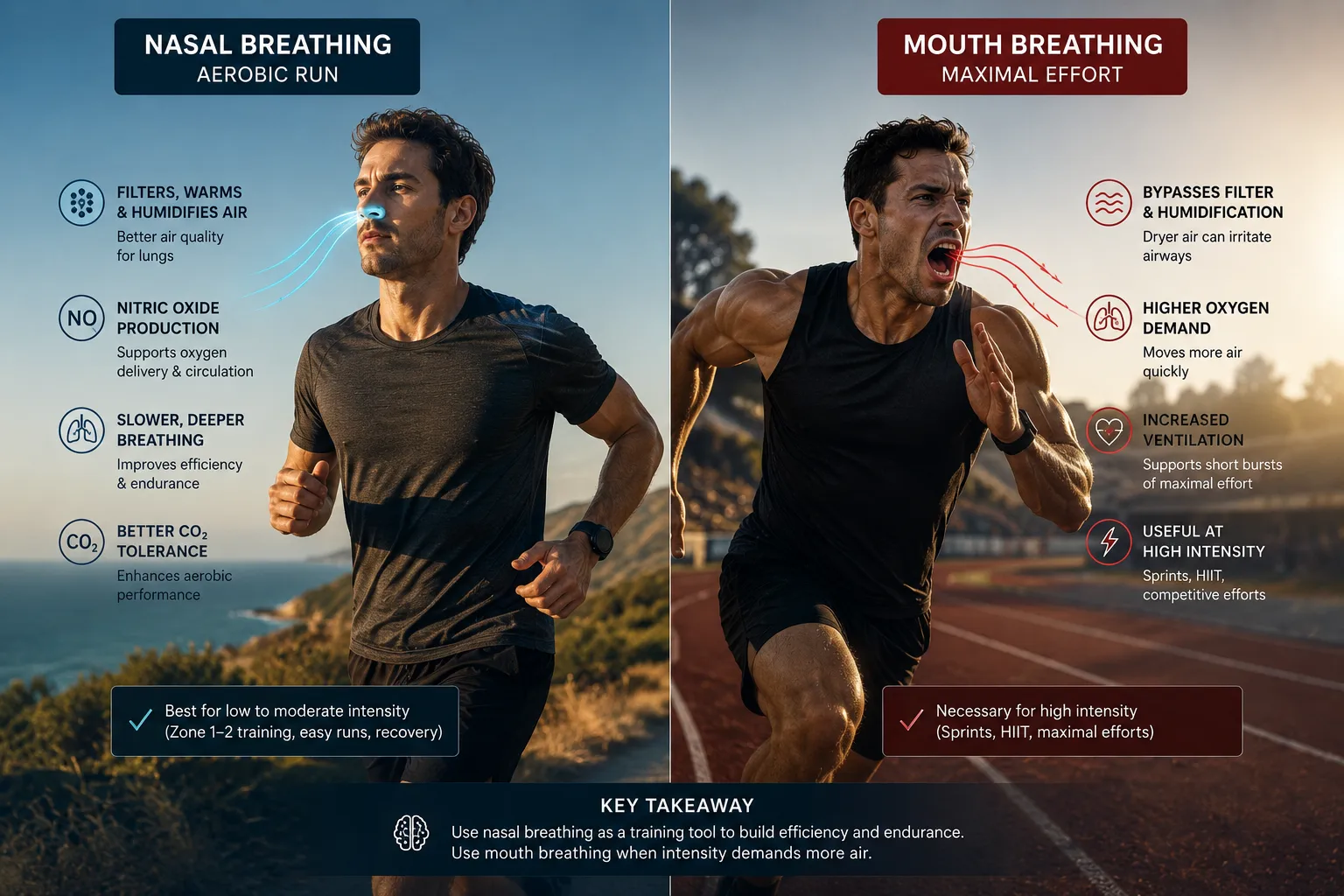
Your nose serves several important functions:
- Filters airborne particles
- Warms incoming air
- Humidifies dry air
- Creates beneficial airflow resistance
- Supports nitric oxide production
Unlike mouth breathing, nasal breathing prepares air before it reaches the lungs.
Key Nasal Breathing Benefits
For athletes, the most important nasal breathing benefits include:
- Improved breathing efficiency
- Better carbon dioxide tolerance
- Enhanced aerobic conditioning
- Increased nitric oxide production
- Reduced airway dryness
- Improved sleep quality
- Better recovery between training sessions
- Reduced reliance on over-breathing during exercise
How Nasal Breathing Improves Athletic Performance
Better Airflow Efficiency
Nasal breathing naturally slows respiratory rate and encourages deeper diaphragmatic breathing.
This often leads to:
- More efficient oxygen utilization
- Reduced respiratory fatigue
- Improved pacing awareness
For endurance athletes, breathing efficiency can be just as important as oxygen volume.
Improved Carbon Dioxide Tolerance
Many athletes mistakenly view carbon dioxide as a waste product.
In reality, healthy CO₂ levels help facilitate oxygen delivery to working muscles through the Bohr Effect.
Improved CO₂ tolerance may help:
- Reduce feelings of breathlessness
- Improve endurance capacity
- Support aerobic adaptation
- Lower perceived exertion
Increased Nitric Oxide Production
Nitric oxide is naturally produced in the nasal passages.
Potential benefits include:
- Improved circulation
- Better vascular function
- Enhanced oxygen transport
- Respiratory support
This is one reason nasal breathing is frequently recommended during lower-intensity endurance training.
Improved Breathing Mechanics
Nasal breathing often encourages:
- Diaphragmatic breathing
- Better posture
- Reduced neck tension
- Improved rib cage mobility
Over time, these changes may improve movement efficiency and exercise comfort.
Nasal Breathing Running: Does It Improve Endurance?
The Short Answer
For easy and moderate-intensity running, nasal breathing may improve aerobic efficiency and breathing control.
For maximal efforts, most athletes naturally transition to combined nose-and-mouth breathing.
The goal is not perfection.
The goal is building breathing capacity.
Benefits During Easy Runs
Athletes commonly report:
- Better pacing awareness
- Reduced over-breathing
- Improved aerobic conditioning
- More controlled effort levels
This is why many coaches encourage nasal breathing during Zone 2 training.
When Should You Use Nasal Breathing vs Mouth Breathing?
| Training Situation | Nasal Breathing | Mouth Breathing |
|---|---|---|
| Walking | ✅ Preferred | Optional |
| Recovery Sessions | ✅ Recommended | Rarely Needed |
| Zone 2 Running | ✅ Recommended | Sometimes |
| Long Endurance Training | ✅ Often Helpful | Sometimes |
| Tempo Efforts | Partial | Often |
| HIIT Workouts | Partial | ✅ Common |
| Sprint Training | Limited | ✅ Necessary |
| Maximal Competition | Limited | ✅ Necessary |
Most athletes benefit from using nasal breathing as a training tool—not treating it as an absolute rule.
This balanced approach is more realistic and supported by current sports physiology research.
The Overlooked Link Between Breathing and Recovery
Many athletes focus exclusively on breathing during workouts.
The bigger opportunity may be breathing during sleep.
Poor sleep is associated with:
- Reduced reaction time
- Slower recovery
- Higher injury risk
- Reduced training adaptation
- Decreased cognitive performance
Recovery is where fitness gains actually occur.
Benefits of Nasal Breathing During Sleep
Reduced Dry Mouth and Throat Irritation
Because nasal passages humidify incoming air, nasal breathing may help reduce:
- Dry mouth
- Sore throat
- Morning dehydration
Common complaints among athletes who sleep with their mouths open.
Reduced Snoring Risk
Mouth breathing can contribute to snoring and airway instability.
While not all snoring originates from mouth breathing, promoting nasal airflow may help improve sleep comfort in some individuals.
Better Recovery Quality
Deep sleep is when many critical recovery processes occur:
- Muscle repair
- Tissue regeneration
- Growth hormone release
- Nervous system recovery
Better breathing may help support more restorative sleep.
The Recovery Loop: How Nasal Breathing Connects Sleep and Performance
Elite athletes don’t improve during training.
They improve when they recover from training.

This creates a performance loop:
Better Breathing
↓
Better Sleep Quality
↓
Better Recovery
↓
Better Training Adaptation
↓
Better Athletic Performance
In other words:
Better breathing supports better sleep. Better sleep supports better recovery. Better recovery supports better performance.
This is one reason breathing habits deserve attention beyond the gym.
For a broader recovery framework, see our Sleepmaxxing 101: The Complete Beginner’s Guide to Optimizing Your Sleep.
Best Nose Breathing Exercises for Beginners
Exercise 1: Nasal Walking
- Walk comfortably.
- Breathe only through your nose.
- Maintain relaxed breathing.
- Continue for 10–15 minutes.
This is the easiest entry point for most people.
Exercise 2: Nasal Breathing Running
- Warm up normally.
- Run at an easy conversational pace.
- Maintain nasal breathing.
- Slow down if breathing becomes strained.
Practice for 10–20 minutes.
Over time, pace typically improves.
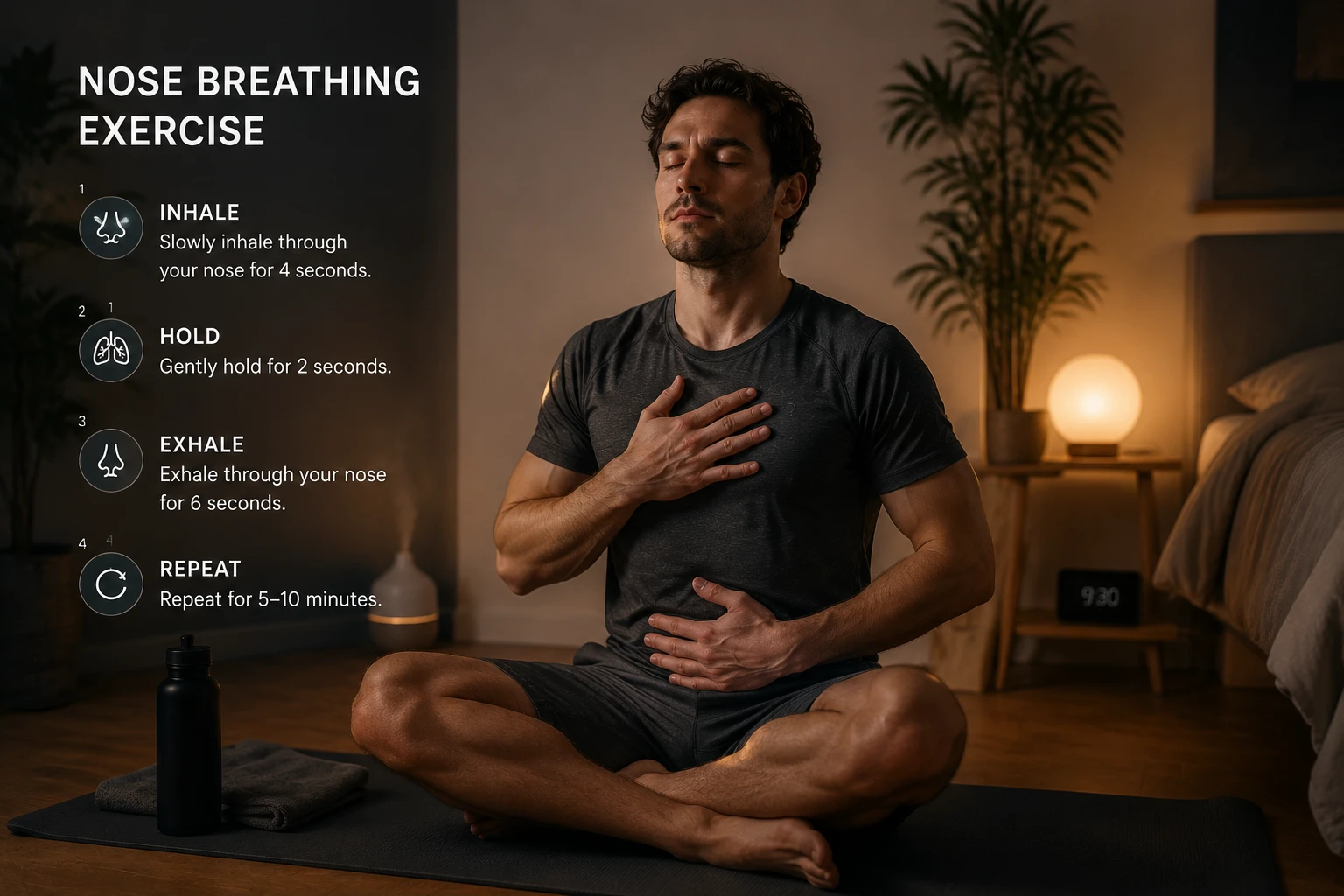
Exercise 3: Diaphragmatic Nose Breathing
- Lie comfortably on your back.
- Place one hand on your chest.
- Place one hand on your abdomen.
- Breathe slowly through your nose.
- Focus on abdominal expansion.
Practice for 5 minutes before bedtime.
This exercise pairs well with The Perfect Nightly Routine: What Sleep Researchers Do Before Bed.
Common Obstacles to Nasal Breathing
Nasal Congestion
Common causes include:
- Allergies
- Illness
- Dry air
- Structural nasal issues
Persistent blockage should be evaluated by a healthcare professional.
Habitual Mouth Breathing
Many adults simply developed mouth-breathing habits over years.
Consistent practice is usually required to retrain breathing patterns.
Exercising Too Hard Too Soon
One of the most common mistakes is attempting high-intensity exercise exclusively through the nose.
Begin with:
- Walking
- Recovery sessions
- Easy aerobic runs
Then progress gradually.
Can Mouth Tape Help Athletes Maintain Nasal Breathing?
Some athletes use mouth tape during sleep as a behavioral cue to encourage nasal breathing.
Potential benefits may include:
- Reduced dry mouth
- Increased awareness of breathing habits
- More consistent nasal breathing overnight
However, mouth tape is not a performance shortcut and should never be viewed as a substitute for healthy nasal function.
⚠️ Mouth Tape Safety Considerations
Mouth tape is not appropriate for everyone.
Avoid mouth taping without professional guidance if you:
- Have untreated obstructive sleep apnea
- Experience chronic nasal congestion
- Have significant breathing difficulties
- Have severe allergies
- Have a respiratory illness
- Feel anxious or claustrophobic while sleeping
If you cannot comfortably breathe through your nose while awake, mouth taping during sleep is generally not recommended.
Always prioritize healthy daytime nasal breathing habits before considering nighttime interventions.
For a complete safety guide, see:
Mouth Tape for Sleeping: Benefits, Risks & How to Start Safely
and
Mouth Tape vs Nasal Strips: Which Actually Stops Snoring?
Building a Complete Recovery System

Nasal breathing works best when combined with:
- Consistent sleep schedules
- Stress management
- Proper hydration
- Magnesium-rich nutrition
- Sleep-supportive environments
- Light exposure management
Many athletes also benefit from:
- How to Sleep Better Without Medication
- NSDR (Non-Sleep Deep Rest): Andrew Huberman’s Free Recovery Protocol
- How to Build the Perfect Sleep Environment
- Magnesium for Cortisol: How It Calms Your Stress Response at Night
Together, these strategies create a comprehensive recovery system.
Final Verdict
Nasal breathing is more than a breathing technique.
It is a recovery habit.
For athletes, nasal breathing may support:
- Better endurance
- Improved breathing efficiency
- Increased CO₂ tolerance
- Better sleep quality
- Faster recovery
- Improved training adaptation
The greatest benefits often come not during workouts, but during the hours after them.
Because ultimately:
Better breathing supports better sleep. Better sleep supports better recovery. Better recovery supports better performance.
Build a Better Recovery Routine
Athletic performance begins long before your next workout.
Explore TideRest’s evidence-based sleep resources to learn how breathing, recovery habits, sleep environment optimization, and natural sleep support can help you perform at your best.
Recommended Reading
- Ultimate Guide to Natural Sleep Aids That Actually Work
- Sleepmaxxing 101
- Mouth Tape for Sleeping
- How to Sleep Better Without Medication
- NSDR (Non-Sleep Deep Rest)
- How to Build the Perfect Sleep Environment
 FAQ
FAQ
 Scientific References
- National Institutes of Health (NIH) – Respiratory Physiology Resources
- American Thoracic Society – Exercise Breathing Mechanics
- Sleep Foundation – Nasal vs Mouth Breathing During Sleep
- Journal of Applied Physiology – Carbon Dioxide Tolerance and Exercise Performance
- International Journal of Exercise Science – Breathing Patterns in Endurance Athletes
 Additional Note
Healthy sleep habits can support better sleep quality, but individual results vary. Persistent sleep difficulties may indicate an underlying sleep or medical condition and should be discussed with a qualified healthcare professional.
The information in this article is intended for educational purposes only and should not replace professional medical advice.