

The Perfect Nightly Routine: What Sleep Researchers Do Before Bed
Quick Answer
The best bedtime routine for adults typically includes maintaining a consistent sleep schedule, dimming lights 1–2 hours before bed, reducing mental stimulation, creating a cool and dark sleep environment, and following a relaxing nighttime ritual.
Sleep researchers don’t all follow the exact same routine, but their habits tend to follow the same biological principles. Rather than relying on complicated sleep hacks, they focus on consistent behaviors that support the body’s natural sleep processes.
Key Takeaways
A science-backed bedtime routine for adults typically includes:
✓ Consistent sleep and wake times
✓ Dimming lights 1–2 hours before bed
✓ Limiting mental stimulation
✓ Creating a cool bedroom (60–67°F / 15–19°C)
✓ Following a relaxing wind-down ritual
✓ Managing stress before getting into bed
✓ Maintaining a dark, quiet sleep environment
The most effective sleep routines prioritize consistency over complexity.
Why Your Bedtime Routine Matters More Than You Think
Many adults focus on what happens after they get into bed.
Sleep scientists focus on what happens before they get into bed.
Sleep is not a switch that flips on at bedtime. It’s a biological process that begins well before your head touches the pillow. Your evening habits influence:
- Melatonin production
- Core body temperature
- Stress hormone levels
- Mental arousal
- Sleep onset latency
- Sleep quality throughout the night
In other words, your nighttime ritual serves as a bridge between a busy day and restorative sleep.
A well-designed bedtime routine for adults can make falling asleep easier, improve sleep quality, and reduce the likelihood of nighttime awakenings.
If you’re looking for a broader framework for improving sleep naturally, our guide on How to Sleep Better Without Medication: 12 Evidence-Based Strategies provides additional science-backed approaches.
What Is the Best Bedtime Routine for Adults?
A healthy bedtime routine doesn’t need to be complicated.
Most sleep experts recommend a sequence that gradually reduces stimulation and helps the brain recognize that sleep is approaching.
An effective routine generally includes:
- Consistent sleep timing
- Reduced evening light exposure
- Fewer mentally stimulating activities
- Stress-management practices
- A sleep-friendly bedroom environment
- A predictable wind-down ritual
The goal isn’t to force sleep. It’s to create the conditions that allow sleep to happen naturally.
What Sleep Researchers Actually Do Before Bed
Although routines vary from person to person, sleep researchers often share several common habits.
1. Keep a Consistent Sleep Schedule
If there is one habit that nearly every sleep researcher prioritizes, it’s consistency.

Going to bed and waking up at approximately the same time every day helps reinforce your circadian rhythm.
Why It Works
Your body operates on an internal biological clock that influences sleep, alertness, hormone production, and body temperature.
When sleep schedules vary significantly from day to day, your brain receives mixed signals about when sleep should occur.
Many sleep experts prioritize consistent timing even on weekends.
Practical Tip
Try to keep your bedtime and wake-up time within:
- 30 minutes on weekdays
- 60 minutes on weekends
If you’re unsure whether your preferred sleep schedule aligns with your natural biology, explore Sleep Chronotypes Explained: How to Work With Your Biology, Not Against It.
2. Dim Lights Early
Many sleep experts begin reducing light exposure 60–120 minutes before bedtime.
Why It Works
Bright light suppresses melatonin production, making it harder for the body to recognize that nighttime has arrived.
Even ordinary household lighting can delay natural sleep signals.
Sleep researchers often:
- Use warm lighting
- Avoid bright overhead LEDs
- Reduce screen brightness
- Turn off unnecessary lights
Practical Tip
Think of dimming lights as creating an artificial sunset inside your home.
If avoiding screens completely isn’t realistic, use Night Shift mode, enable warm-color filters, reduce brightness, or consider blue-light-blocking glasses during the hour before bed. While these tools aren’t perfect, they may help reduce some of the sleep-disrupting effects of bright evening light.
3. Stop Treating Bedtime as a Work Extension
Many adults answer emails, scroll social media, or solve problems right up until bedtime.
Sleep researchers generally avoid this.
Why It Works
Mental stimulation increases alertness and activates stress-related pathways that make it harder to relax.
Your brain cannot instantly shift from productivity mode into sleep mode.
Better Alternatives
Instead of working or endlessly scrolling, try:
- Reading a physical book
- Journaling
- Gentle stretching
- Light conversation
- Meditation
- Relaxation exercises
These activities create a clear boundary between daytime performance and nighttime recovery.
4. Create a Sleep-Friendly Environment
A surprising amount of sleep science focuses on the bedroom itself.
Researchers know that environmental factors can significantly influence sleep quality.
The Ideal Sleep Environment
Most experts aim for:
- A cool room (typically 60–67°F / 15–19°C)
- Minimal noise disruptions
- Limited light exposure
- Comfortable bedding
- Consistent airflow
Research suggests that a slightly cooler bedroom supports the natural drop in core body temperature that occurs before sleep, making it easier to fall asleep and stay asleep throughout the night.
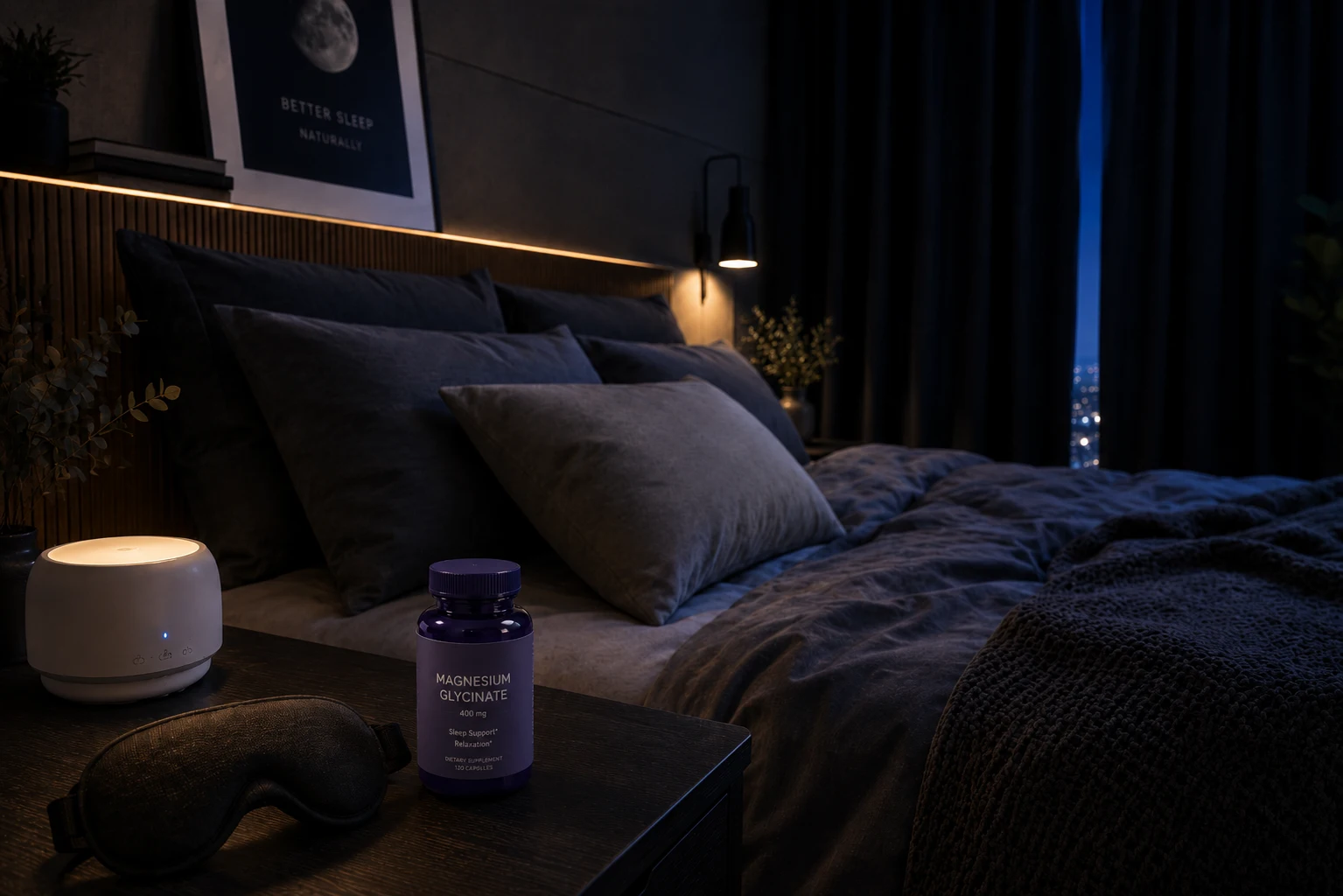
Imagine a bedroom with cool air, blackout curtains drawn shut, soft amber lighting, breathable bedding, and minimal background noise. These environmental cues help signal to the brain that it is safe to transition from wakefulness into restorative sleep.
Practical Sleep Optimization
Common sleep-supportive tools include:
- Blackout curtains
- White noise machines
- Breathable bedding
- Comfortable pillows
- Contoured sleep masks
For a deeper dive into environmental optimization, see How to Build the Perfect Sleep Environment: A Room-by-Room Guide.
5. Follow a Consistent Wind-Down Ritual
A nighttime ritual works because the brain learns through repetition.

Over time, repeated behaviors become signals that sleep is approaching.
Examples of Research-Supported Wind-Down Activities
Many sleep professionals rotate among:
- Reading
- Meditation
- Breathwork
- Gratitude journaling
- Gentle yoga
- NSDR (Non-Sleep Deep Rest), a guided relaxation practice designed to place the body into a deeply restorative state without actually sleeping
The exact activity matters less than consistency.
The Goal
Reduce cognitive stimulation while increasing feelings of safety, relaxation, and calm.
If you’d like to learn more about this increasingly popular recovery technique, explore NSDR (Non-Sleep Deep Rest): Andrew Huberman’s Free Recovery Protocol.
6. Limit Alcohol Close to Bedtime
Alcohol can make people feel sleepy initially.
However, sleep researchers generally avoid using alcohol as a sleep aid.
Why?
Alcohol may:
- Fragment sleep later in the night
- Increase nighttime awakenings
- Reduce sleep quality
- Suppress portions of REM sleep
As a result, many people wake up feeling less refreshed despite falling asleep quickly.
7. Manage Stress Before It Reaches the Pillow
Many sleep difficulties are actually stress-management difficulties.
Sleep researchers often address stress before bedtime instead of carrying it into bed.
Popular Techniques
- Brain-dump journaling
- Tomorrow planning lists
- Meditation
- Deep breathing
- Gratitude exercises
These habits help reduce mental clutter and bedtime rumination.
Some adults also pair healthy sleep habits with evidence-based sleep tools such as magnesium glycinate, which may support relaxation and healthy nervous system function.
If stress tends to interfere with your sleep, you may also find our guide Magnesium for Cortisol: How It Calms Your Stress Response at Night helpful.
A Sample Sleep Researcher Routine
Here is a realistic bedtime routine for adults inspired by common sleep science recommendations.

Two Hours Before Bed
- Dim household lighting
- Finish large meals
- Avoid additional caffeine
- Reduce screen brightness
- Begin winding down mentally
One Hour Before Bed
- Put away work tasks
- Prepare the bedroom
- Set a comfortable room temperature
- Turn on white noise if desired
- Reduce stimulating content
Thirty Minutes Before Bed
- Read a book
- Journal briefly
- Stretch gently
- Practice meditation or breathwork
- Complete your wind-down ritual
Bedtime
- Enter a dark, quiet room
- Avoid checking your phone
- Keep lights off
- Follow a consistent bedtime
Common Bedtime Routine Mistakes
Even health-conscious adults often make these mistakes.
Mistake #1: Chasing New Sleep Hacks Every Week
Sleep responds best to consistency, not constant experimentation.
Mistake #2: Going to Bed Too Early
Spending excessive time awake in bed can create frustration and weaken the mental association between bed and sleep.
Mistake #3: Scrolling Until Exhaustion
Falling asleep because you’re mentally exhausted isn’t the same as preparing your body for restorative sleep.
Mistake #4: Ignoring Environmental Factors
Light, noise, and temperature can significantly affect sleep quality.
Mistake #5: Expecting Immediate Results
Most healthy sleep habits require consistent practice before noticeable improvements occur.
Building Your Own Personalized Nighttime Ritual
The perfect nighttime ritual isn’t identical for everyone.
However, most successful bedtime routines include the same foundational elements.
Your Sleep Routine Checklist
✓ Consistent sleep schedule
✓ Reduced evening light exposure
✓ A relaxing wind-down activity
✓ Stress management
✓ A cool, dark bedroom
✓ Limited stimulation before bed
✓ Consistent bedtime habits
Start with one or two changes rather than attempting a complete overhaul overnight.
Small habits repeated consistently tend to produce better long-term results than ambitious routines that are difficult to maintain.
How TideRest Supports a Better Evening Routine
Healthy sleep begins with healthy habits.
Many adults find it helpful to combine evidence-based sleep behaviors with supportive sleep tools, including:
- Magnesium glycinate supplements
- Sleep masks
- White noise machines
- Sunrise alarm clocks
- Other non-melatonin sleep solutions
The goal isn’t to force sleep or create dependency. It’s to support the conditions that help your body sleep naturally.
Final Thoughts
When you look at what sleep researchers actually do before bed, a clear pattern emerges.
They prioritize consistency over complexity.
The most effective bedtime routine for adults isn’t built around trendy sleep hacks, expensive gadgets, or rigid rules. Instead, it’s built around predictable behaviors that support your body’s natural sleep biology.
If you’re looking for a single place to start, focus on improving the hour before bed. For many people, that one change creates meaningful improvements in sleep quality, energy levels, and overall well-being.
 FAQ
FAQ
 References
- National Institutes of Health (NIH)
- American Academy of Sleep Medicine (AASM)
- Centers for Disease Control and Prevention (CDC)
- National Heart, Lung, and Blood Institute (NHLBI)
- Sleep Foundation
Build a Better Night, One Habit at a Time
Looking to create a calmer, more restorative bedtime routine?
Explore TideRest’s collection of science-informed, non-melatonin sleep solutions designed to support healthy sleep habits—from magnesium glycinate and sleep masks to white noise devices and other sleep-friendly essentials.
Discover Natural Sleep Support →
 Additional Note
Healthy sleep habits can support better sleep quality, but individual results vary. Persistent sleep difficulties may indicate an underlying sleep or medical condition and should be discussed with a qualified healthcare professional.
The information in this article is intended for educational purposes only and should not replace professional medical advice.