
Summer Heat and Sleep: The Science of Sleeping Cool
Introduction
Summer nights can be surprisingly disruptive to sleep. If you find yourself tossing, turning, or waking up sweaty, you’re not alone.
Research shows that elevated bedroom temperatures can interfere with your body’s natural cooling process, making it harder to fall asleep and stay asleep.
In this guide, you’ll learn how to sleep in hot weather using science-backed strategies, cooling sleep products, and practical summer sleep tips that can help you stay comfortable all season long.
Quick Answer: How to Sleep in Hot Weather
If you’re wondering how to sleep in hot weather, focus on these four essentials:
- Keep your bedroom between 65–72°F (18–22°C)
- Choose breathable bedding and sleepwear
- Take a cool shower before bed
- Improve airflow with fans or air conditioning
These simple adjustments help your body lower its core temperature naturally, which is a key biological requirement for healthy sleep.
Why Hot Weather Makes Sleep More Difficult
Sleep and body temperature are closely connected.
As bedtime approaches, your body naturally begins cooling itself to prepare for sleep. This drop in core temperature helps signal melatonin release and promotes deeper sleep stages.
When your bedroom is too warm, that cooling process becomes less efficient.
Common effects include:
- Taking longer to fall asleep
- Frequent nighttime waking
- Increased sweating
- Reduced deep sleep
- Lower sleep quality the next day
Research suggests that excessively warm sleep environments can negatively affect both REM sleep and slow-wave sleep, two critical stages for recovery and cognitive function.
12 Science-Backed Summer Sleep Tips
1. Lower Your Bedroom Temperature
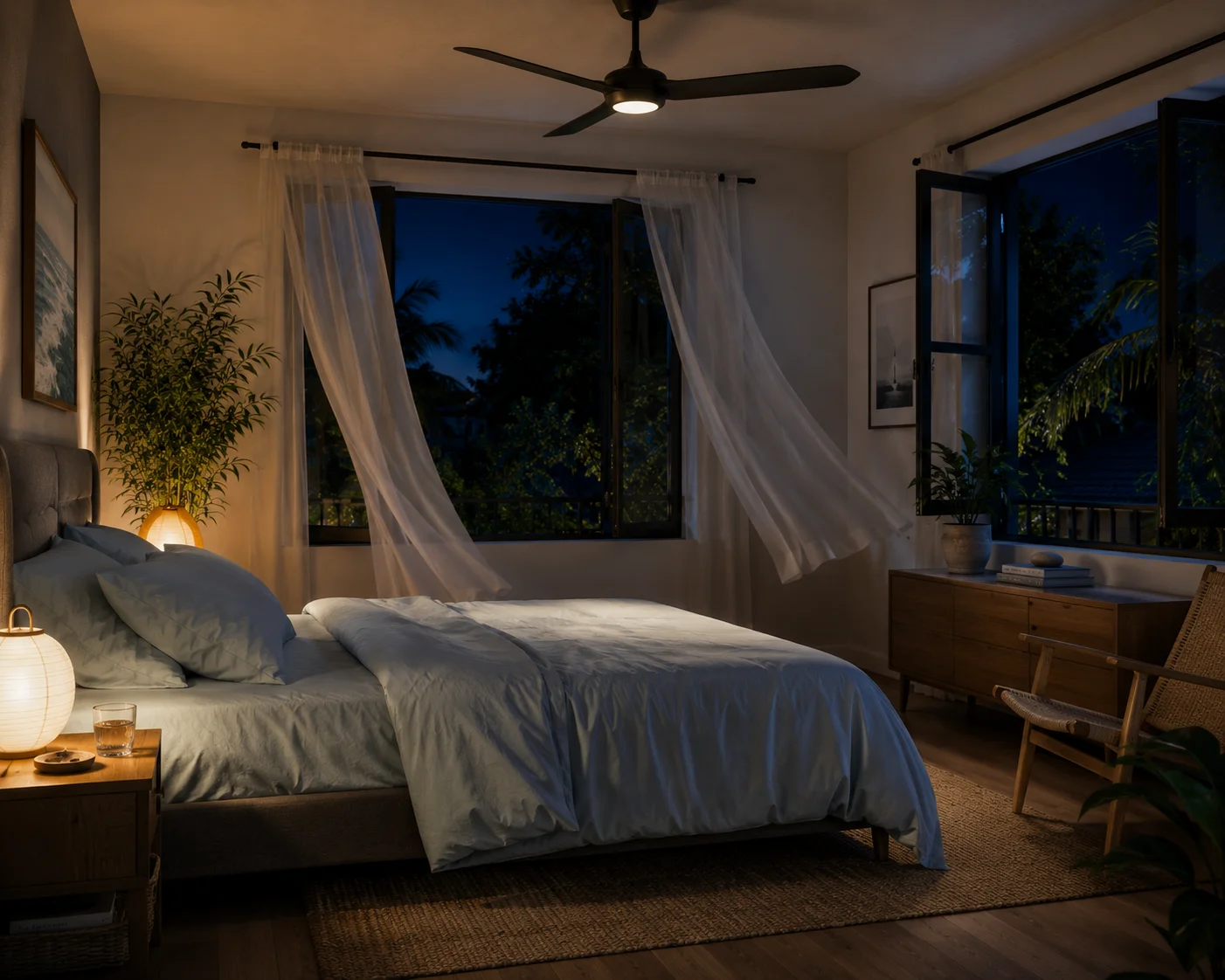
Most sleep experts recommend maintaining a bedroom temperature between 65–72°F (18–22°C).
If air conditioning is available, use it strategically rather than setting extremely cold temperatures.
If AC isn’t available:
- Open windows during cooler evening hours
- Use blackout curtains during the day
- Create cross-ventilation with fans
2. Switch to Breathable Bedding
Heavy winter bedding traps body heat.
For summer sleep, prioritize:
- Bamboo sheets
- Cotton percale sheets
- Lightweight blankets
- Moisture-wicking pillowcases
Breathable fabrics help dissipate heat and improve airflow around the body.
3. Wear Lightweight Sleepwear
Loose-fitting sleepwear made from:
- Cotton
- Bamboo viscose
- Moisture-wicking performance fabrics
can improve comfort and reduce overheating during the night.
4. Take a Cool Shower Before Bed
A cool or lukewarm shower 30–60 minutes before bedtime may help accelerate the body’s natural cooling process.
Avoid extremely cold showers, which can sometimes stimulate the nervous system and make relaxation more difficult.
5. Stay Hydrated During the Day
Mild dehydration can make it harder for the body to regulate temperature effectively.
Aim to hydrate consistently throughout the day rather than consuming large amounts of water immediately before bedtime.
6. Limit Alcohol on Hot Nights
Alcohol can:
- Increase dehydration
- Disrupt REM sleep
- Trigger nighttime waking
While it may initially make you feel sleepy, it often leads to poorer sleep quality overall.
7. Avoid Heavy Evening Meals
Digesting large meals generates metabolic heat.
During heat waves, lighter evening meals may improve comfort and reduce nighttime overheating.
8. Use a Fan Strategically
Fans do more than move air.
They can:
- Improve evaporation of sweat
- Create cooling airflow
- Provide gentle white noise that masks environmental sounds
This combination often improves overall sleep comfort.
9. Cool Your Feet Before Bed
Your feet contain specialized blood vessels that help regulate body temperature.
Some people find relief by:
- Rinsing feet with cool water
- Using breathable socks
- Keeping feet outside blankets
10. Reduce Humidity
Humidity can make warm temperatures feel significantly worse.
If possible, use:
- Air conditioning
- Dehumidifiers
- Improved ventilation
to reduce moisture levels in the bedroom.
11. Optimize Light Exposure
Summer evenings often remain bright later into the night.
To support healthy circadian rhythms:
- Dim indoor lights after sunset
- Limit screen exposure before bed
- Consider using a sleep mask
For a complete circadian strategy, see our guide on Sleep Chronotypes Explained: How to Work With Your Biology, Not Against It.
12. Build a Consistent Sleep Routine
Consistency remains one of the most powerful sleep tools regardless of season.
If summer travel or longer daylight hours have disrupted your schedule, revisit the principles outlined in our guide to The Perfect Nightly Routine: What Sleep Researchers Do Before Bed.
Common Summer Sleep Mistakes
Many people unknowingly make hot-weather sleep harder than it needs to be.
Keeping Winter Bedding Too Long
Heavy comforters and flannel sheets can trap significant amounts of heat.
Drinking Alcohol to Relax
Alcohol often increases nighttime waking and dehydration.
Setting the AC Too Cold
A freezing room can sometimes create discomfort later in the night and disrupt sleep continuity.
Exercising Immediately Before Bed
Intense exercise temporarily raises core body temperature, making sleep onset more difficult.
Best Cooling Sleep Products for Summer

The right sleep products can make a noticeable difference during hot weather.
| Cooling Product | Primary Benefit | Best For |
|---|---|---|
| Bamboo Sheets | Moisture wicking and breathability | Hot sleepers and night sweaters |
| Cooling Mattress Pad | Reduces heat retention | People who naturally sleep warm |
| Contoured Sleep Mask | Blocks light without trapping heat | Side sleepers and travelers |
| White Noise Machine | Sound masking and comfort | Light sleepers in noisy environments |
| Cooling Weighted Blanket | Gentle pressure with better airflow | People who enjoy weighted blankets but overheat easily |
Cooling Sleep Products vs Sleep Supplements
Cooling strategies address one of the most overlooked causes of poor summer sleep: excessive body heat.
However, some people also experience:
- stress-related sleep difficulty
- racing thoughts
- difficulty relaxing at bedtime
In those situations, environmental strategies may be combined with nutritional approaches.
You may find these related resources helpful:
- Magnesium Glycinate for Sleep: Dosage, Timing & What Science Says
- 7 Natural Alternatives to Melatonin (That Won’t Make You Groggy)
- Sleep Supplements Without Melatonin: 5 Evidence-Based Options
Together, environmental and physiological approaches often create the most sustainable sleep improvements.
Final Verdict
Learning how to sleep in hot weather isn’t about finding a single miracle solution.
The most effective approach combines:
- cooler room temperatures
- breathable bedding
- smart hydration
- proper airflow
- consistent sleep habits
Small adjustments can dramatically improve comfort, sleep quality, and next-day energy levels during summer months.
If you regularly struggle with heat-related sleep disruption, optimizing your sleep environment should be your first priority before turning to more complex interventions.
Build a Cooler Summer Sleep Environment
From breathable sleep masks to white noise solutions, small changes can make hot nights significantly more comfortable.

Explore sleep tools designed to help you stay cool, comfortable, and well-rested all summer long.
→ Discover Summer Sleep Essentials
 FAQ
FAQ
 Sources & References
- Sleep Foundation. Bedroom Temperature and Sleep Quality.
- Harvard Medical School. Sleep and Temperature Regulation.
- National Institutes of Health (NIH). Sleep and Circadian Biology.
- Okamoto-Mizuno K, Mizuno K. Effects of Thermal Environment on Sleep and Circadian Rhythm. Frontiers in Physiology.
- National Sleep Foundation. Healthy Sleep Environment Guidelines.
 Additional Compliance Note
Sleep products and supplements are intended to support healthy sleep habits and are not intended to diagnose, treat, cure, or prevent any disease.