
Apigenin vs L-Theanine for Sleep: A Head-to-Head Comparison
Introduction
If you’re exploring apigenin vs L-theanine for sleep, you’re likely looking for natural ways to improve sleep without relying on melatonin.
Both compounds are widely used in melatonin-free sleep support routines, but they work through very different mechanisms:
- L-theanine focuses on mental calm and stress reduction
- Apigenin promotes mild sedation and physical relaxation
Unlike melatonin, neither directly overrides your circadian rhythm, which is why many people prefer them as part of a more natural sleep strategy.
Why People Choose Melatonin-Free Sleep Support
Many users comparing apigenin vs L-theanine are specifically trying to avoid melatonin.
Compared to melatonin, both compounds:
- Do not directly shift your sleep-wake cycle
- Are less likely to cause next-day grogginess
- Focus on relaxation instead of forced sleep signaling
This makes them popular among people who want natural sleep support without hormonal intervention.
What Is L-Theanine?
L-theanine is an amino acid found in green tea that promotes relaxation without sedation.

How L-Theanine Works
- Increases alpha brain wave activity
- Supports GABA, dopamine, serotonin balance
- Reduces stress-related cognitive overactivity
Benefits for Sleep
- Reduces racing thoughts
- Supports sleep onset
- Improves relaxation under stress
- Helps anxiety-related insomnia
L-Theanine Dosage for Sleep
- Typical dose: 100–200 mg
- Timing: 30–60 minutes before bed
What Is Apigenin?
Apigenin is a flavonoid found in chamomile, parsley, and celery.

It is commonly associated with calming and mildly sedative effects.
How Apigenin Works
- Binds to GABA-A receptors
- Promotes nervous system downregulation
- Supports physical relaxation before sleep
Benefits for Sleep
- Helps initiate sleep
- Promotes deeper relaxation
- Supports calmer nighttime state
- Found in chamomile extract sleep formulations
Apigenin Dosage for Sleep
- Typical dose: 25–50 mg
- Often taken 45–90 minutes before sleep
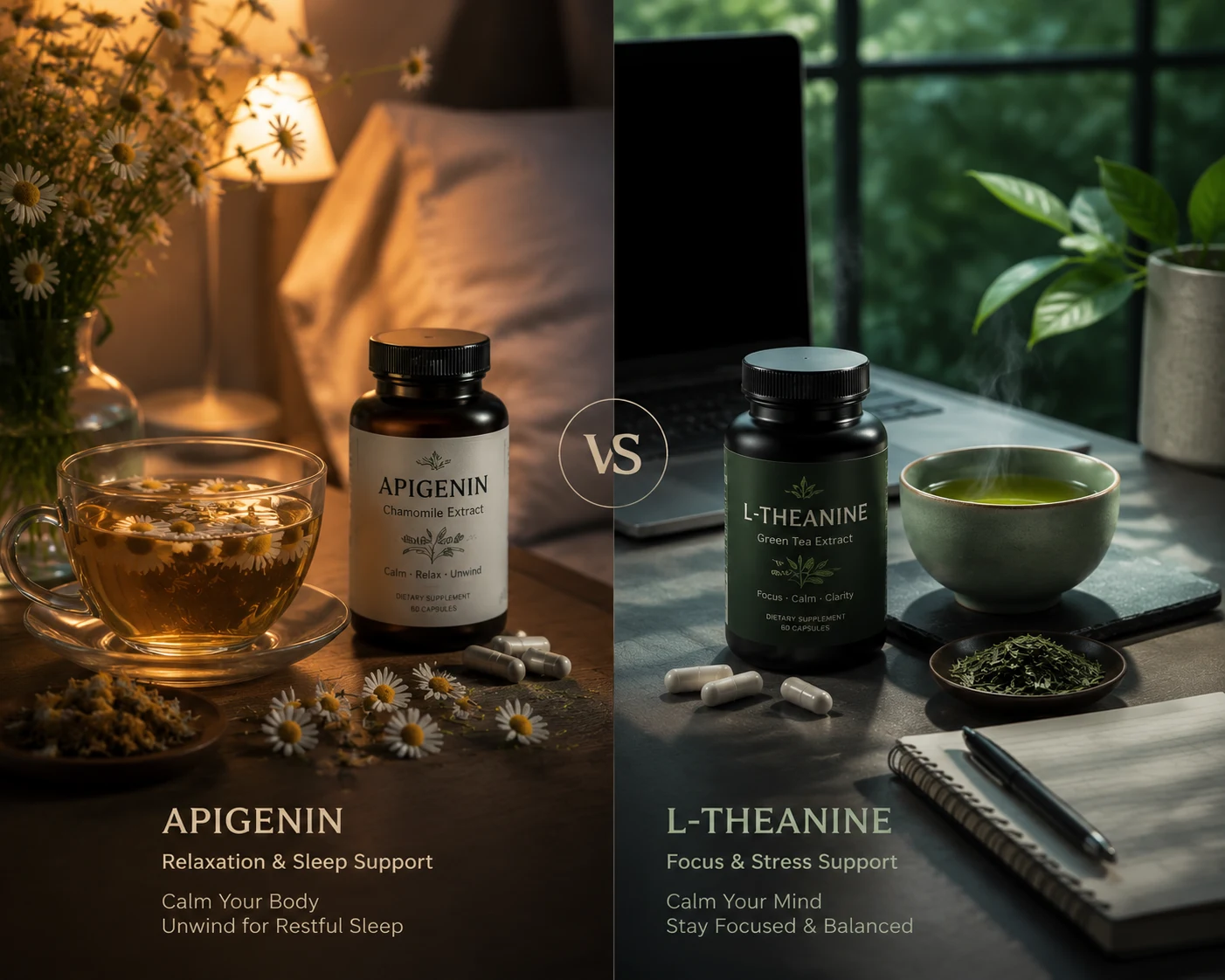
Apigenin vs L-Theanine: Key Differences
Mechanism
| Supplement | Mechanism | Effect |
|---|---|---|
| L-Theanine | Alpha waves + neurotransmitters | Calm alertness |
| Apigenin | GABA receptor modulation | Mild sedation |
Use Case
- L-Theanine: mental stress, racing thoughts
- Apigenin: difficulty falling asleep
Onset
| Supplement | Onset Time | Experience |
|---|---|---|
| L-Theanine | 30–60 min | Calm, clear mind |
| Apigenin | 45–90 min | Relaxed, slightly sleepy |
Do They Work Immediately or Take Time?
Both L-theanine and apigenin can work within the same night of use, typically within 30–90 minutes.
However:
- L-theanine: more immediate calming of mental activity
- Apigenin: may feel more noticeable as physical relaxation builds
They are not “build-up-only” supplements, but consistent use may improve overall sleep stability over time.
Safety & Interaction Considerations
Both compounds are generally considered safe at typical dosages.
However, important considerations include:
Apigenin Safety Note
Apigenin may interact with liver enzymes known as cytochrome P450 (CYP450), which are responsible for metabolizing many medications.
This means it could potentially influence how certain drugs are processed, including:
- Blood pressure medications
- Antidepressants
- Sedatives or sleep medications
👉 If you are taking prescription medication or have liver-related conditions, consult a healthcare professional before regular use.
L-Theanine Safety
L-theanine is generally well tolerated with a very low risk profile, even at higher doses.
Which One Should You Choose?
Choose L-Theanine if you:
- Have racing thoughts before bed
- Experience stress-related insomnia
- Want calm focus without sedation
Choose Apigenin if you:
- Struggle to physically “wind down”
- Prefer mild sedative support
- Use chamomile or herbal sleep blends
Sleep Stack Insight
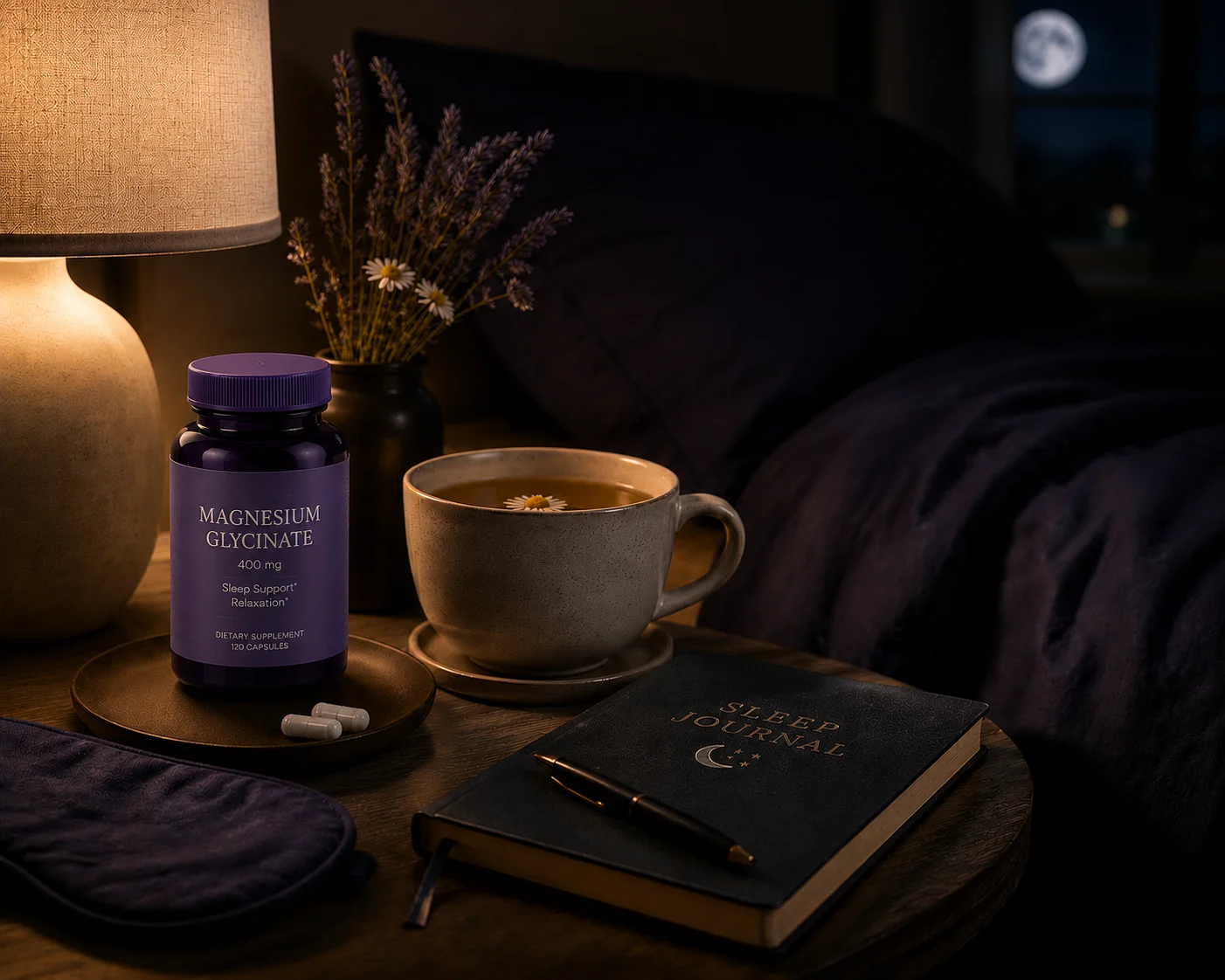
Many users combine both compounds with magnesium glycinate:
- L-theanine → mental calm
- Apigenin → physical relaxation
- Magnesium → nervous system support
→ Related: Magnesium Glycinate for Sleep
TideRest focuses on melatonin-free sleep support systems designed to work with your natural biology.
Explore related guides:
- → Sleep Supplements Without Melatonin
- → magnesium glycinate vs threonate
- → huberman sleep stack supplement
❓ FAQ
📚 Scientific References
- National Institutes of Health (NIH)
- PubMed studies on L-theanine and stress response
- Chamomile and flavonoid research literature
- Sleep Foundation educational resources
 Additional Compliance Note
This content is intended for educational and informational purposes only and should not be considered medical advice, diagnosis, or treatment.
Apigenin and L-theanine are generally recognized as well-tolerated natural compounds; however, individual responses may vary.