
How to Read a Supplement COA: A Buyer’s Trust Checklist
Introduction
When buying a supplement, the ingredient list tells you what a company claims is inside the bottle — but it does not always show whether the product was tested for identity, potency, purity, or contamination.
A Certificate of Analysis (COA) is a laboratory document that provides detailed testing results for a specific supplement batch. It can help consumers understand whether a product has been independently verified and whether the supplement meets its stated quality standards.
Learning how to read a supplement COA allows buyers to look beyond marketing claims and make more informed decisions.
A trustworthy supplement company should be able to explain:
- What was tested
- Who performed the testing
- Which batch was tested
- Whether the results match the product label
What Is a Supplement COA?
A Certificate of Analysis (COA) is a document issued after laboratory testing that reports the measured results of a supplement sample.
In simple terms:
A supplement COA is a quality verification report showing whether a specific product batch matches its claimed specifications.
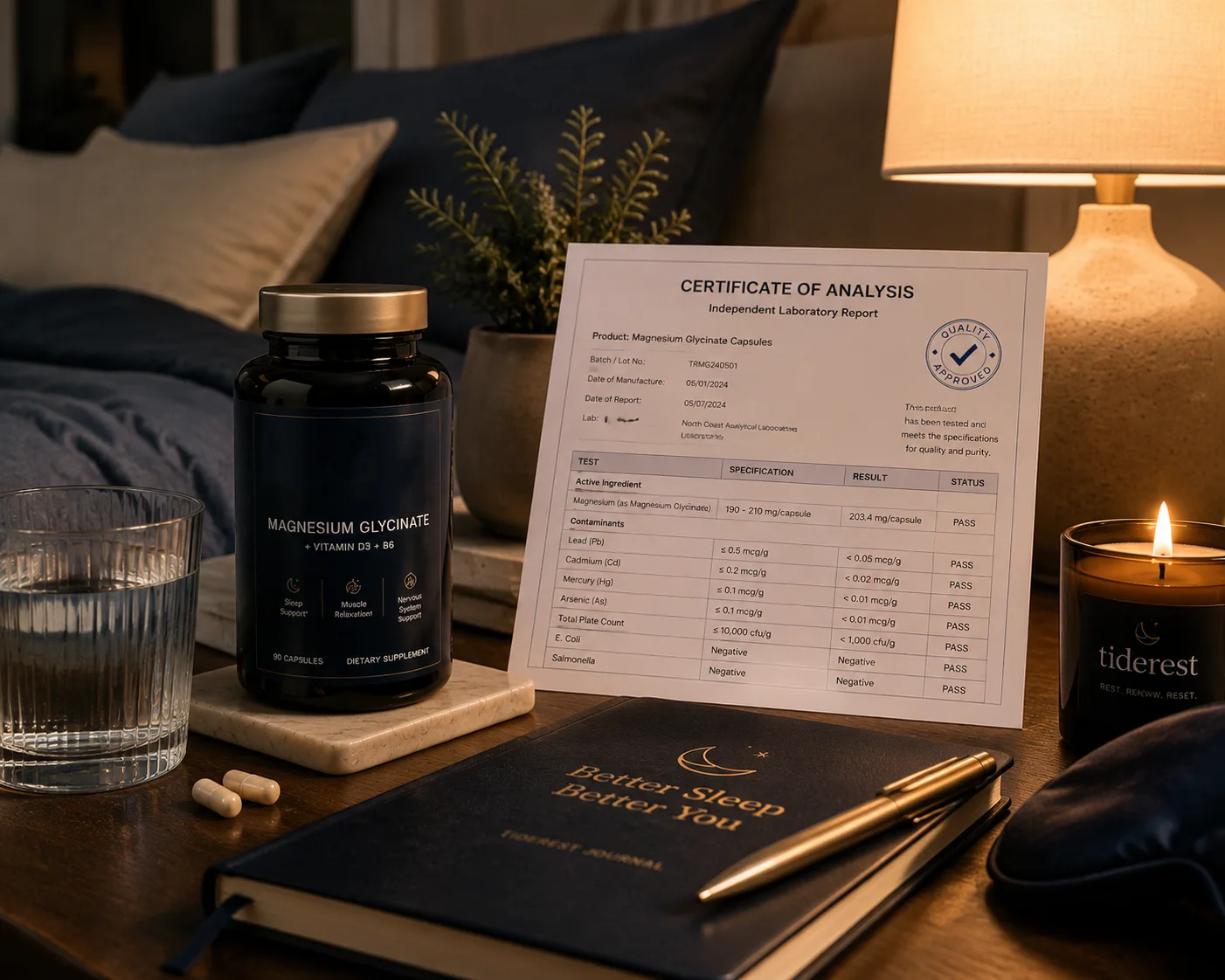
A typical COA may include:
- Product name
- Batch or lot number
- Manufacturing date
- Testing date
- Laboratory information
- Ingredient analysis
- Contaminant screening
- Pass/fail specifications
The important point is that a COA applies to a specific batch, not automatically every bottle ever produced.
For example:
A magnesium supplement manufactured in March may have a different COA from the same product manufactured six months later because each production batch requires separate testing.
Key takeaway
A COA is not a marketing certificate. It is a batch-specific testing record.
Why COAs Matter When Choosing Supplements
Supplement quality is difficult for consumers to evaluate because most buyers cannot independently test what is inside a capsule or gummy.
A product label may tell you:
- ingredient names
- serving size
- dosage
But it usually does not show:
- whether the ingredient amount matches the label
- whether contaminants were detected
- whether manufacturing standards were followed
A COA helps close this information gap by providing evidence from laboratory testing.
For consumers, this matters because supplement quality depends on more than just choosing a popular ingredient.
Two products may both contain:
“Magnesium glycinate”
but differ in:
- ingredient purity
- elemental magnesium amount
- manufacturing controls
- contamination testing
- transparency practices
A COA does not guarantee that a supplement is perfect, but it provides a stronger level of verification than relying only on advertising claims.
How to Read the Key Sections of a COA
A supplement COA may look technical, but most buyers only need to understand several important sections.

1. Product Identity
The first check is whether the tested product matches the supplement you are buying.
Look for:
- Product name
- Ingredient tested
- Manufacturer name
- Batch number
The COA should clearly connect the laboratory report to the exact product batch.
A vague document that only says “magnesium supplement testing” without identifying the product batch provides limited value.
2. Potency Testing
Potency testing checks whether the amount of an ingredient matches the label claim.
For example:
A magnesium supplement label may state:
200 mg elemental magnesium per serving
A potency test verifies whether the actual amount is close to that specification.
This is especially important for supplements where dosage accuracy matters.
3. Purity and Contaminant Testing
Quality supplements are often tested for unwanted substances.
Common contaminant screens may include:
- Heavy metals
- Microbial contamination
- Pesticides
- Residual solvents
The exact tests depend on the ingredient and manufacturing process.
A strong COA should show:
- What contaminants were tested
- Testing limits
- Actual results
- Pass/fail status
4. Laboratory Information
A reliable COA should identify:
- Testing laboratory
- Laboratory accreditation (when applicable)
- Testing methods used
Transparency matters because consumers should be able to understand who performed the analysis and how the results were generated.
Third-Party Testing vs Manufacturer Testing: What Is the Difference?
A common question is:
“Does third-party testing mean a supplement is automatically better?”
Not necessarily.

However, third-party testing provides an additional layer of verification because the testing organization is independent from the company selling the supplement.
Manufacturer Testing
Internal testing means the company evaluates its own products.
Advantages:
- Faster quality control
- Direct manufacturing feedback
Limitations:
- Less independent verification
Third-Party Testing
Third-party testing means an outside laboratory evaluates the product.
Advantages:
- Greater transparency
- Independent review
- Additional consumer confidence
Limitations:
- Quality still depends on testing methods and standards used
The strongest supplement companies often combine:
- internal quality control
- external laboratory testing
- transparent documentation
Red Flags That May Indicate a Weak or Unreliable COA
Not every document labeled “COA” provides meaningful verification.

Be cautious if a company provides:
1. No Batch Number
A COA without a lot number cannot confirm which production batch was tested.
2. No Laboratory Information
A trustworthy report should identify who performed the testing.
3. Only Shows “Passed”
A simple statement like:
“Third-party tested”
does not explain:
- what was tested
- what limits were used
- what the actual results were
4. Old or Unrelated Reports
A COA should correspond to the product batch you are purchasing.
An outdated document from a different product version may not represent current manufacturing quality.
How to Verify a Supplement Company’s Testing Claims
Consumers can use a simple verification checklist.
Supplement COA Buyer Checklist
Before purchasing, ask:
☑ Does the company provide a COA?
☑ Does the COA include a batch number?
☑ Is the testing laboratory identified?
☑ Does the ingredient amount match the label?
☑ Are contaminants tested?
☑ Are results specific rather than vague?
☑ Does the company explain its testing process?
A transparent company should make quality information easy to understand rather than difficult to find.
What Quality Signals Should You Look for in Sleep Supplements?
For sleep supplements, transparency is especially important because consumers often compare products based on marketing phrases such as:
- “natural sleep support”
- “calming formula”
- “better rest”
However, a higher-quality evaluation starts with fundamentals:
Ingredient Transparency
Look for:
- Clearly listed active ingredients
- Accurate serving sizes
- Transparent dosage information
Testing Transparency
Look for:
- Batch-specific COAs
- Third-party testing information
- Clear quality standards
Responsible Positioning
Trustworthy supplement brands avoid promising unrealistic outcomes.
A sleep supplement should be positioned as supporting healthy sleep habits, not replacing medical care or guaranteeing sleep improvement.
At TideRest, transparency and education are central to supplement selection. Helping consumers understand ingredients, testing, and quality standards is part of building long-term trust.
Final Checklist: Before Buying a Supplement
A reliable supplement purchase decision does not depend on a single marketing claim.
Use this checklist:
Quality Verification
- Check whether a COA exists
- Confirm the batch number
- Review laboratory information
- Look for potency testing
- Check contamination screening
Label Transparency
- Compare COA results with the supplement label
- Understand the actual active ingredient amount
- Avoid products with unclear formulations
Brand Trust
- Look for accessible testing information
- Evaluate whether claims are realistic
- Choose companies that explain their quality process
A supplement COA is not just paperwork — it is a tool that helps consumers make better decisions.
Explore More Sleep Supplement Education
Understanding supplement quality is only one part of choosing effective sleep support.
Learn more:
 FAQ
FAQ
 References
- U.S. Food & Drug Administration (FDA). Dietary Supplement Quality and Manufacturing Information.
https://www.fda.gov/food/dietary-supplements - National Institutes of Health Office of Dietary Supplements. Dietary Supplement Fact Sheets.
https://ods.od.nih.gov/ - United States Pharmacopeia (USP). Dietary Supplement Verification Program.
https://www.usp.org/ - NSF International. Certified for Sport and Dietary Supplement Certification Programs.
https://www.nsf.org/
 Additional Compliance Note
Dietary supplements are intended to support overall health and should not replace a balanced diet, healthy lifestyle, or professional medical advice.
These statements have not been evaluated by the FDA. This product is not intended to diagnose, treat, cure, or prevent any disease.